




Deep in the rugged north of Namibia, Okonjima Luxury Bush Camp is proving that high-end safari living and high-impact conservation aren’t just compatible – they’re a power couple in their own right (even if it once played host to a very literal one: Brangelina). What began as a big-cat sanctuary has evolved into a visionary blueprint for rewilding the savannah. Today, every stay directly supports the AfriCat Foundation’s work, turning indulgent wilderness immersion into something with tangible ecological return. From waking to the distant chorus of jackals at your doorstep to tracking leopard through thorny bushveld, the experience is unfiltered and elemental, yet meticulously refined. It goes a long way to show how a luxury expedition can be genuinely regenerative.
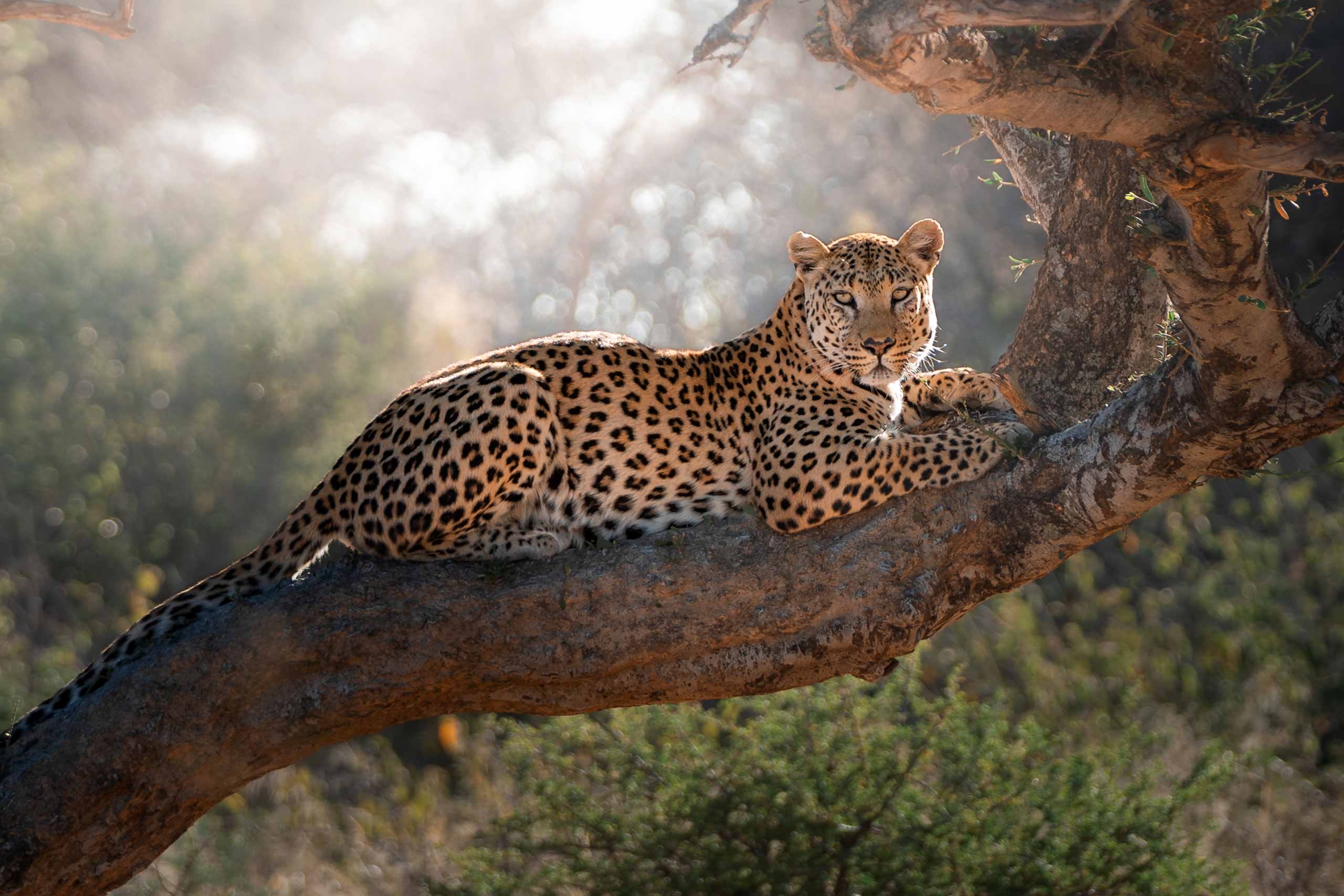
With its abundance of varied habitats across a diverse landscape, the Okonjima Nature Reserve is a haven for some of the world’s most endangered creatures, including white rhinos, pangolins, and over 300 species of birds. But due to Okonjima’s own AfriCat Foundation, it’s the leopards and cheetahs that take centre stage here. What was started in 1991 by the reserve’s owners, the Hanssen family, as an initiative to protect Namibia’s big cat population, has, under the directorship of Karen Codling, developed into a much broader mission – to restore previously overgrazed farmland to its natural state, creating thriving ecosystems that support both wildlife and sustainable tourism.
To achieve this, AfriCat works alongside local farmers to foster a deeper understanding of how nature and humans can coexist in the same spaces. In the process, the foundation has evolved into one of Namibia’s most significant conservation initiatives, producing decades of invaluable data on behaviour, which in turn benefits scientists across ecological disciplines. It’s good to know that, as a guest, one doesn’t just observe or benefit from AfriCat’s work; rather, visitors actively contribute to it (60% of AfriCat’s budget comes directly from the lodge business, with the rest from voluntary guest donations and sponsorships).
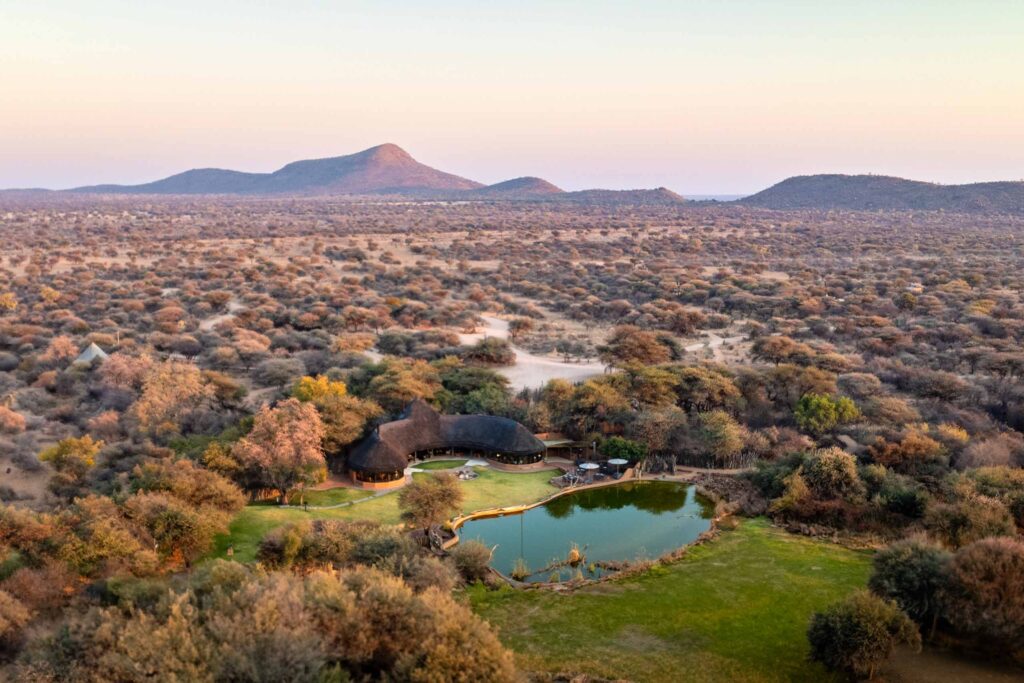
We travelled here by road, as our trip was part of a self-drive ‘Land Rover Discovery Experience’, though guests also have the option to arrive by private plane, about an hour’s flight from Eros Airport, just 5 km (3 mi) south of Windhoek CBD. Our home for our three-night stay was Okonjima Luxury Bush Camp, one of five accommodation offerings within the reserve, which also includes the stunning Okonjima African Villa (the Brangelina clan famously stayed there back in 2006).
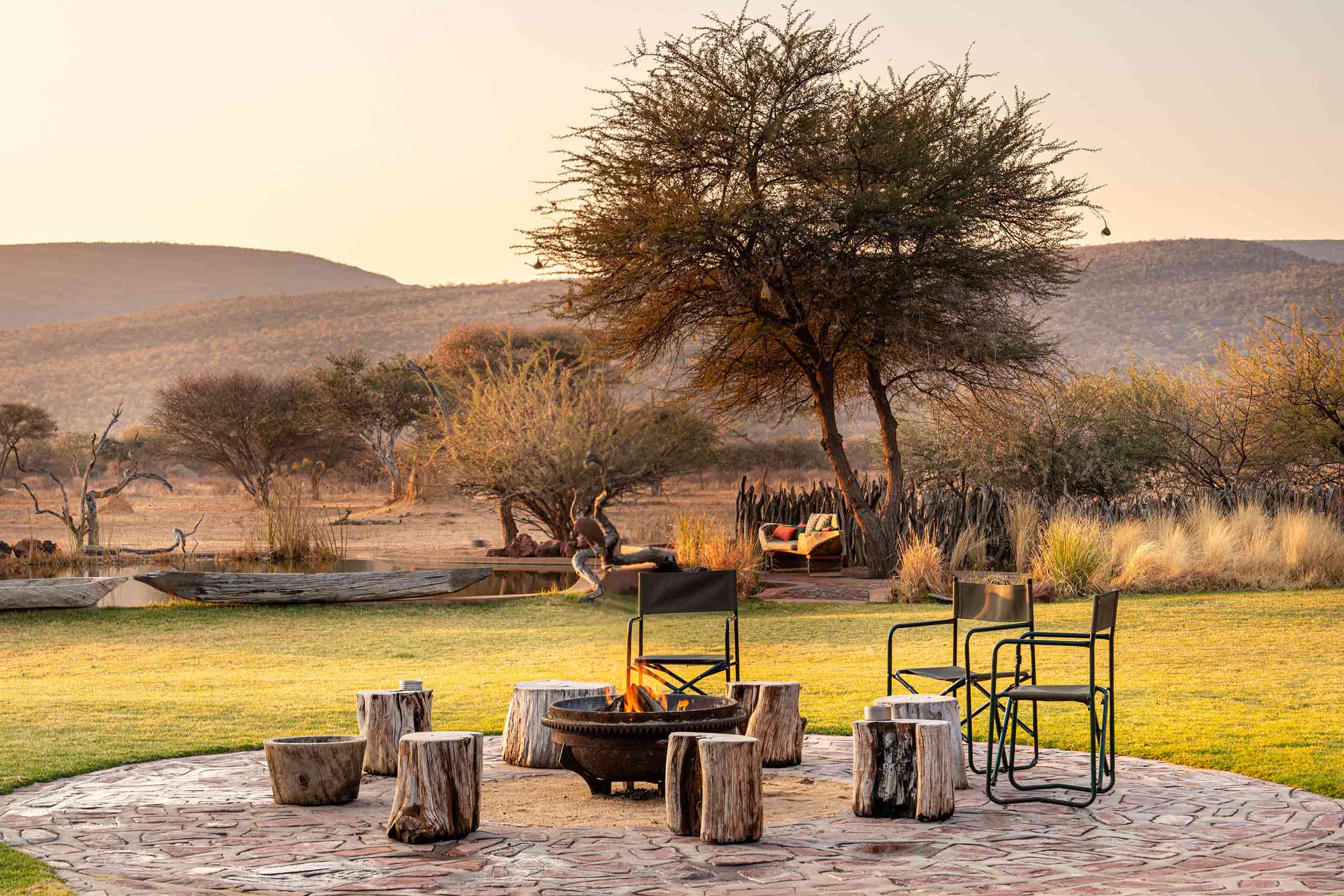
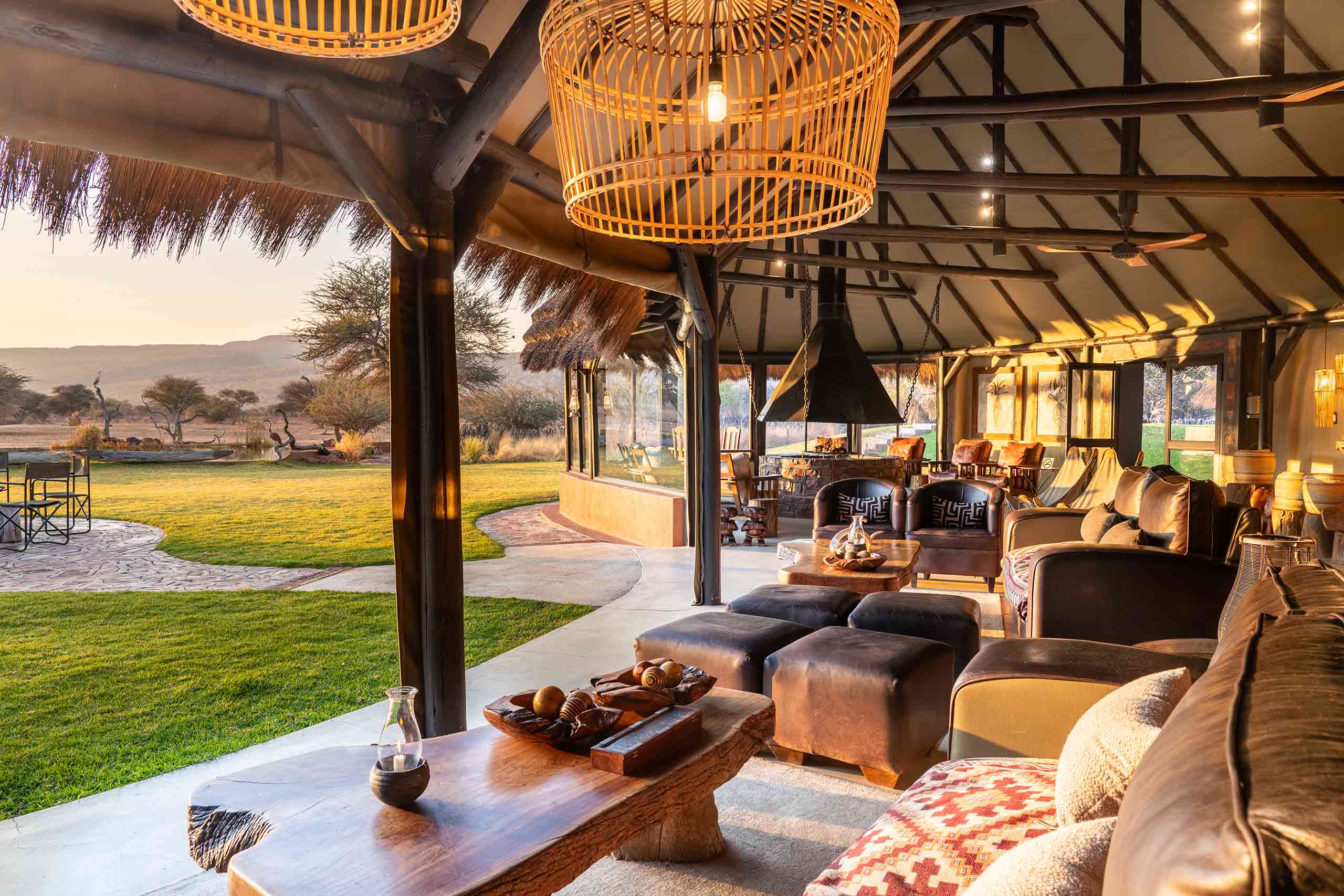
At the heart of the camp sits a generously sized Camelthorn-pod-shaped lapa (a traditional Namibian building) containing the reception and an ample lounge with comfortable seating and a dining area which extends outside. The building and fixtures blend natural textures of wood, canvas, and stone into something that feels both homely and sympathetic to its outstandingly beautiful natural surroundings. From here, across a lawn, the view opens onto a waterhole teeming with birdlife. The immediate surroundings of Okonjima Luxury Bush Camp are a twitcher’s paradise with over 300 bird species.
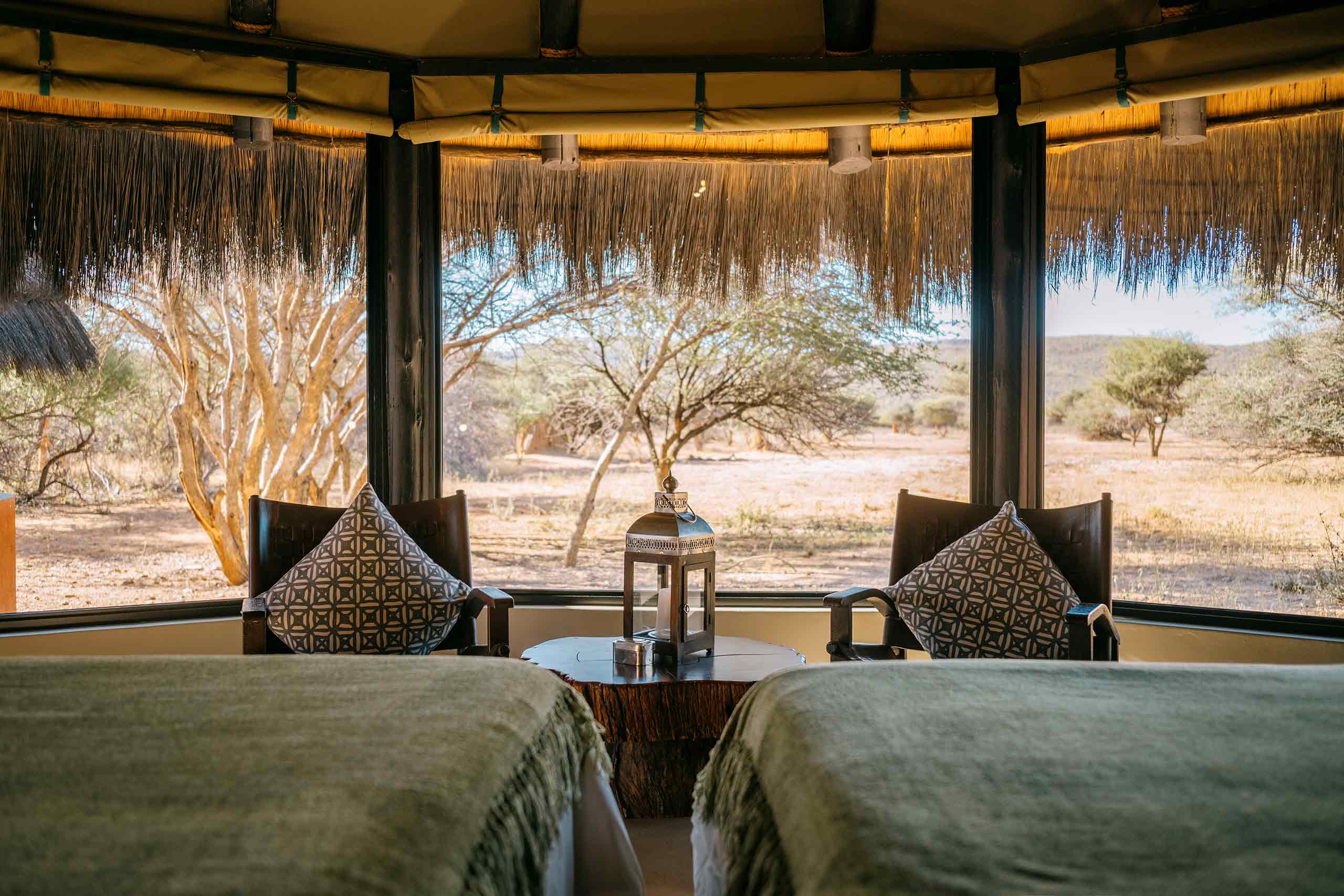
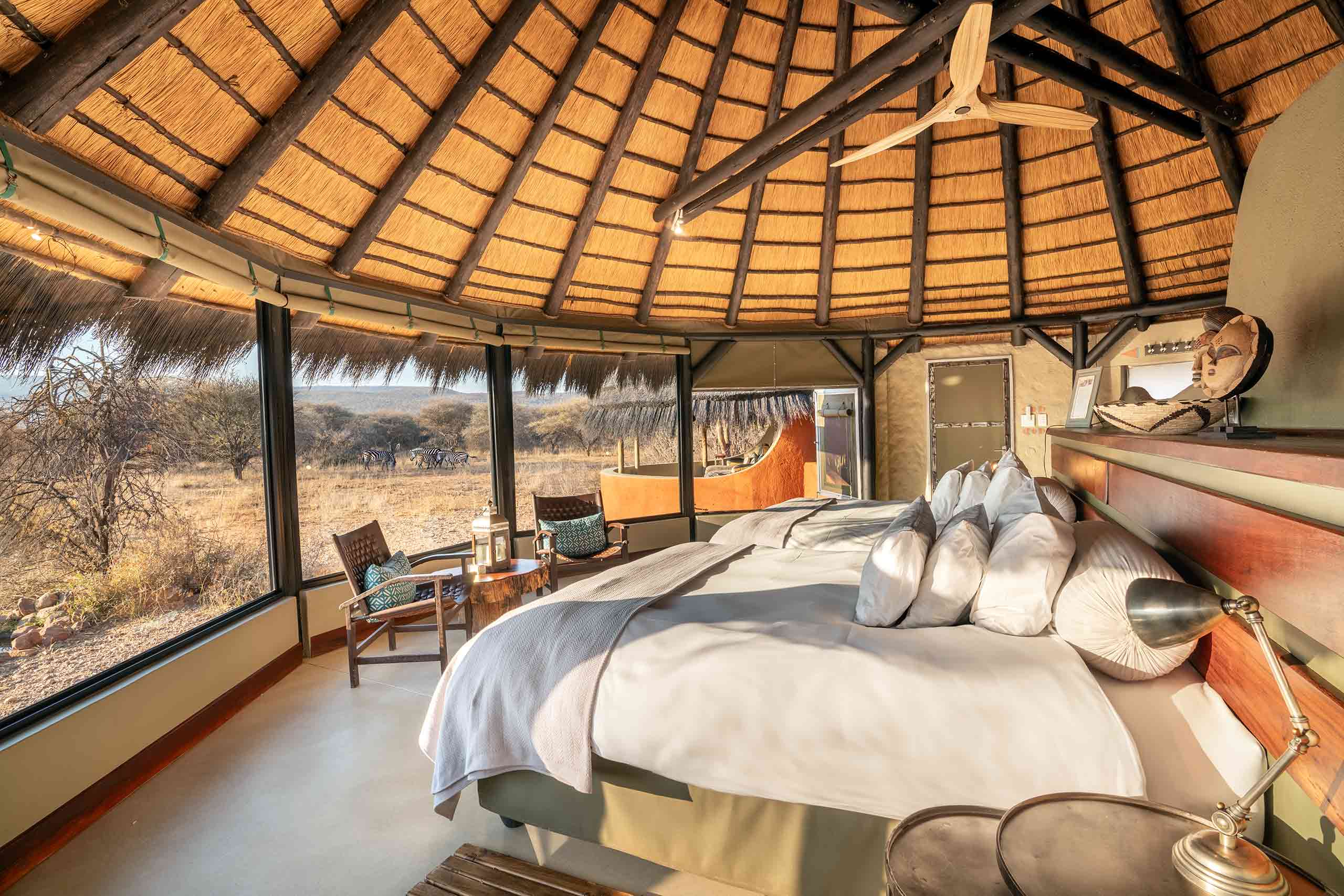
A short walk from the main building, up a gravel path, spaced about 100 meters apart, are eight generously proportioned, thatched-roofed, rondavel-style suites. They were constructed using the same traditional building materials and techniques – combining clay walls, canvas panels, and large windows, which can be folded away entirely, inviting not only the sights but also the sounds and smells of nature inside. The one morning we didn’t take part in a dawn excursion into the reserve, we woke up to our very own view across the savannah and watched a pair of black-backed jackals playing at the base of a tree adjacent to our chalet, just a few feet from the end of our bed. They were clearly unaware of our presence, making the experience simply magical.
Our characterful lodgings felt cosy and sheltered yet connected to the wild environment – a winning mix of comfort and adventure. The spacious feel of the room was accentuated by the conical ceiling, and the uncluttered 105 sqm (1,130 sqft) open-plan layout made the most of the space. Our accommodation was practical, with all bases covered: comfortable twin queen-sized beds, a table and chairs, a large wardrobe, and a generous bathroom with a rain shower. Meanwhile, an exposed concrete floor and ceiling fan helped to maintain a comfortable temperature.
We particularly enjoyed the annexed open-air sala with its daybed perfectly positioned for quiet moments to look over the many photos we had taken on the thrilling, sighting-packed drives out into the reserve. The space would have worked equally well as a spot to read, journal or sketch whilst feeling directly connected to nature. Home-office views don’t get much better than this.Nothing about the Bush Camp accommodation screams excess or ostentation. Instead, space, comfort, privacy, and a real connection to nature are the order of the day.
Our days at Okonjima Bush Camp started early. We met up with fellow guests in the reception for a much-needed coffee and a muffin before climbing onto the safari truck and setting off into the chilly pre-dawn. Each morning, the fresh air was filled with the heady smell of damp earth and vegetation, which, due to the recent rains, was particularly verdant and diverse. On every game drive we took, it would only be a matter of minutes – and on one occasion, merely seconds – before our first sighting (a large herd of blue wildebeest grazing just yards from the compound), such is the abundance of wildlife here.
Damara dik-dik, the world’s smallest antelope, impala and zebra, to name just a few of the most numerous ‘game’, were all in generous numbers, and could be seen throughout the reserve. They made each drive a thrilling, sight-filled experience, to the point where we began to wonder if the whole thing was somehow being orchestrated by a production team hiding just out of sight: “OK… and queue the oryx! And… Go giraffes!” Joking aside, we will never forget the sight of watching a rather cheeky juvenile leopard approaching a large tower of giraffes, for all the world like a scene from a wildlife documentary.
Our time outside of exploring the reserve was spent enjoying the camp’s hospitality, from swigging a cooling Windhoek Lager by the secluded pool to sampling the chef’s braai on the deck next to the water’s edge, particularly memorable at night with a bonfire roaring under a star-filled sky. There’s no gym or spa at Bush Camp, where the focus is entirely on the wildlife, conservation and giving their guests a fuller understanding of nature. Still, for those who simply can’t live without a fitness component to their safaris, Okonjima hosts dedicated ‘Fitness Safaris’, although we didn’t experience these.
Okonjima Luxury Bush Camp is a great example of how travel can not only create wonderful memories but also actively support conservation, hopefully preserving the magic for generations to come.
Martin travelled to Okonjima as part of a Namibia Safari with Land Rover’s Defender Experience around northern Namibia.
www.okonjima.com | www.visitnamibia.com
Photography by Yasin Kirsch and courtesy of Okonjima Luxury Bush Camp

Perfect for
The Adventurer

Fly into
WDH, then drive or connect to the camp’s private airstrip

Right on time
GMT +2
While you’re OutThere
It’s not only pangolins that can be tracked on foot at Okonjima. You are also given the opportunity to track the considerably larger Southern white rhino. Hunted almost to extinction by the beginning of the 20th century, Southern white rhinos represent one of wildlife conservation’s greatest success stories, proving that sustained protection can bring a species back from the brink of extinction. These 2,000 kg vegans could, if suddenly disturbed, charge at speeds of up to 35mph, generating forces of up to 8,000+ pounds (roughly the equivalent of a car travelling at the same speed), making them some of the most powerful land animals on Earth. However, due to their unaggressive nature and the expert guidance of Okonjma’s dedicated anti-poaching team, who know each rhino personally, your chances of an unfortunate incident are very low. But in terms of heart-in-your-mouth, these once-in-a-lifetime experiences are way up there with the best of them.