

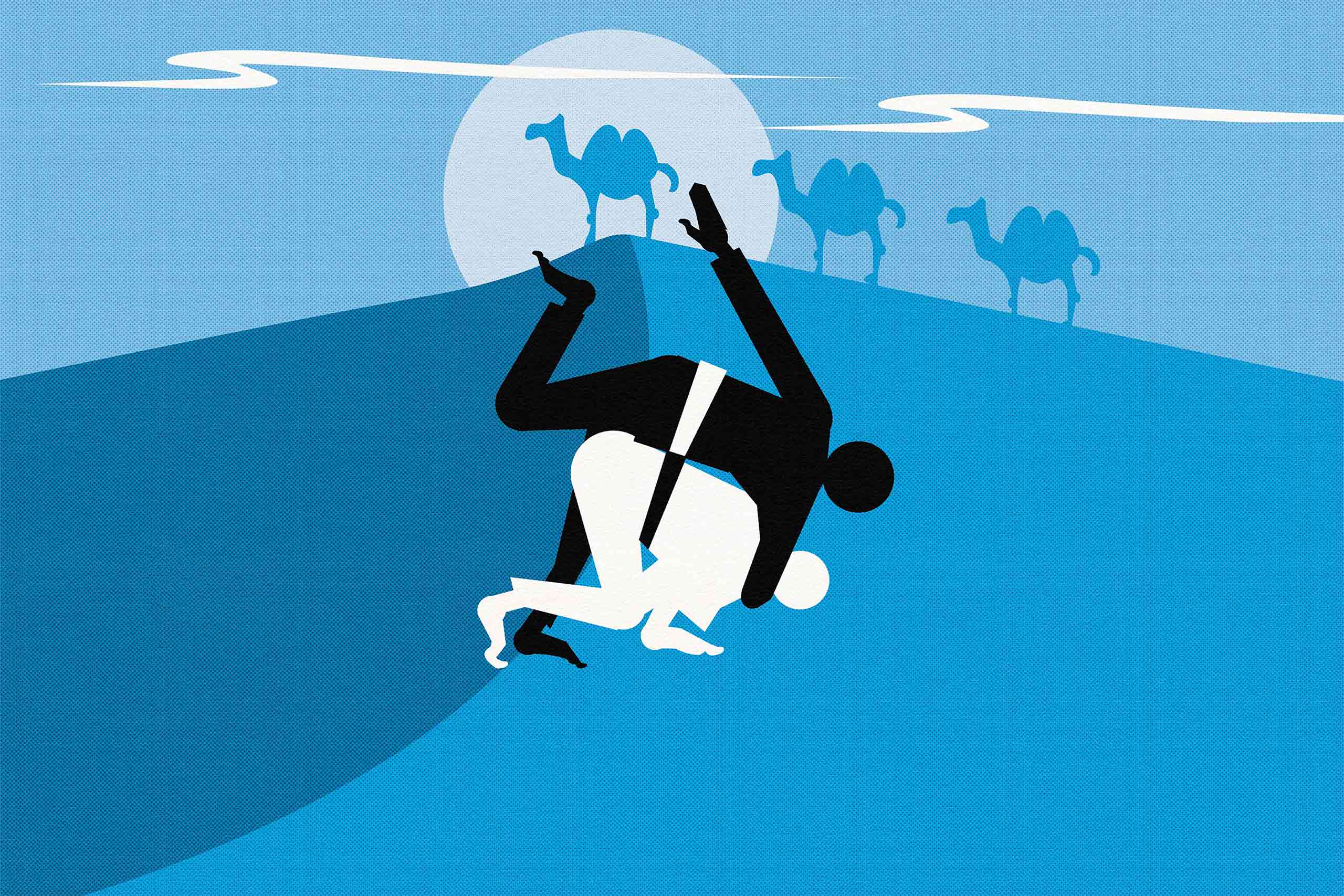




In his latest The Layover column, Zack Cahill joins a week-long Brazilian Jiu Jitsu camp on a Moroccan beach, and learns – somewhat unexpectedly – that surrender can be its own reward.
I am on a beach in Anza, Morocco, in mid-November. The sun is setting over the Atlantic, glinting off the waves of one of the best surfing spots on earth. I can hear the call to prayer faintly in the distance and smell sweet tea from the wandering beach vendors. Someone is trying to choke me, and it is consensual.
I am here with thirty others for the inaugural Rip and Roll Brazilian Jiu Jitsu camp, and today is my 100th Jiu Jitsu session, my goal number of sessions for the year.
Brazilian Jiu Jitsu is about a hundred years old, but its recent surge is firmly a product of Joe Rogan and the manosphere/podcast ecosystem he began. Your mileage may vary when it comes to Rogan, but when he gets on the subject of martial arts, he achieves poetry. Rogan sold Jiu Jitsu like Daniel Craig’s Casino Royale body sold gym memberships. He sold it with the headbutt poetry of the kettlebell comedian. And against my better judgment, he sold me on it too.
On the beach, I have sand in my mouth and a smiling man on top of me. Tanned surfers throw bemused glances at us, adults in pyjamas simulating murder. I tap.
The old lie in martial arts was that it was a great equaliser. That in a few karate classes, a slim woman could roundhouse kick a biker through a plate-glass window. And it was a lie, but with BJJ, it approaches the truth. When someone skilled in BJJ gets their hands on you, they can do what they want. The sensation when rolling (BJJ for sparring) with a higher belt is like being very gently folded into a series of positions to which you do not consent but can do nothing to prevent. It has been described as the art of folding clothes with people in them.
The other unique thing is that it appeals to a particular type of analytical person. It’s not that other martial arts don’t require a brain, but BJJ is like full-body chess with extreme physical consequences. The aim is to trap your opponent in a choke or joint lock, causing them to tap”, thus conceding the round (“Tap, snap or nap” – like any cult, BJJ is packed with insider jokes, mottos and slang). In setting these traps, it helps to think several moves ahead, predicting the counterattack and then countering the counter. There are no available stats correlating BJJ proficiency with autism, but it’s early days, and I know where my money is. BJJ is very much a real-life Revenge of the Nerds.
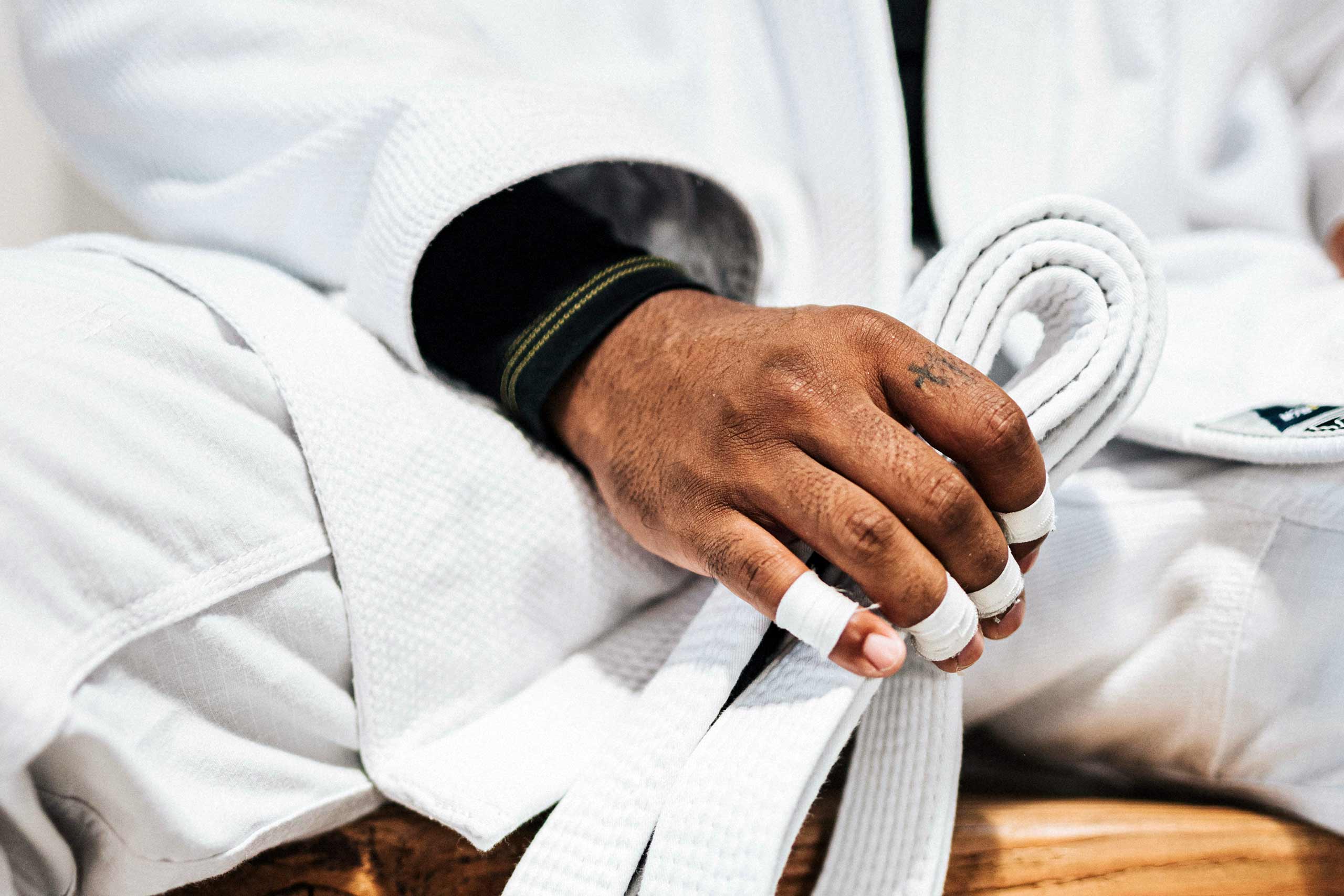
As a middling white belt, I’m towards the bottom of the totem pole here in Morocco and spend a lot of my time getting smashed. It’s mostly not on the sand, but in an idyllic open-air studio looking onto the beach. There are morning sessions wearing the gi, the traditional training uniform that resembles a karate suit but is much more durable, designed to be gripped and yanked by your opponent, or used as a choking weapon.
Evening sessions are “no gi”, where we just wear tight “rash guard” t-shirts and shorts. No gi means no collars or cuffs to grip or yank and is generally more fast-paced. No gi sessions are sweaty at the best of times, but in Morocco, it’s something else. I sometimes feel like Freddie Mercury in the fantasy section of the I Want To Break Free music video, sliding across a sea of glazed bodies. That, but completely unerotic.
If I were 20 years younger, I might have come here to find myself. Or to turn myself into a killing machine. But I don’t need to find myself, and I haven’t got the knees to be a killing machine, as my middle-aged body repeatedly reminds me, contrasted with the mostly younger men and women here who simply bounce when they hit the floor.
In fact, my real goal with taking up a new skill in later life is to be less goal-focused. I have a habit of taking a hobby and turning it into a job. This is a fast route to improvement – the pain and anxiety of not being where you want to be is a powerful driver.
But the downside is you never enjoy it, because you never “arrive”. So this year I resolved not to worry about arriving. Hence, my 100 sessions. My goal was a process, not a result. I didn’t want to win a competition; I just wanted to keep showing up. To step back on the mat on the days I’d rather sit out. To tap out and feel relief rather than shame, then bump fists and go again.
Travel is voluntary vulnerability. You step into a place without your language, your routines, your shortcuts. A Brazilian Jiu Jitsu camp just makes that vulnerability unavoidable. There’s no blagging it, no powering through, no pretending you’re better than you are. Someone applies pressure, and you admit you’re done. Tap, snap or nap.
The light is fading over the Atlantic. I am sitting, sweating, on the edge of the mats. I am sore and out of breath. Someone is walking over, making eye contact in that particular BJJ way that says, “Shall we roll?”
Tomorrow I’m going back home. Tonight I’ll step back in. For now, that is enough.
Illustration by Martin Perry, photography via Unsplash