
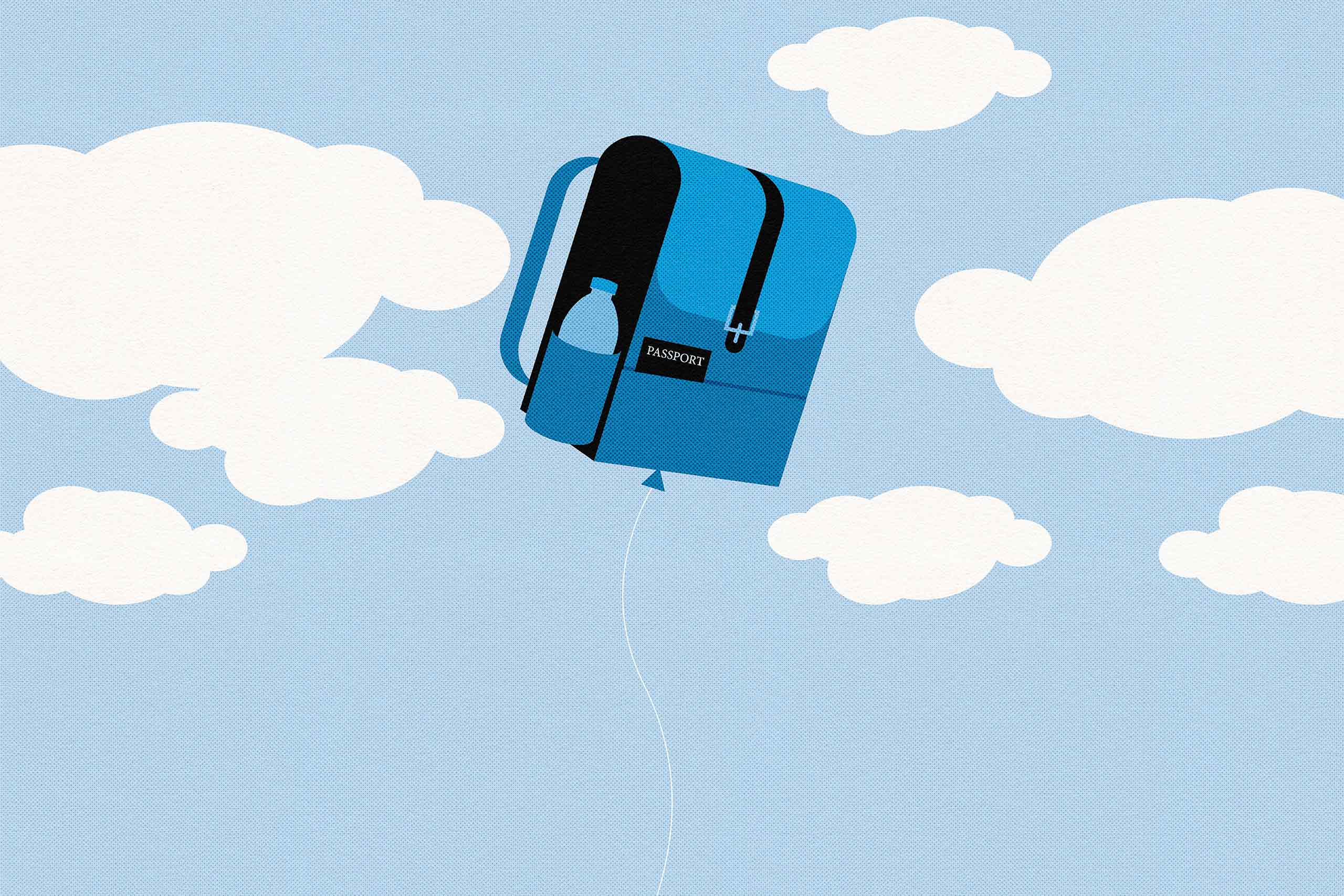



Luggage can be an extension of your identity, a source of home comforts. Or it can betray you at thirty thousand feet. Zack Cahill learned the hard way. Decades later, he has never checked a bag, and along the way he’s picked up some hard-won tips for travelling light — and a few insights on how limiting your options can free your experiences.
We all have formative experiences, events that lodge in early memory and quietly shape the story we tell about who we are. Some examples: Stephen Hawking, diagnosed with a life-changing illness, discovering that when the body’s horizons close in, the mind has no choice but to roam further. A nine-year-old Anthony Bourdain, standing on a beach in France, swallowing an oyster fresh from the sea, and realising that the world was bigger, stranger, and more delicious than anything waiting for him back home. Pr Nadine Coyle, caught lying about her age on Irish television, accidentally redirecting her career towards a far larger destiny.
And then there’s me. Nineteen years old, flying alone for the first time, heading to Greece with a backpack and a dream of who I might become — only for the airline to lose that backpack in transit. This was decades before smartphones, before the internet became a daily fixture. The only way to call home was from a phone box, feeding in extortionately priced cards printed with codes that allowed you, briefly, to speak across borders.
The airport had been a baffling warren: display walls flickering with shifting numbers and destinations. The plane, a rattling, claustrophobic tube. The sole entertainment was a cathode-ray television dragged into the aisle, playing Mister Bean on a loop. So, did I admit defeat and try to go home, or did I, like Alexander, burn the boats and move forward? I chose to step forward, into destiny — and into a life without luggage. To this day, decades later, I have never checked a bag.
Since then, I’ve spent months at a time in Central America, trekked across Icelandic glaciers, and even attended my own Costa Rican wedding, all with only what I could cram in an overhead locker or shove under the seat in front of me. The kids now talk of “raw dogging” — travelling without podcasts or streaming. They have no idea. I’ve been raw-dogging reality and travelling light since the second Iraq War. And here’s what I’ve learned.
Radical economy equals freedom
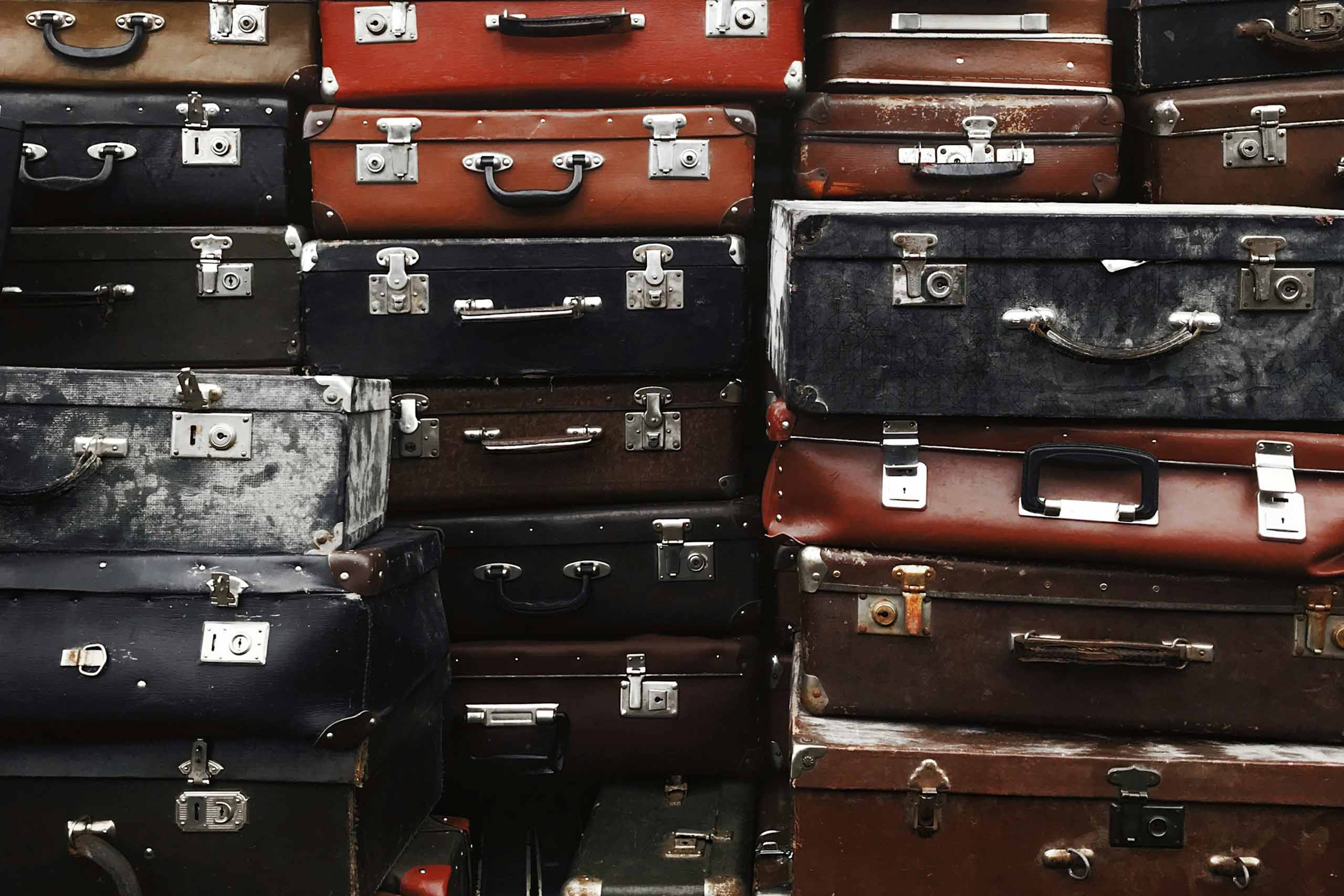
I’m not claiming to be the Marie Kondo of travel (that part is for you to decide). But a body unburdened is a mind freed. Once you start stripping out the non-essentials, you’ll be amazed by how little you actually need. Sure, it means occasionally washing your smalls in a sink, but your back will thank you. I once met a woman travelling through Australia with the entire Lord of the Rings collection. Every time she read a page, she’d tear it out, lightening her load incrementally. Frankly, this was psychotic — but I admired her commitment to the bit.
There are bags, and there are bags
To live the luggage-less life to the fullest, you need a proper duffel. This is your Excalibur. A trusted steed. A Waitrose “bag for life” simply won’t cut it. After extensive Reddit research, the Peak Design Duffel came out on top. It’s the Lamborghini of luggage: carry it, sling it on your back, expand it to contain clothes, liquids, books, and dreams. This isn’t #sponcon (although if they want to send me one, I’ll graciously accept).
You can always buy it there
In the 2000s, a guy called Rolf Potts took the concept of travelling light to its breaking point. In his book Vagabonding, he described seeing the world without even a backpack – just a cleverly designed jacket and cargo pants combo, coupled with a ruthless dedication to Rule #1.
The book was part of that enraging 2000s literary trend: the contents of a blog stretched wafer-thin over 200 pages, endlessly restating the same point so that every paragraph, every page, was almost fractal, containing the entire thesis in miniature.
One of his points, though, still holds: it’s usually cheaper to buy what you need at your destination. Unless, of course, you’re backpacking across the Nordic states, in which case you’re screwed unless you’ve been mining Bitcoin since the Clinton era.
No one wants your gifts anyway
Bringing back a “tribal Balinese sculpture” (made in Taiwan) will get only a forced grin from a friend while they ponder which recycling bin to chuck it in.
We all live in a digital hellscape now
Recall: when I had my formative experience, people were still lugging hefty books, maps, travel guides, and Walkmans. In the decades since, the iconic Nokia 3310 has been replaced by the sleek rectangle you’re reading this on, a Library of Alexandria living in your pocket. Sure, parts of it are infested with Nazis, which is a bummer. But my advice? Load up the Kindle app and disable the socials.
The more you strip away the inessentials, the freer you become. Free to follow whims. Free to eat oysters on French beaches. Free to stumble through souks without snagging your wheelie on a spice stall. Pack light. Travel smart. Don’t check anything you can’t carry yourself. Your back – and your memories – will thank you.
Illustration by Martin Perry, photography via Unsplash