
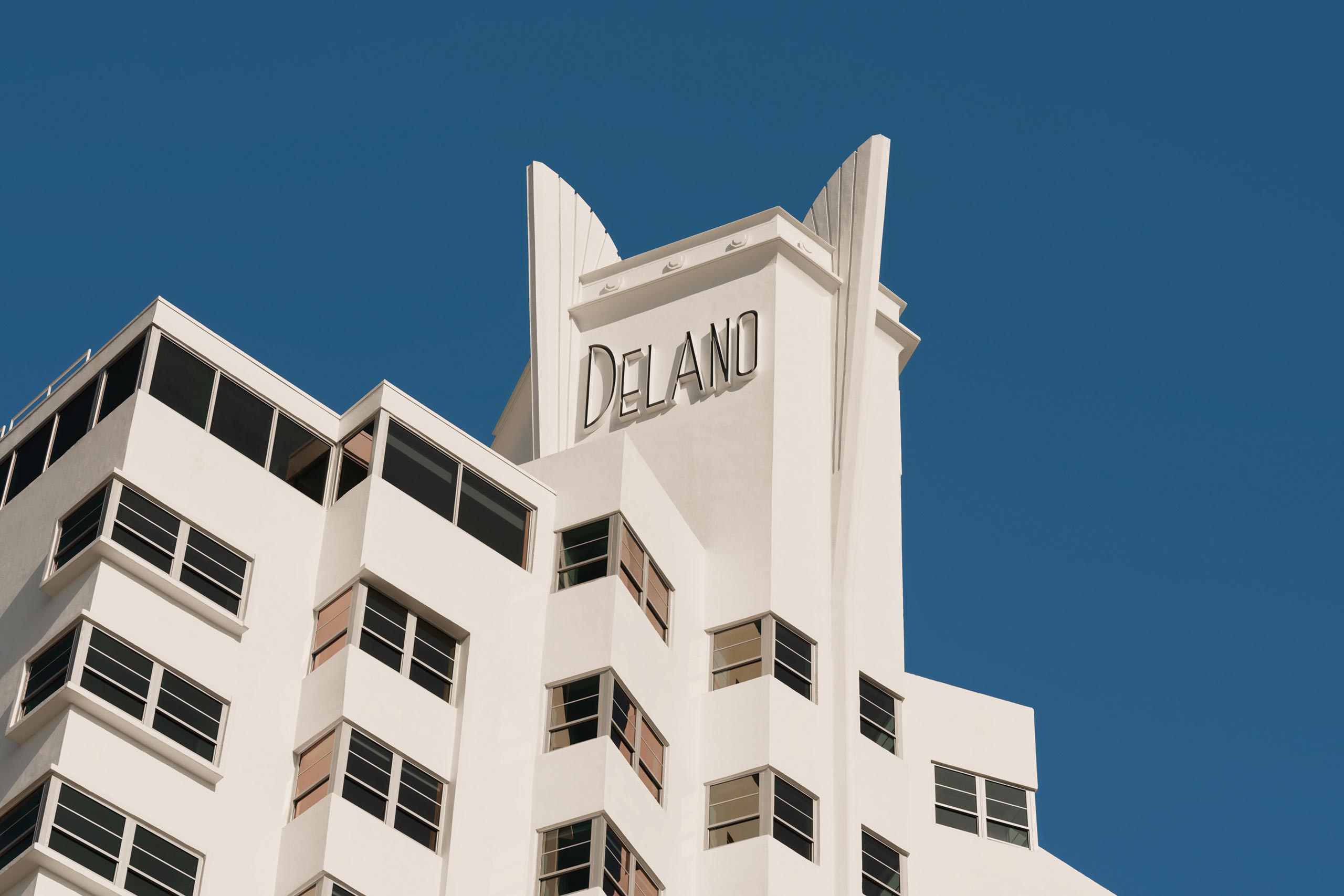




Some hotels have long helped define how a city is remembered. The Delano Miami Beach is one, though less a hotel than a cultural signal, its whitewashed, Miami-Modern theatricality folded into the wider mythology of South Beach itself. For decades, it has occupied a rare place in our collective imaginations – a backdrop to fashion, music, design and nightlife, but also a symbol of the city’s ability to reinvent itself while remaining unmistakably Miami. Its reimagining and return arrive at a moment when Miami is once again recalibrating its identity, balancing global ambition with a renewed sense of place. In doing so, the Delano invites a more interesting question than nostalgia alone: not simply what has been restored, but what kind of city – and what kind of traveller – it now seeks to inspire.
There are few places in America more fluent in the language of reinvention than Miami Beach. Like the tide that shapes its shoreline, the city has advanced and receded through the decades, returning each time with a fresh expression of glamour and a new cast of cultural protagonists. Yet for all its transformations, it stays remarkably faithful to its essential character: Miami remains unmistakably Miami.
It rose from a subtropical sandbar into a playground of Art Deco fantasy. It survived neglect, economic decline and the cocaine-fuelled notoriety of the 1970s and 1980s. It reinvented itself yet again in the 1990s and early 2000s as the world’s most sybaritic outdoor nightclub, before becoming a global centre of art, design, music and contemporary culture.
And yet, for all its resilience, Miami Beach has lately felt “tired”, as though it is running on memories rather than momentum. The luxury hotels are still there. The sunshine is remarkably reliable. The beach is still one of the world’s great urban stretches of sand. But the last time we were in the city – admittedly, in the wake of the pandemic – there was a creeping sense that South Beach had become like an ageing raver reluctant to leave the dancefloor. The city that once attracted designers, artists and cultural provocateurs increasingly found itself catering to bachelorette weekends, social-media clichés and a form of tourism that often mistook excess for sophistication.
Thankfully, reinvention is one of the city’s greatest talents, and a new phase in its lore is emerging. This is why the reopening of the Delano Miami Beach feels like something much larger than a hotel relaunch. After six years behind construction hoardings and more than three decades after Ian Schrager and Philippe Starck transformed it into the property that defined South Beach hospitality, the Delano Miami Beach has returned.
The question is not whether the hotel can reclaim its crown – for that, there is £75 million ($100 million) worth of capital expenditure, the backing of global hospitality superbrand Ennismore and creative leadership under Ben Pundole (a fellow hospitality storysmith, turned idea architect), not to mention the nostalgia of a Delano-loving generation that has continued rising through the ranks and ready to return and spend. The question is whether Miami itself is ready to be led into yet another revival.
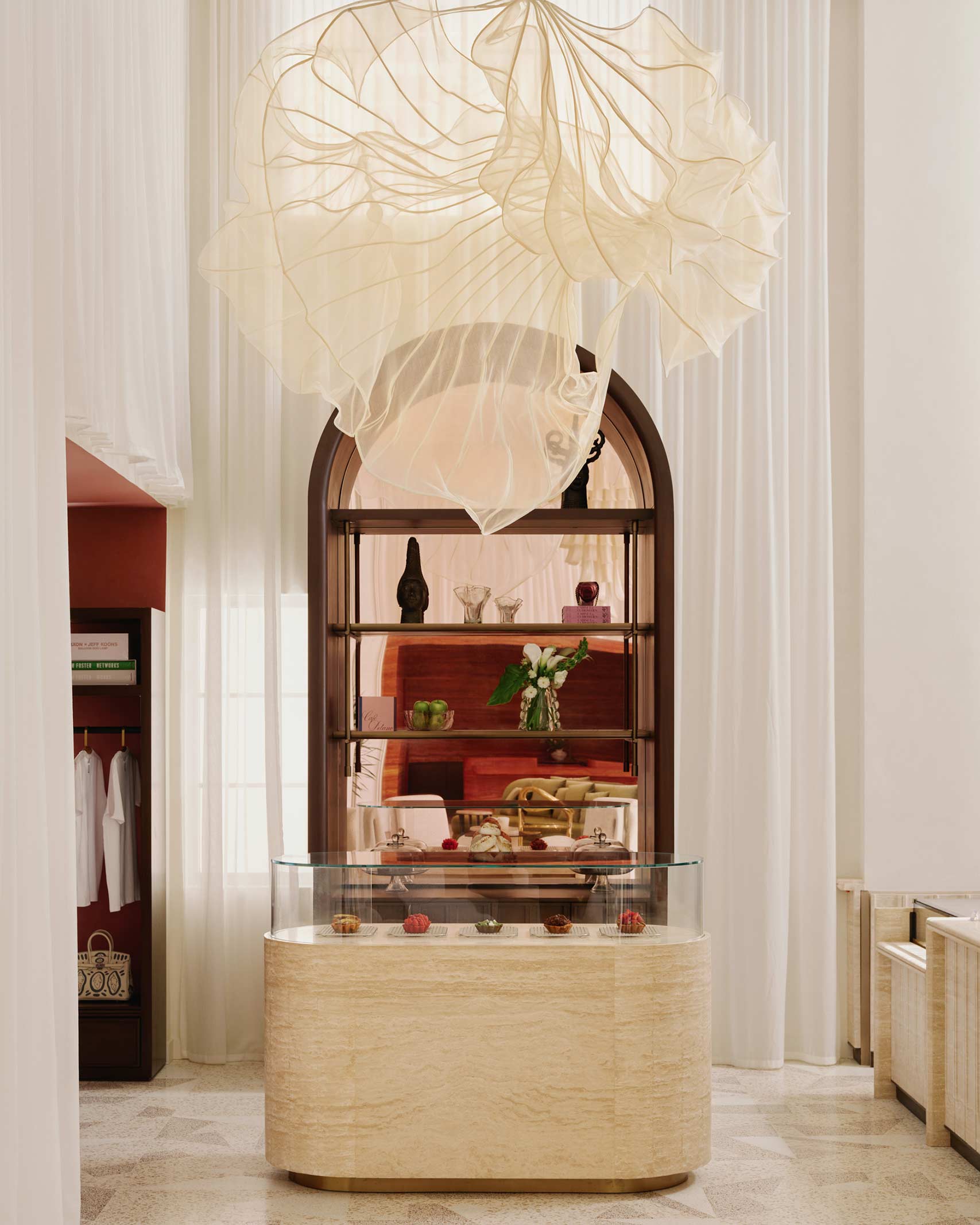
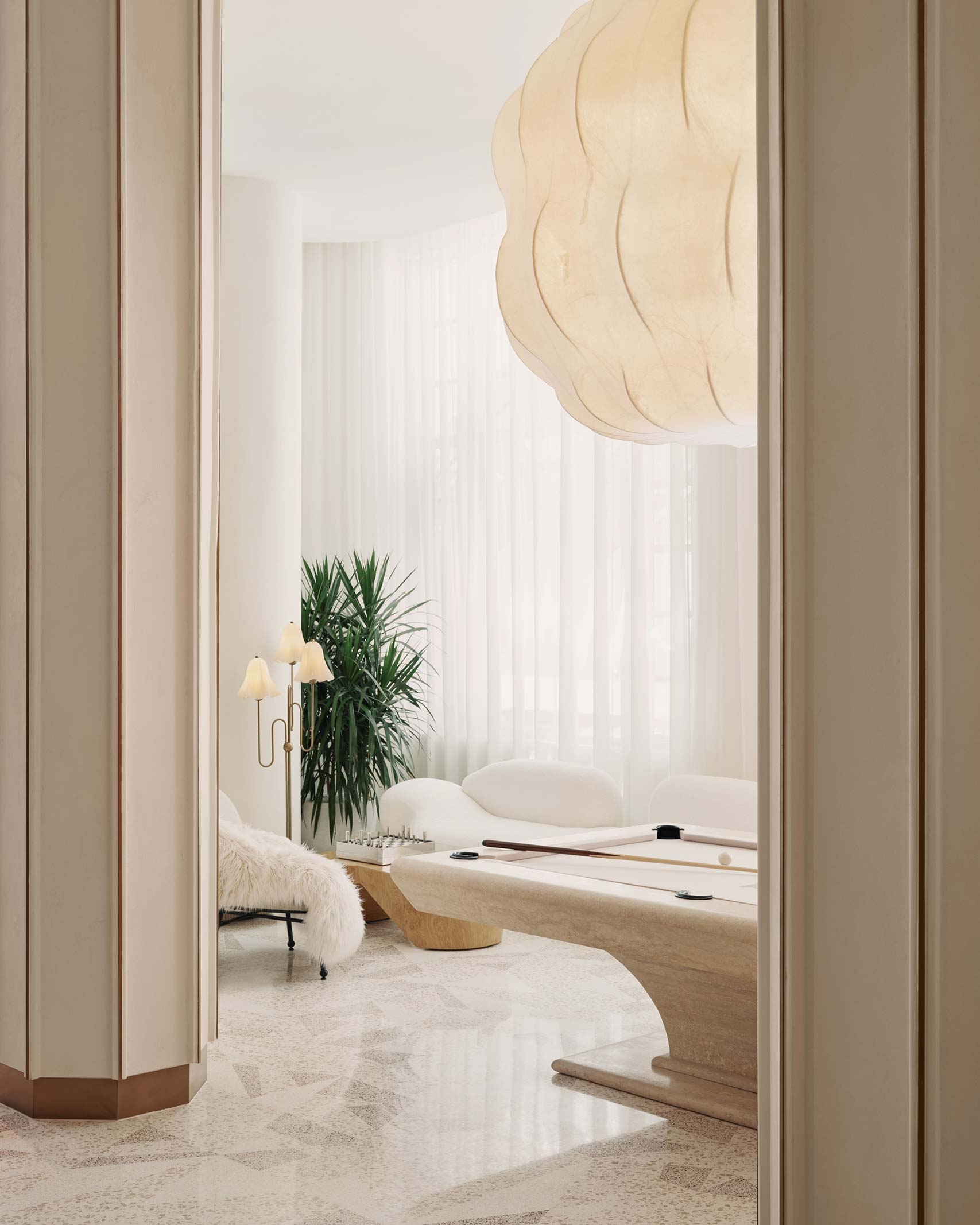
So how do you reopen an icon? It sounds deceptively simple. Restore the building. Upgrade the rooms. Hire talented chefs. Bring in an international, bougie concept or two. Add a spa. But iconic hotels are not just buildings, but memories. The real challenge lay in deciding which memories deserved preservation and which deserved retirement – a process that we can only imagine came with a million opinions.
Delano’s custodians spent six years grappling with precisely that question. The result is less a renovation than a conversation between multiple eras of Miami itself. The building first opened in 1947 under the slogan “Nothing Finer”, a phrase now revived as the name of the hotel’s retail and cultural concept store (curated by Steven Giles, no less). It emerged during a fascinating moment in Miami Beach history, when architects were evolving beyond pure Art Deco into something distinctly Floridian.
Many visitors mistakenly label the Delano Miami Beach as Art Deco. But technically, it isn’t. Completed after WWII, the building belongs more accurately to Miami Modernism – that uniquely local architectural language that softened signature Deco geometry with subtropical optimism.
Having worked closely with preservation priorities and policies, the ‘restoration’ (albeit more a re-creation, … as there wasn’t all that much left that was original to restore) by Elastic Architects has brought back many of the property’s defining architectural features.
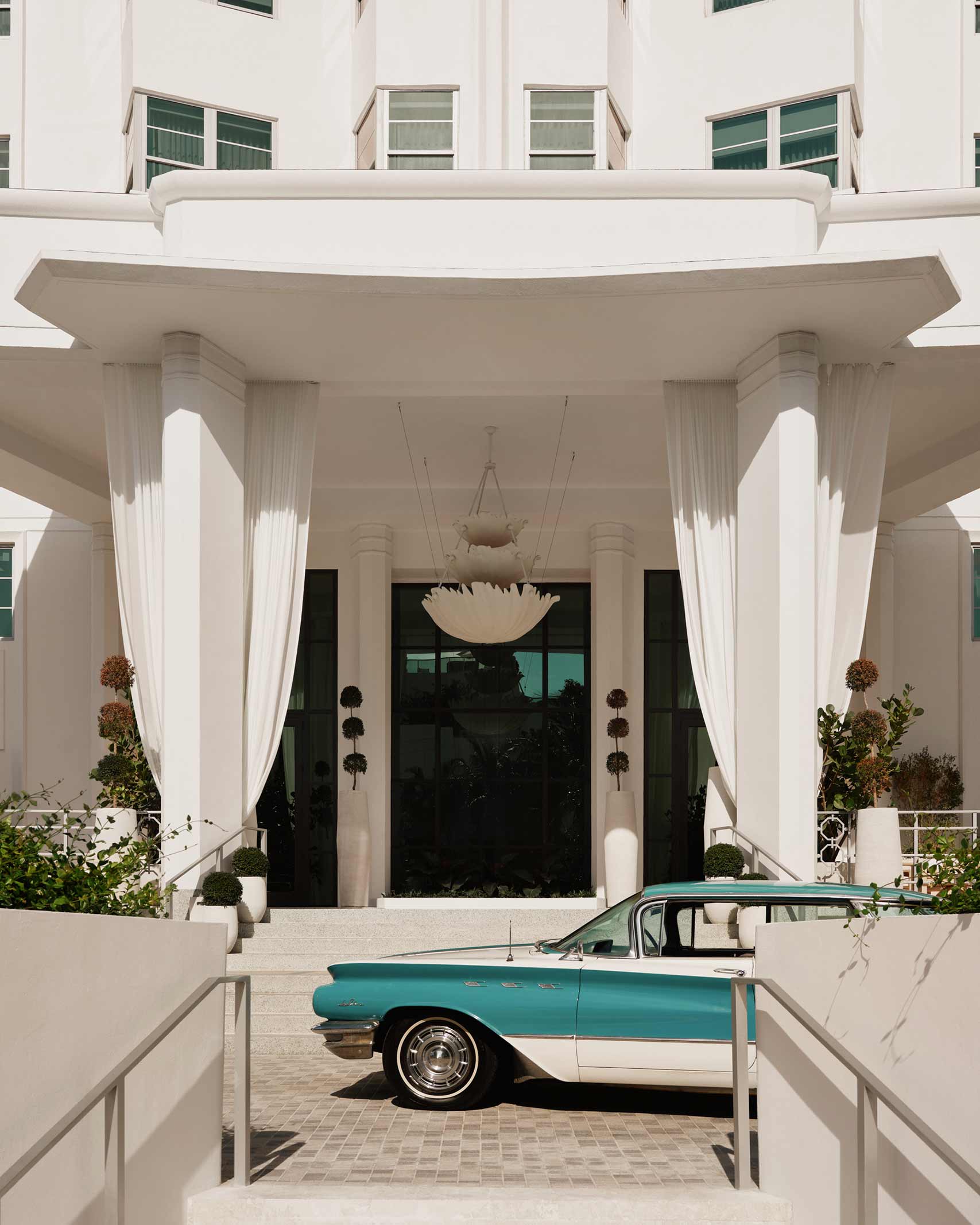
The imposing entrance ramp once again delivers guests into a soaring lobby. Original terrazzo flooring has been painstakingly relaid. Hexagonal columns have been reinstalled. Historic sightlines have returned. The effect is not nostalgic, nor opulent, but grounding. In a city frequently accused of demolishing its past, the property feels refreshingly interested in remembering it.
But then there’s Starck, because the original architecture alone doesn’t explain the Delano’s legend. Few hotel transformations have altered hospitality as profoundly as Ian Schrager and Philippe Starck’s rebrand of the Delano in 1995. White-on-white minimalism became a global design language almost overnight – complete with billowing curtains, ghostly translucence, sculptural furniture and a sense of dream-sequence theatrical whimsy.
We remember walking into Delano Miami Beach for the first time all those years ago and being in awe, and all these years later, that first impression returned.
What struck us most about the current incarnation is that it resists the temptation to favour one chapter over another. Instead, both coexist. Starck’s signature ruched white curtains take pride of place. Elsewhere, their folds become sculptural motifs embedded into walls and architectural details. Curves soften corners. White remains dominant, though no longer as severe. The famous Lucite piano associated with Lenny Kravitz makes a welcome comeback, recalling the property’s musical legacy and hinting at a renewed programme of cultural activation.
Nearby, a giant white stone-and-felt pool table sits beneath a dramatic, oversized cream lantern. Towering plants enhance the beachfront sensibility, giving the space a distinctly subtropical character. The Rose Bar has also made a comeback, reimagined but unmistakably connected to its past. Named after Rose Schwartz, wife of the hotel’s original developer, it is perhaps the most eyecatching expression of Delano’s new philosophy. Here, Art Deco glamour, European grand-hotel elegance and contemporary Miami sophistication converge beneath sculptural lighting, textured velvets and softly glowing sconces.
Everything felt far less “nightclub” than we remembered – and much more “salon”. That distinction matters because the new Delano understands that modern luxury has changed.
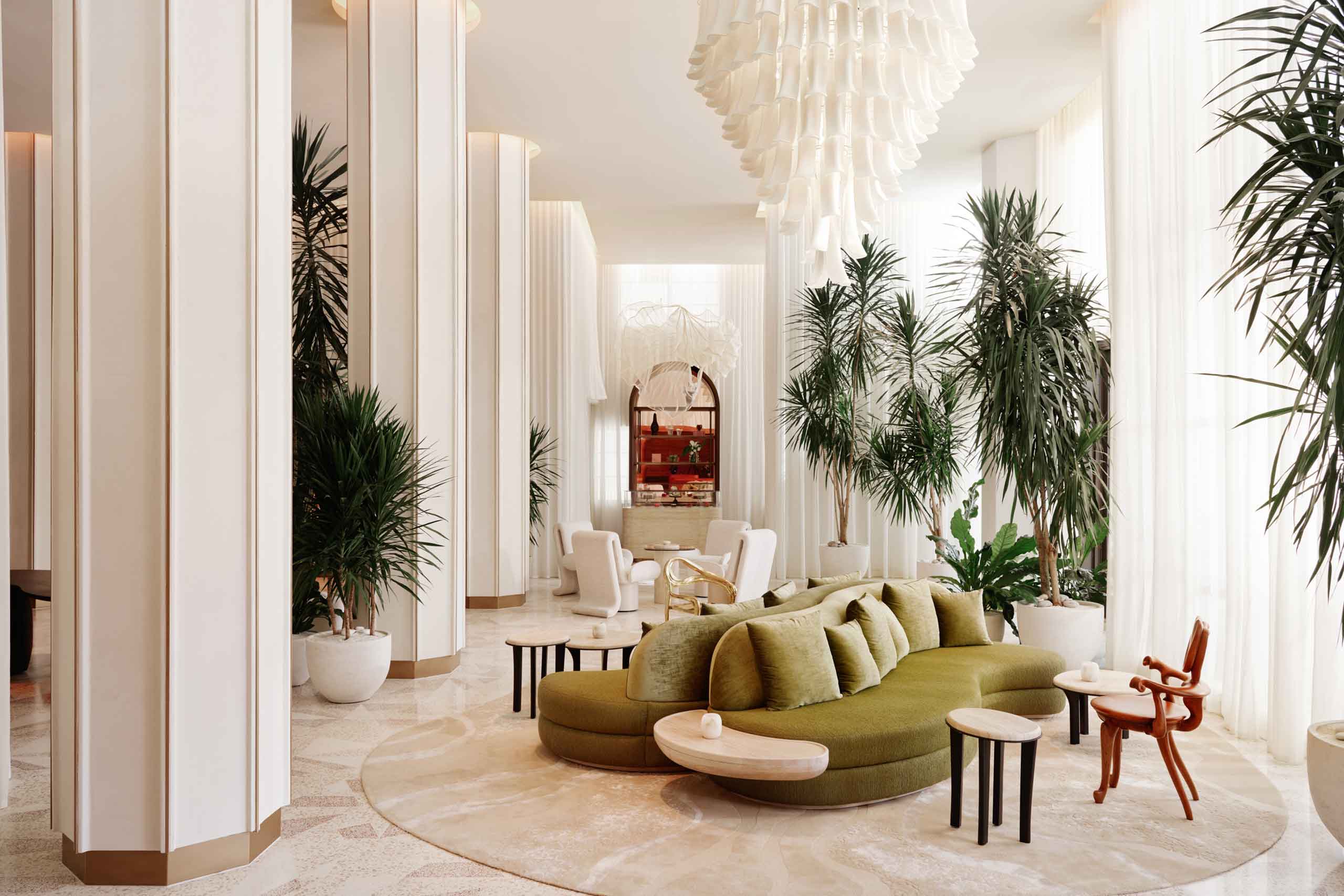
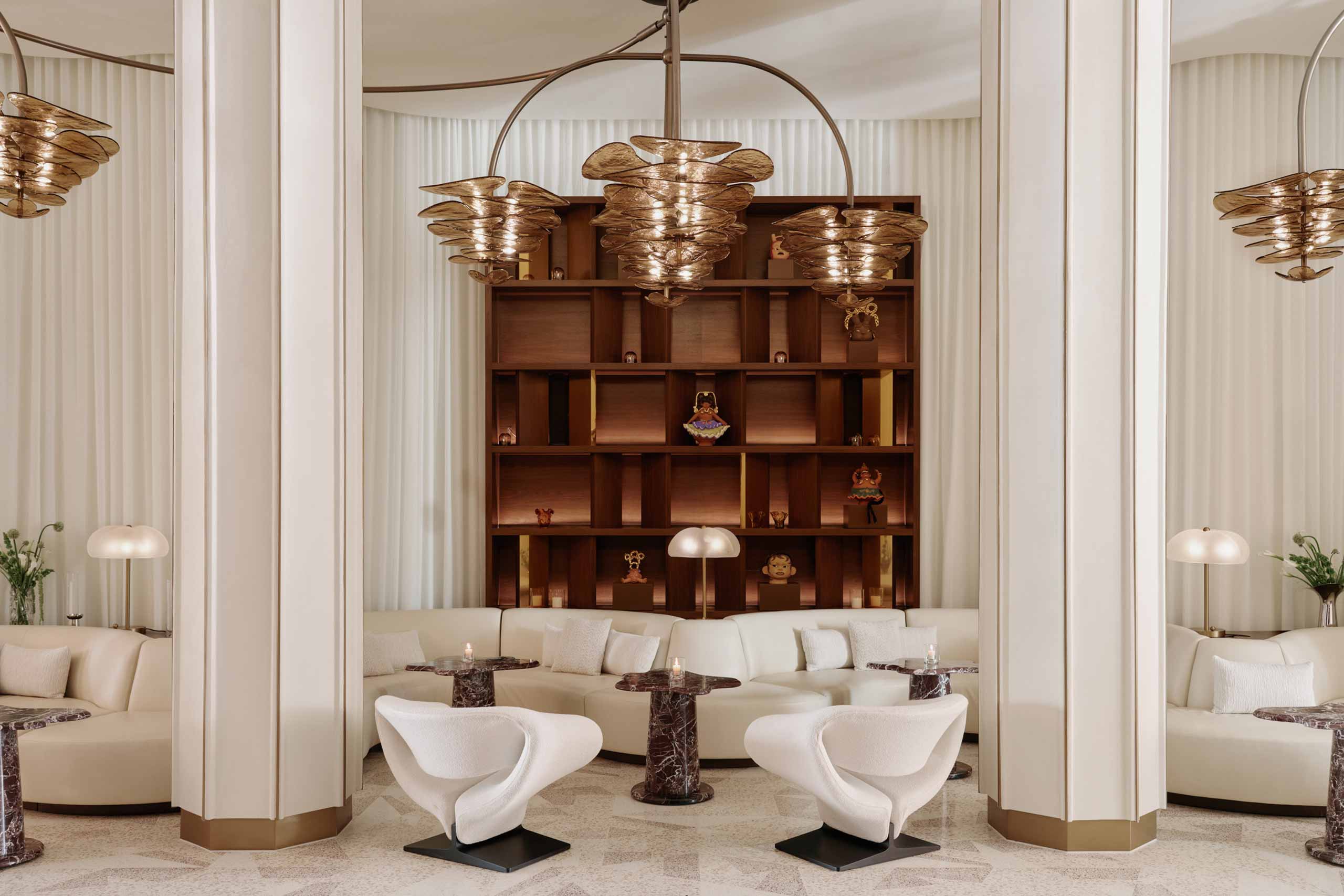
Art Basel transformed the city into one of the world’s most important contemporary art destinations. Design Miami followed. A generation of creatives, entrepreneurs and cultural thinkers relocated here during and after the pandemic, bringing intellectual capital alongside financial capital. The city remains playful, but it has grown up – or at least begun to.
That shift is reflected throughout the hotel. It’s in the art for sure.
We loved that local artists are given a real presence. While this risks familiar language about “supporting the community”, what comes through is something more deliberate: an attempt to root the hotel in the city’s restless creative identity, as it continues to renegotiate itself in real time.
In doing so, the property doubles down on Miami’s role as a hinge between Latin America, the Caribbean and the wider contemporary art world, shifting the narrative away from pure nostalgia for Starck-era spectacle and towards something closer to a living, slightly unruly gallery of place. The emphasis is clear. At its best, it suggests a city that is perpetually in translation – Caribbean symbolism, Latinx diasporic and political memory and Floridian environmental intensity overlapping, colliding and occasionally resolving into unexpected clarity. At its worst, one might say it risks aestheticising complexity into atmosphere. But mostly, it holds together well and forms a visual language that feels like a kind of spiritual cartography of Miami’s cultural DNA.
The standout moment is undoubtedly Haitian artist Édouard Duval-Carrié’s Red vs Blue Skirmish, a surreal, myth-laden centrepiece that refuses the polite distance so many hotel artworks maintain. Drawing on Haitian history, iconography and magical realism, it collapses the historical and the mythological into the same visual field.
Elsewhere, Alissa Alfonso’s sculptural works line the shelves like specimens from a parallel ecosystem: upcycled, hand-stitched forms made from reclaimed textiles and plastics coaxed into biomorphic shapes. Nearby, twins Sydnie and Haylie Jimenez bring a different narrative density – figurative ceramic sculpture and painted, inscribed surfaces that explore themes of Black and brown queer youth, chosen families and subcultural codes rendered with affectionate specificity.
Taken together, these practices form a kind of Floridian surrealism that feels distinctly of this moment: less polished reinvention, more layered accumulation. In a hotel context so often addicted to surface gloss, accumulation may be the more radical gesture.
Natalie Galindo’s oil paintings draw from meditation, tarot, yoga and reconstructed personal archives. Through layered compositions built from altered photographs and symbolic fragments, she creates images that feel like emotional residue – part ritual, part remembering, part refusal to let memory stay still.
This leads neatly to wellness, another pillar for the Delano Miami Beach that had yet to be completed at the time we visited. A forthcoming 1,579 sqm (17,000 sqft) wellness destination – The Source by Delano – centred around social sauna culture signals where hospitality here is heading next. Like the art, the emphasis appears to be on collective restoration. Revival, recovery and renewal are recurring themes throughout the property.
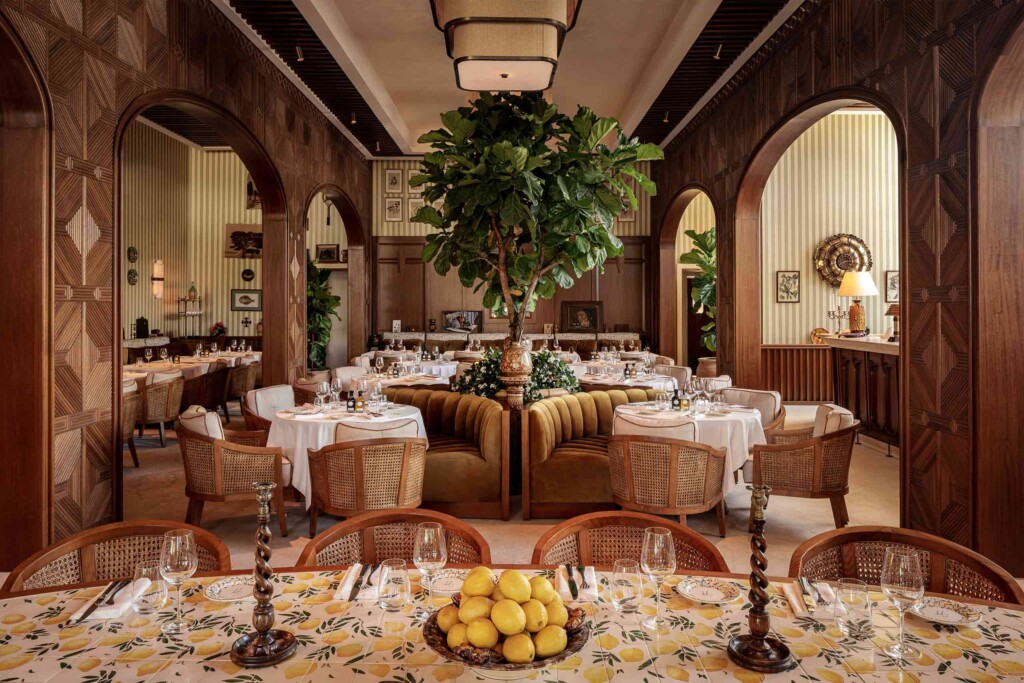
And then there’s Gigi and Mimi, which may sound like a Miami socialite’s lap dogs – but in reality, they function as the hotel’s conceptual anchors.
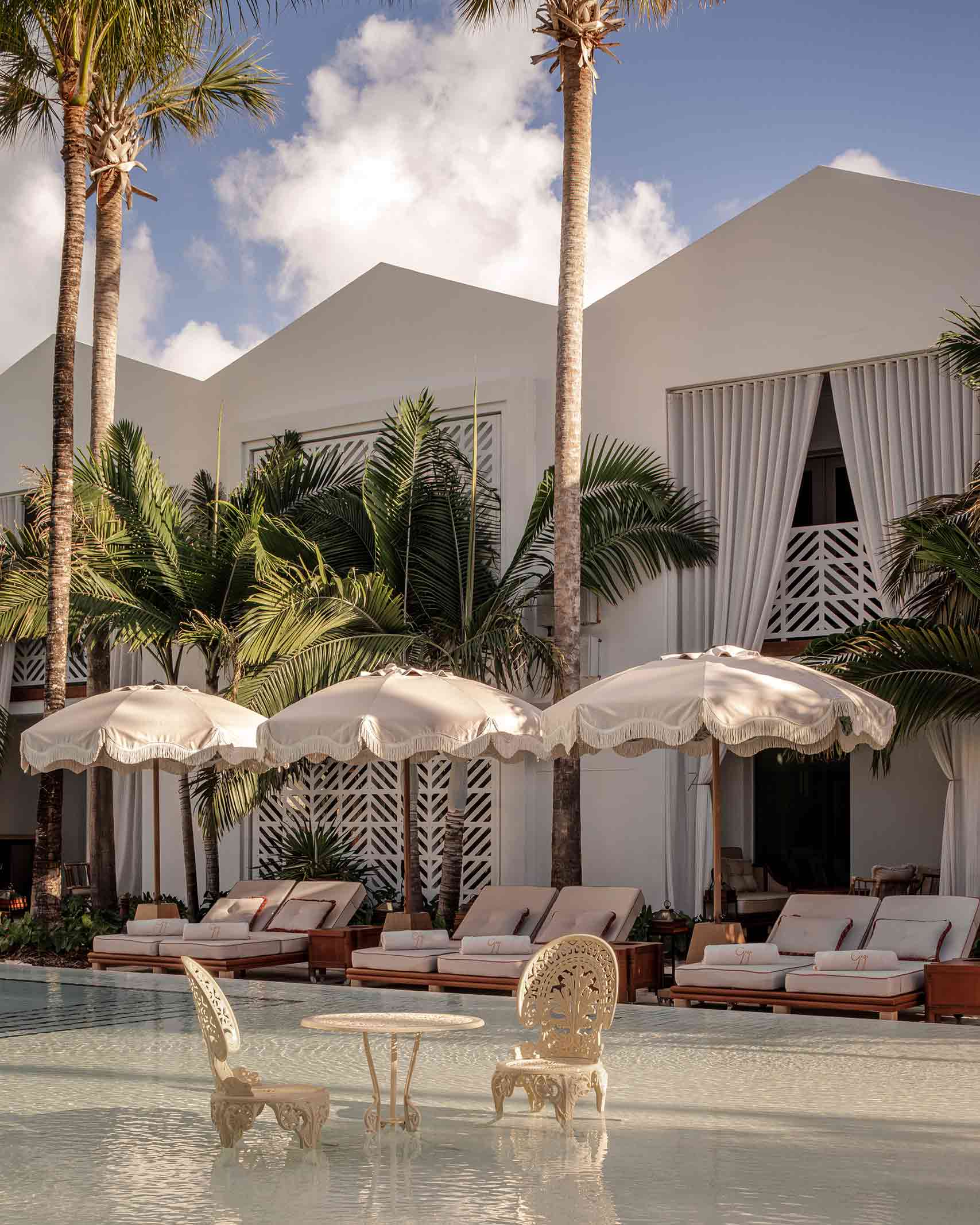
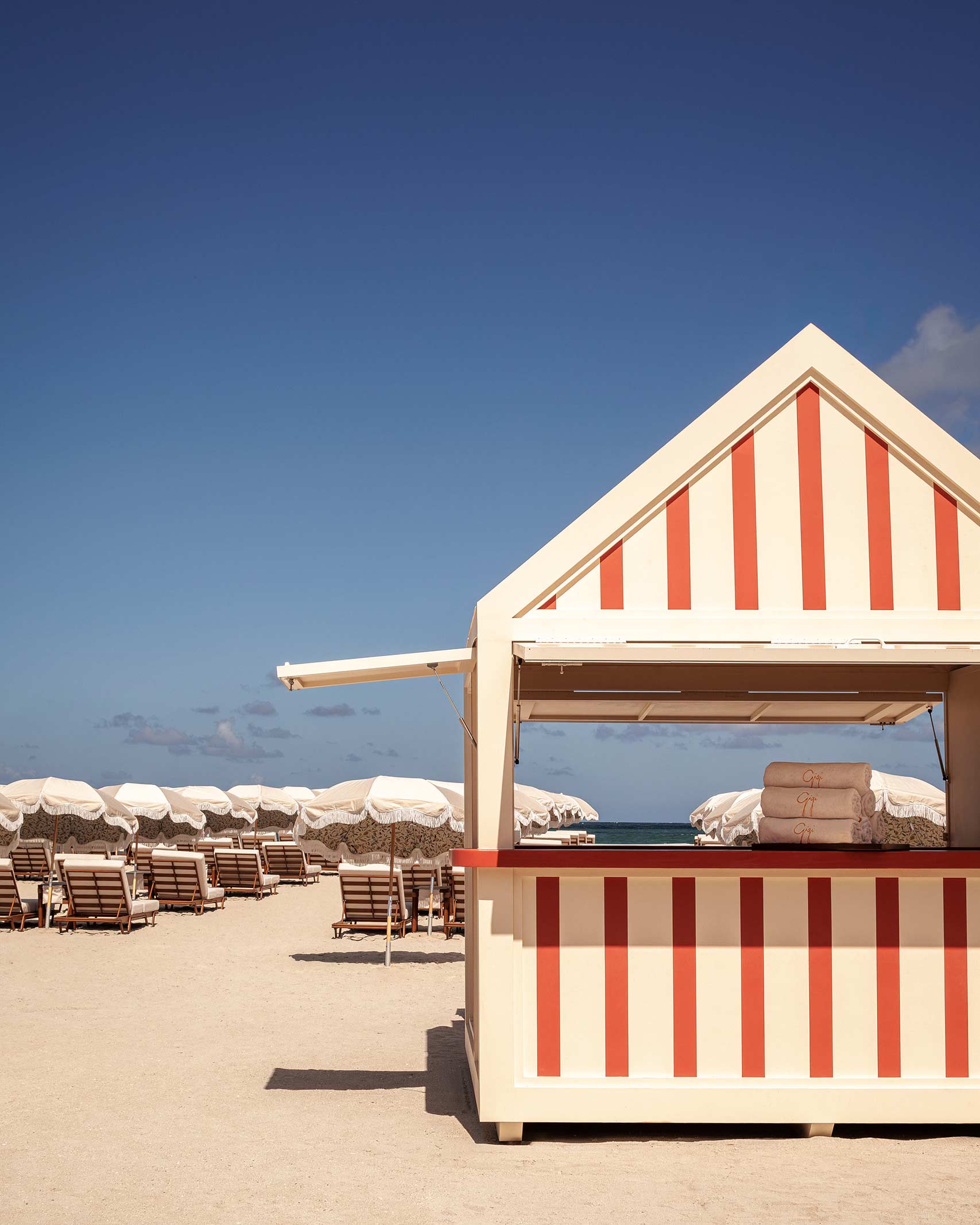
Gigi Rigollato occupies the entire ground floor past the lobby, from restaurant to terrace to pool and beach. Historic photographs reveal that when the hotel opened in 1947, the Atlantic sat considerably closer to the building than it does today. Miami Beach later expanded its shoreline through reclamation. Gigi Rigollato cleverly attempts to reverse that psychological distance to the water, and the journey from lobby to terrace to pool to beach now feels seamless. Umbrellas multiply towards the horizon. Spaces dissolve into one another. The sea – now with Riviera-like chic – feels close again.
Paris Society’s first U.S. outpost feels calibrated for contemporary Miami. The concept leans unapologetically into a curated version of Italian hospitality – trattoria and pizzeria included – where warmth, ritual and indulgence become a kind of social rhythm rather than a guilty pleasure.
Designed by the very OutThere Hugo Toro, one of contemporary hospitality’s most compelling creative talents, the concept wraps the Delano Miami Beach in sunlit Riviera fantasy without descending into cliché. Hugo moves fluidly between architecture, interiors and scenography, often drawing on cinematic references and a heightened romanticism that refuses to stay within the boundaries of “good taste”.
The food, meanwhile, was excellent. The staff was brilliant. The uniforms were colourful and clearly designed with intent and a wink of personality, though in practice, they occasionally felt like they were wearing the staff more than the staff were wearing them.
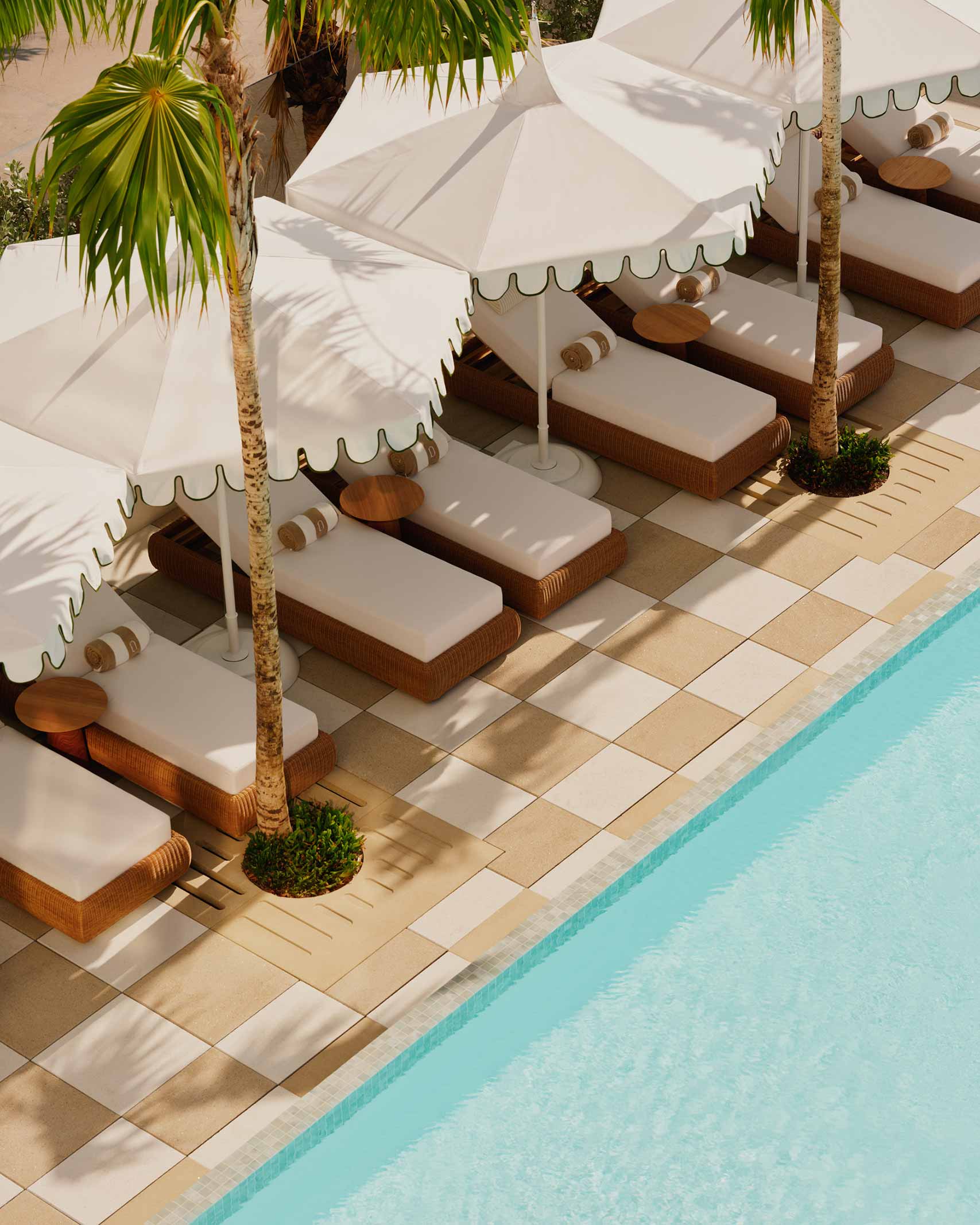
The pool and deck remain something of a living legend – carefully re-polished, as if any real intervention would be sacrilege. It holds on to its proportions, its calm geometry, and its sense of suspended time, and in doing so feeds the nostalgia of those like us who remember its earlier life (especially that afterparty in Bungalow 3)! What has changed is more atmospheric than architectural: a refresh here, a subtle recalibration there, but never enough to disturb the spell, although the sunbeds are still all squashed together a little too closely for any real privacy. Some things don’t change.
Perhaps what will feed new memories is Mimi Kakushi – the new first-floor private members’ and residents’ wing, complete with its own pool. The restaurant here has, for us, become one of Miami’s most theatrical dining experiences. Inspired by 1920s Osaka and its fascination with Western modernity, it transformed cocktail ordering into performance art. We selected our drinks through film-inspired viewing devices, while inventive martinis arrived with flourish. The food is informal rather than omakase. The mocktails were exceptional.
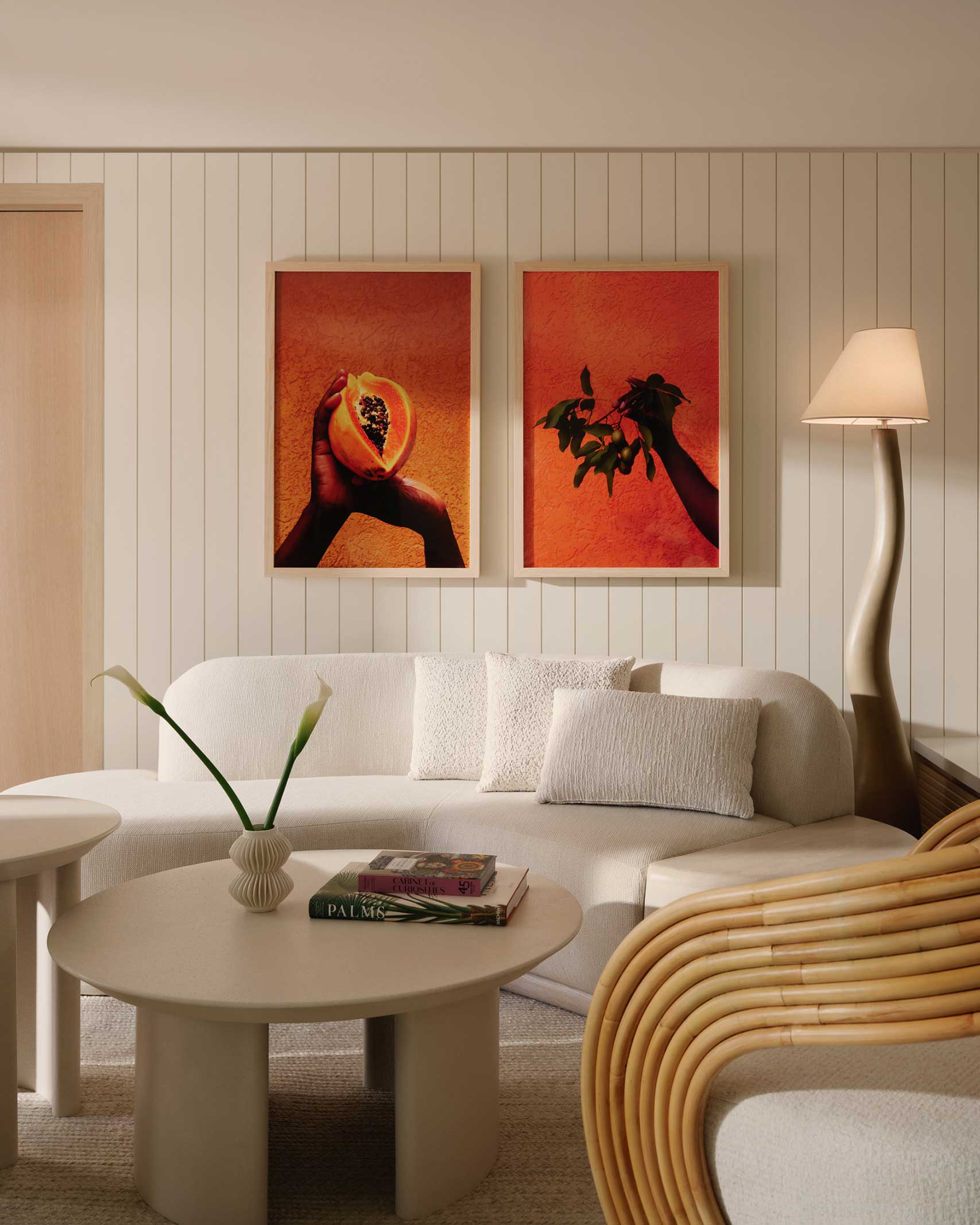
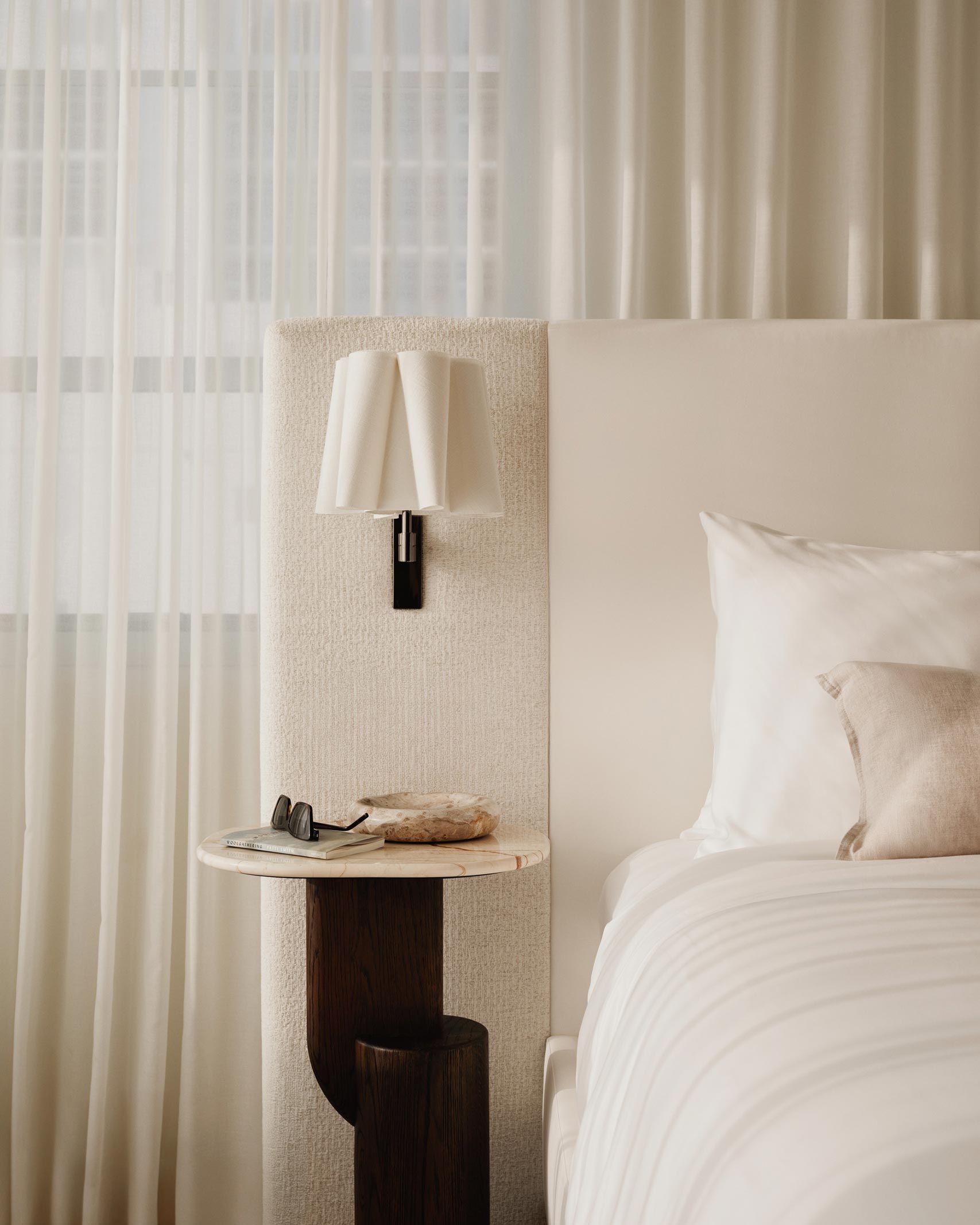
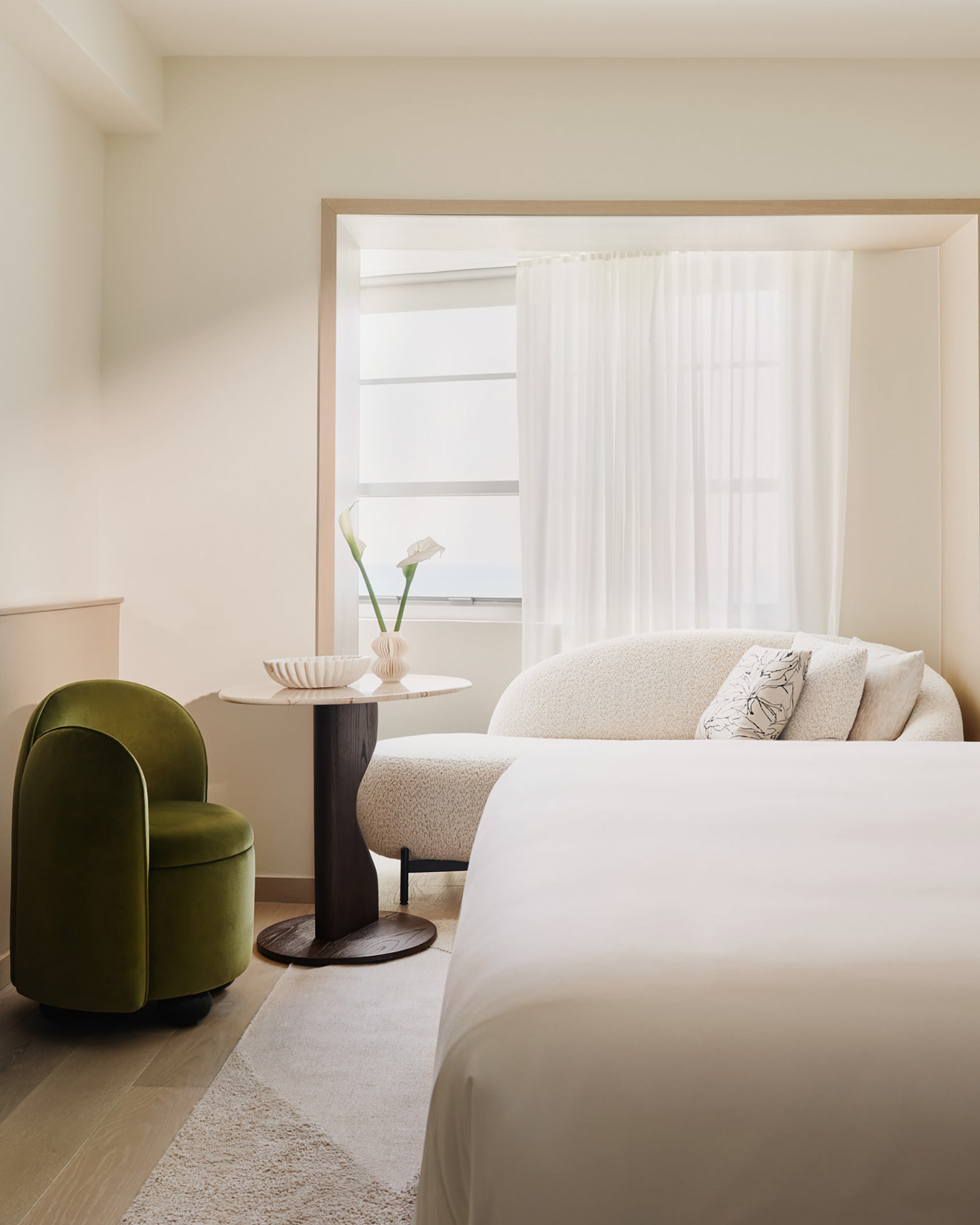
At 171 keys, including suites, bungalows and penthouses, the hotel remains relatively intimate by South Beach standards, and its new incarnation represents a drop of about 20 rooms since the Schrager-Starck era. There are many different orientations and views – sea view, partial sea view and city – shaped by the building’s heritage layout, so it’s worth choosing your vista carefully.
Accommodations lean heavily into sanctuary. Everything is white, calm and whisper-soft. At first glance, ours felt underwhelming, even a little bland. Perhaps the Ennismore big-brand influence came into play here – we’ve stayed in several SLS and Mondrian properties around the world, and they all share a similar design sensibility. There was a certain chain-hotel feel to the fixtures and fittings, particularly in the white marble bathrooms and monochrome detailing. It is, undoubtedly, an homage to Starck, though these days that does not stop us from wishing for a little more. Still, comfort was unquestionable, and perhaps serenity itself is the new luxury here, but compared to the conceptual richness of the public spaces, our suite seemed cautious, raising the question of whether more Miami storytelling should have found its way upstairs.
But closer inspection revealed thoughtful details – the enduring Starck references, elegant curves, layered textures, “D” monogrammed lumbar pillows, bespoke amenities including vitamin patches, branded water bottles, canvas beach bags, an elegant writing pen in a green velvet box and edible chocolate teddy bears. There were also the expected (or perhaps unexpected, even) international trimmings – Byredo cosmetics, Dyson hair-tech and European coffee machines.
So what to make of this revival? In truth, it feels carefully pitched rather than loudly declared – less about reclaiming a lost crown than refining a familiar silhouette for a new era of Miami. The OutThere guests who will love it most are the design-oriented travellers who want nostalgia without dust, the culture-led luxury seekers who expect art to do more than decorate and a new generation of Miami-adjacent creatives for whom the city is as much a playground as it is a permanent address.
There is still enough of the old Delano Miami Beach in the bones – the pool, the geometry, the quietly cinematic pacing – to satisfy returning romantics, but it is now tempered by a softer sensibility that speaks to contemporary luxury’s preference for texture and depth over spectacle.
But for us, the most interesting thing about the new Delano was its idea of ‘membership’. Yes, this sits within a fast-rising global trend of hotels evolving into member-led spaces, but beyond the notion of paid access, there is a subtler ambition at play: the shaping of a genuine sense of community. After all, hospitality’s most valuable currency today is no longer exclusivity but belonging. Increasingly, people travel to find affinity, rhythm and shared cultural language. From its earliest incarnation, the hotel was never just about rooms and beds, but atmosphere as social architecture. And this is where we think the Delano’s future most convincingly sits: not in recreating 1949 or 1999, but in creating reasons for people to return from now right up until 2049, and feel like they can be themselves while doing it.
Belonging is never just a strategy; it is also a signal – sometimes subtle, sometimes profound – of who a place is really for. In that context, there is something quietly significant about what the hotel represents in a more unsettled contemporary America. Miami has always been a city shaped by migration, reinvention and the constant layering of diasporas, a place where cultures, identities and perspectives converge, and where art, food and community are continually enriched by diverse lived experiences from across Latin America, the Caribbean and beyond. The Delano’s evolving ecosystem appears to embrace that reality through its brand, art, cultural programming, supper clubs, wellness rituals and creative exchanges that reflect the city’s pluralistic character. In doing so, it feels less like a hotel imposing an identity and more like one attempting to reflect the rich, dynamic and ever-evolving community that surrounds it.
It positions itself – at least aspirationally – as a place of reassurance through familiarity and openness, where difference is woven naturally into the fabric of the experience. For generations of Latinx guests who have long considered Miami a cultural home away from home, as well as LGBTQ+ OutThere travellers and, increasingly, their families, the Delano Miami Beach can be read as a space that offers a sense of ease and recognition. Not in an overt or performative way, but through the quieter assurance that comes when a place reflects the diversity, complexity and cultural richness of the community around it.
Photography by Robert Reiger and Chris Tamburello, courtesy of Delano Hotels

Perfect for
The Culturalist

Fly into
MIA

Right on time
GMT -4
While you’re OutThere
Spend an afternoon exploring the cultural corridor between the Design District and Little Haiti. Most visitors know Miami for the beach, but some of its most interesting energy now exists away from the shoreline.
Begin in Miami Design District, where world-class architecture, contemporary public art and luxury fashion coexist with ambitious galleries and design installations. Then continue north into Little Haiti, one of the city’s most culturally significant neighbourhoods, where Haitian art, music and cuisine offer a very different perspective on Miami’s identity.
A visit to Little Haiti Cultural Complex provides insight into the community’s artistic traditions, while nearby independent galleries and studios reveal why Miami increasingly sees itself as a bridge between the Caribbean, Latin America and the contemporary art world.