


It’s hard to imagine a more otherworldly setting than that of this quietly sumptuous desert lodge, set in its own lush river oasis in Namibia’s far-flung north west. Elegant design, referencing the land’s Himba custodians, and seamless service conspire to further heighten guests’ glorious desert immersion at Serra Cafema.
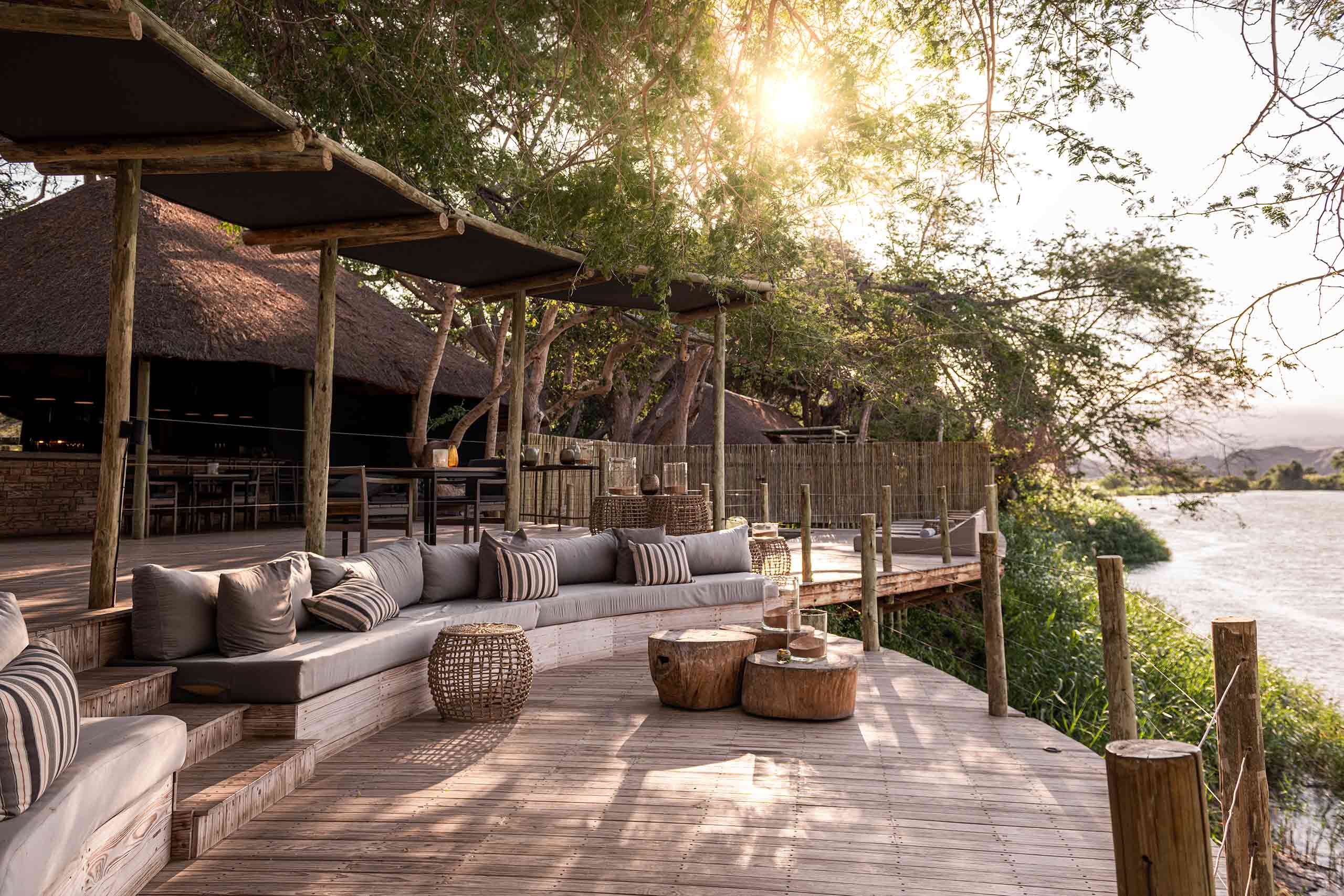
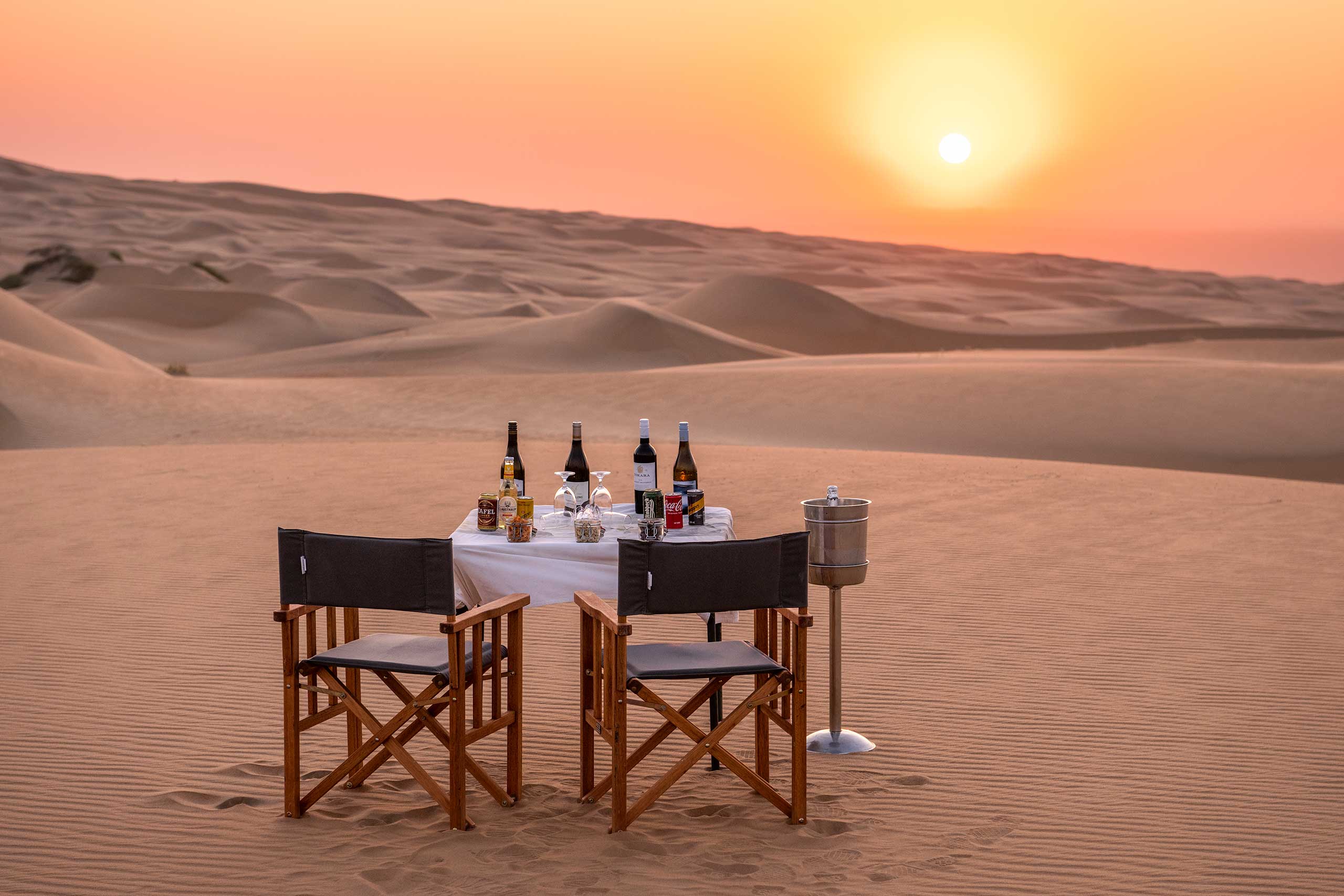
When darkness falls in Namibia, so, notably, does the temperature. But any discomfort from cool night air nipping our faces was far outweighed by the rewards of lingering on our partly al-fresco lounge at Serra Cafema, and a blanket and a whisky soon warmed our goose-pimpled flesh as we settled to enjoy the sights and sounds of nature. Above, a meteor plummeted through space in a blaze of fire. Beneath, the River Kunene rushed onwards towards the Atlantic. Around us, the wind picked up pace. Just visible in the celestial light were silhouettes of Angola’s mountains. Hunkering deeper into our blankets, we made a deal – we would starve ourselves of sleep so that we could glut our senses on that night sky with its golden sliver of waxing moon and trillion stars, and on the ripples in the water we told ourselves were surely crocodiles.
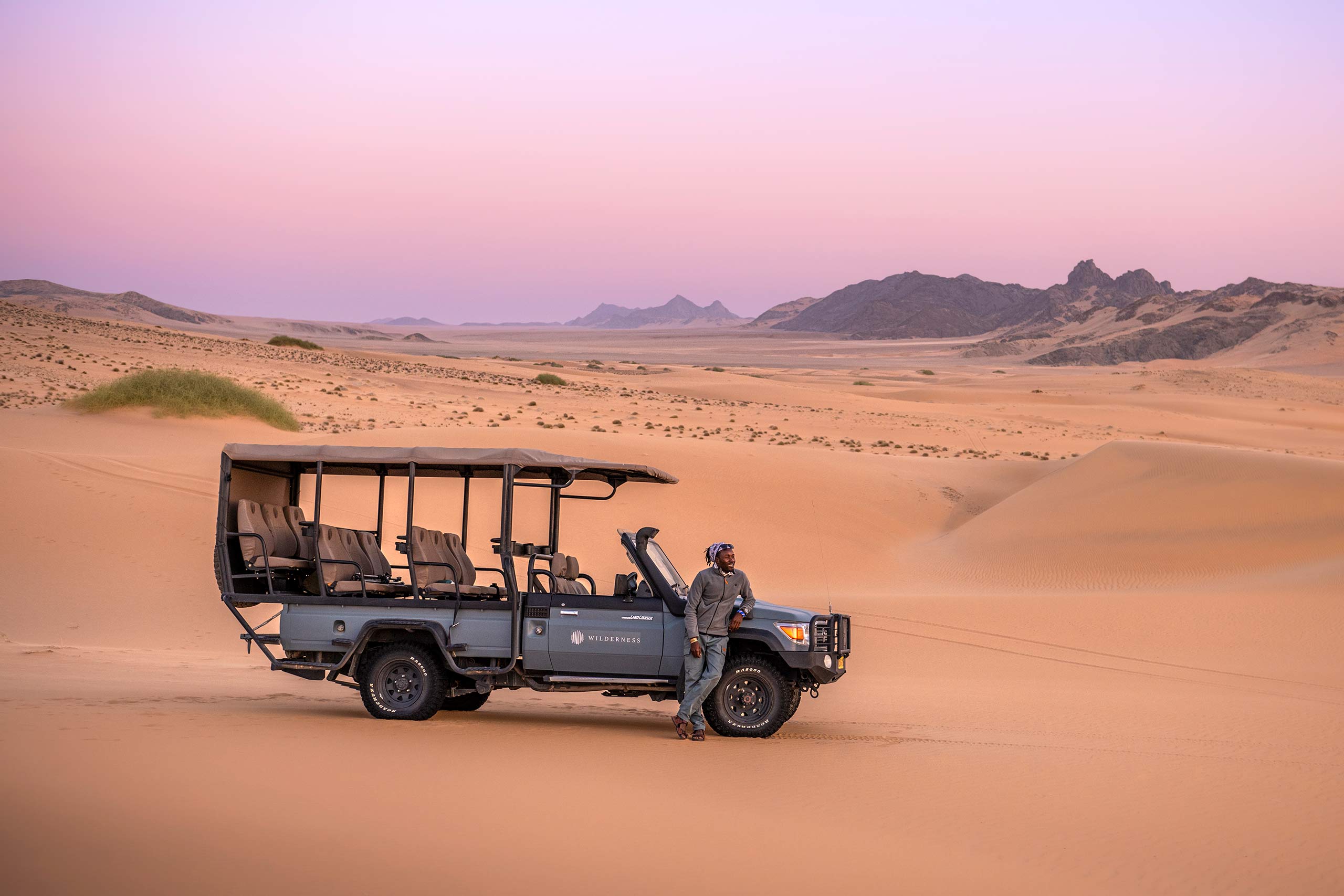
Hours before, we had landed on a tiny airstrip, then climbed aboard a four-by-four for a 90-minute journey to the camp through a desert flanked by mountains, over cracked earth studded with parched shrubs, and otherwise past zero signs of life. Its mesmerising nothingness made this the most extraordinary environment we have ever seen. “We might see baboons”, said our guide, Michael. We didn’t. “And oryx”. We saw oryx tracks and, a while later, a dot in the far distance Michael assured us was a male of the genus.
A 15-year drought has brought desolation to a landscape that was already starkly barren, and has altered, but not stolen, its rugged beauty, which plays out in ever-shifting sands and shadows. After many miles of immersion in this on our journey, Serra Cafema rose like a mirage, and our eyes took a moment to adjust to the sudden burst of vivid green plants and Acacia albida trees. In this world, where there is water, life springs abundant, and, stepping out of the Jeep, we saw red-eyed bulbuls hopping on the central building’s elegant bar. The human welcome was more delightful still. Staff greeted us with smiles and a song of welcome, offering us cold, scented flannels for our desert-dusted faces, and iced teas, and their care and anticipation of our every need and whim were unwavering throughout our stay.
| Perfect for | Fly into | Right on time |
| The Adventurer | WDH, then lodge’s own airstrip by light aircraft | GMT +2 |
| While you’re Out There |
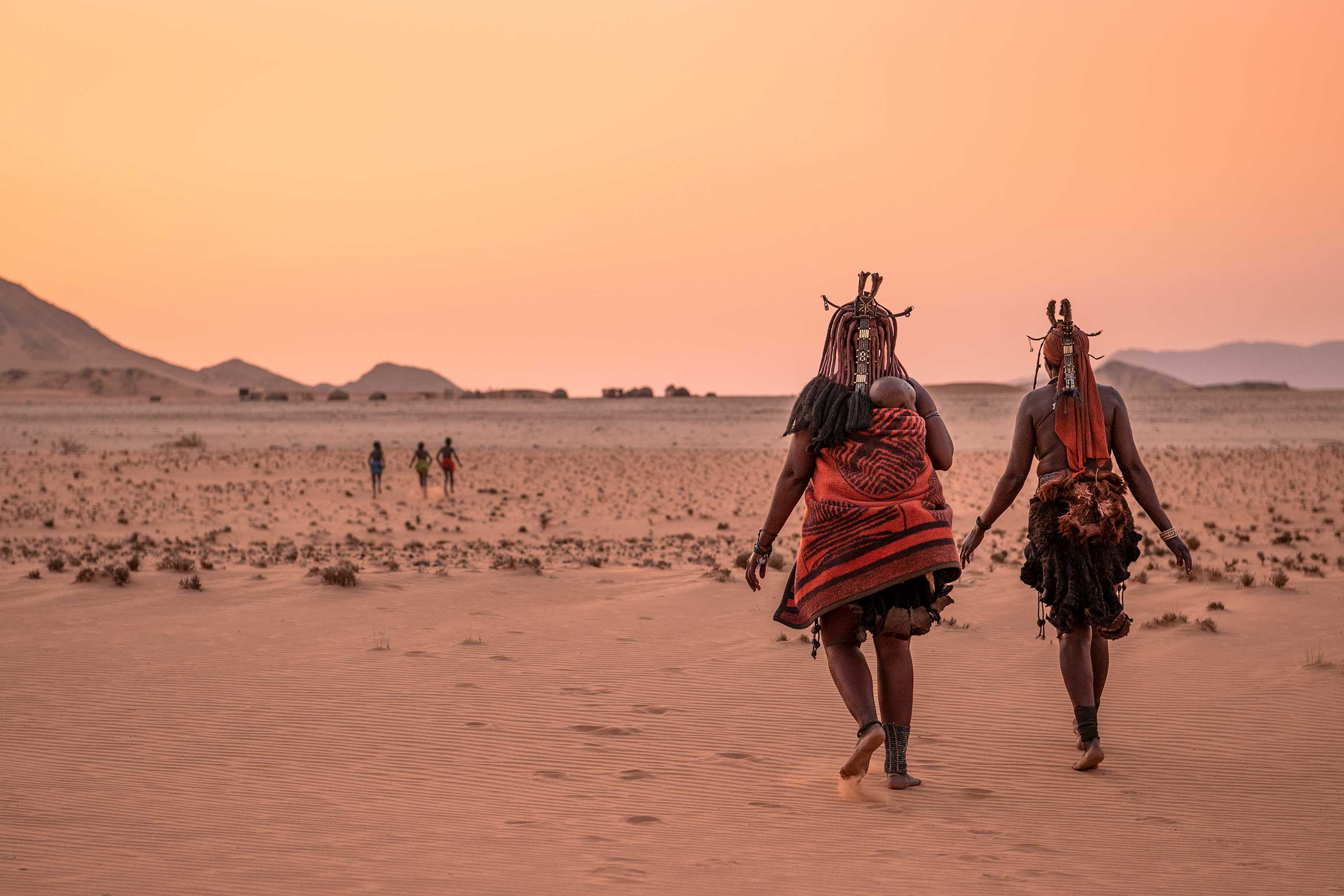
| More than 50,000 semi-nomadic Himba people live in Namibia, and you can visit one of their villages – a circle of domed thatched mud huts – while at Serra Cafema. It’s an extraordinary encounter with a tribe that lives much like they did centuries ago, with the added problems brought about by climate change. It is an insight into a way of life most visitors would never be able to imagine. |
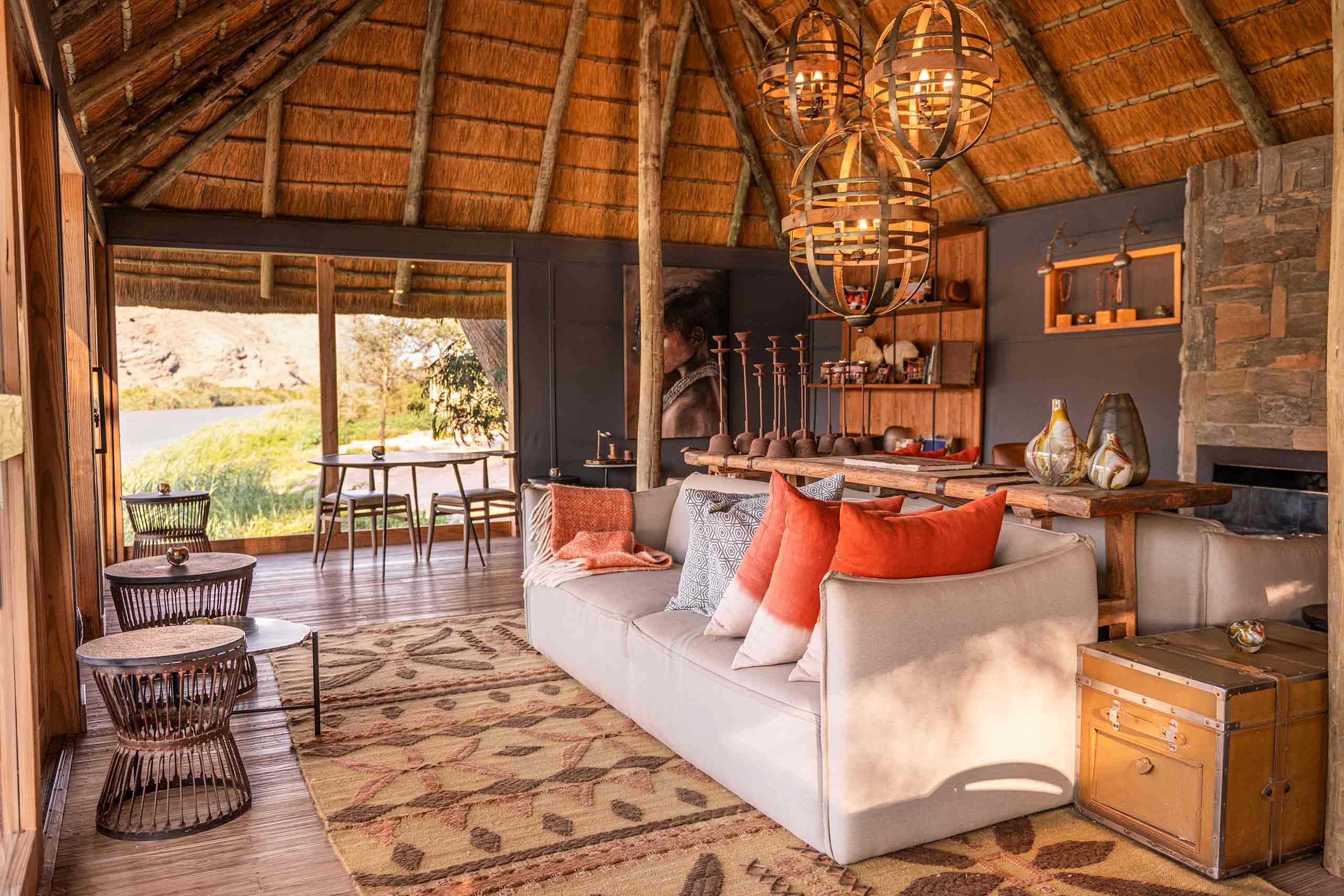
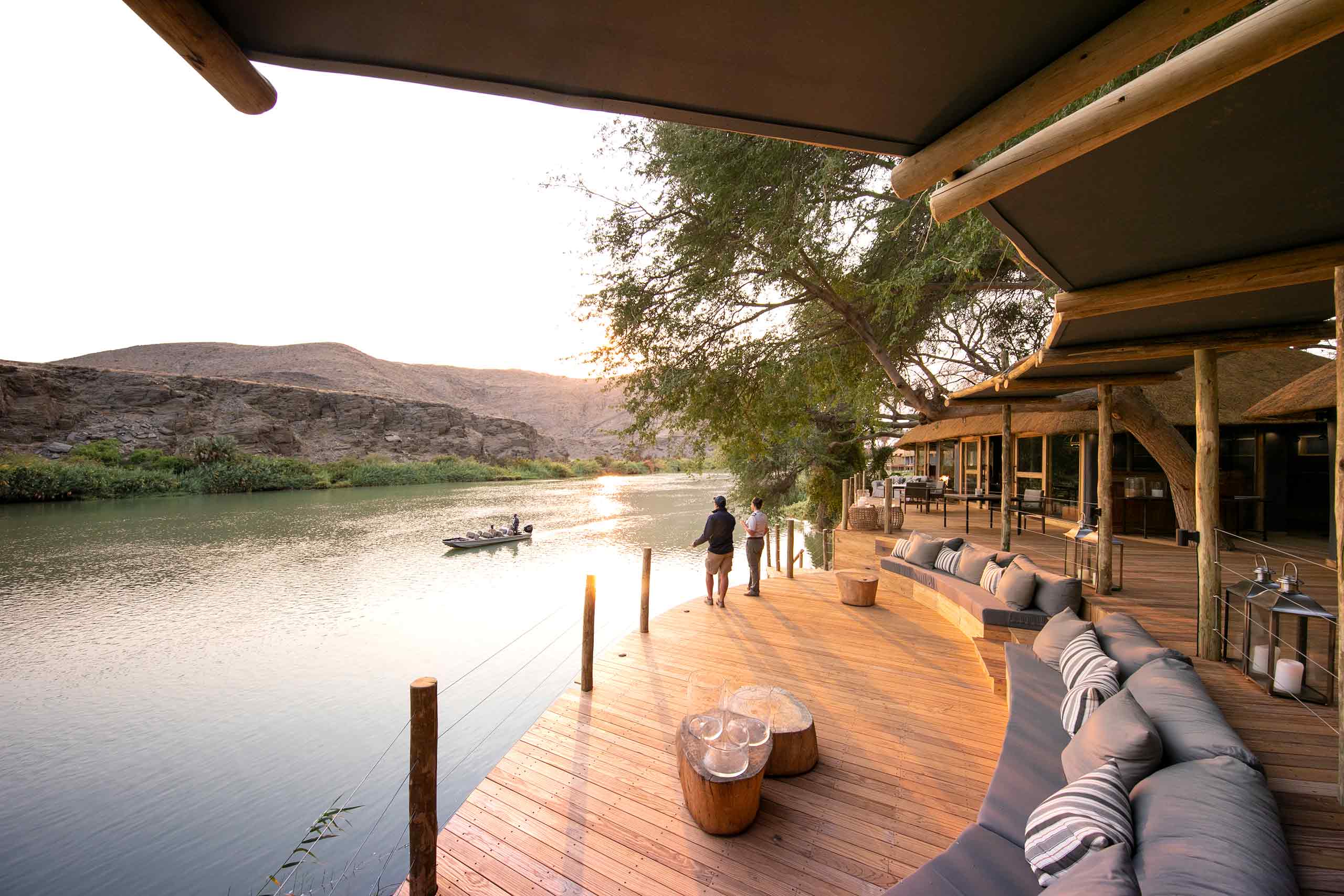
Built largely of wood, with local stone used for detailing and feature walls, solar-powered Serra Cafema sits in serene harmony with its surroundings. Constructed as a rustic-luxe, tree-shaded viewing platform for its glorious location, the central, communal area has a library, a bar, a plunge pool, and a restaurant with a remarkably varied menu. As vegetarians, we had wondered how well the kitchen would fare, with all supplies flown in, but Serra Cafema‘s veggie food seduced even the most confirmed carnivores among our fellow guests, with roasted, spiced tahini-laced cauliflower and a fabulous wild rice tabbouleh with red cabbage chutney standouts. Freshly made bread, pastries and cakes were also beyond delicious.
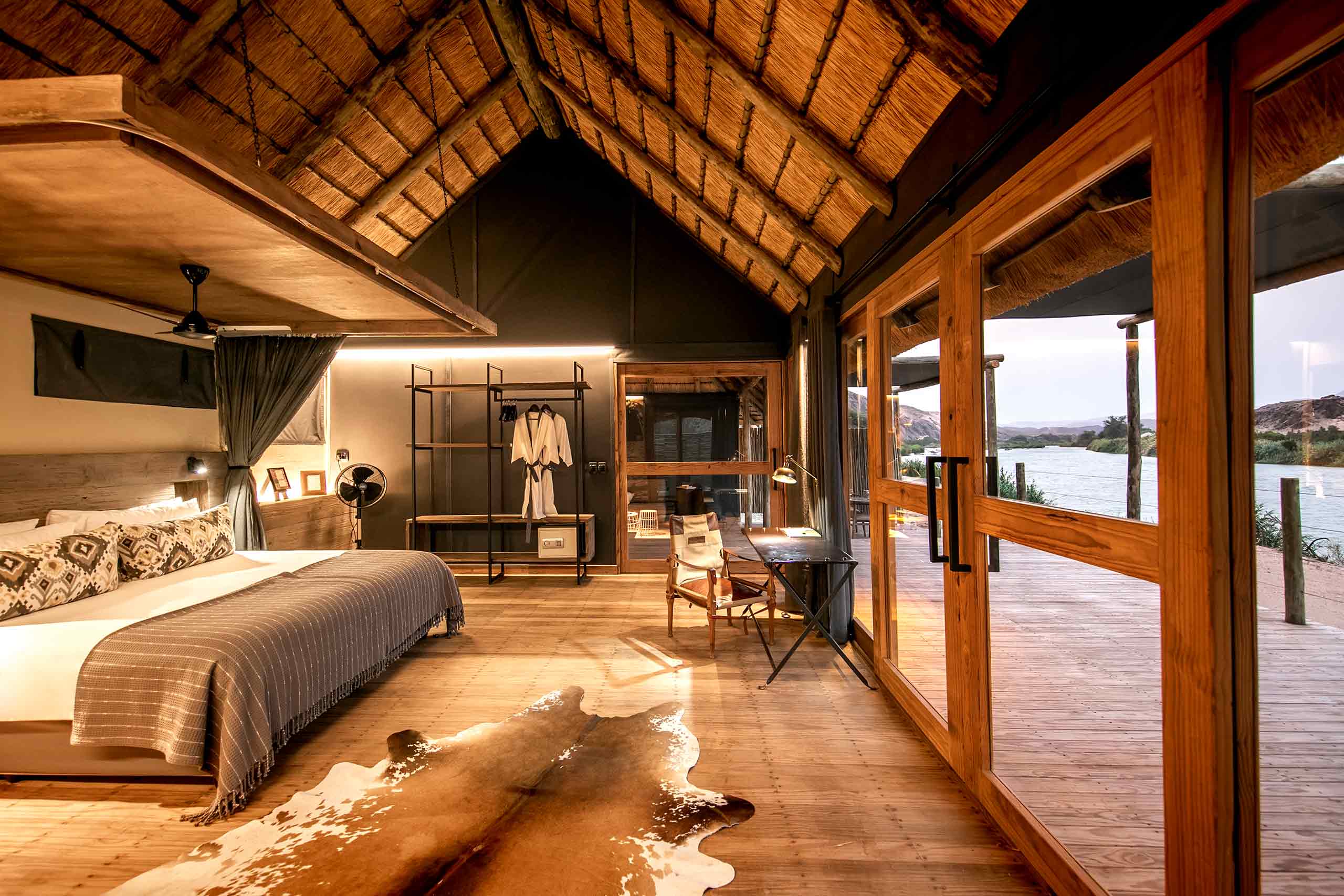
Guest accommodation comprises eight spacious thatched villas and one honeymoon suite, all of whose design references the traditional dwellings of the Himba people – the semi-nomadic, pastoralist tribe which owns this extraordinary land. Like the rest of the camp, these are raised on stilts and linked by decked walkways, and look over the Kunene to the mountains of Angola’s Iona National Park. Each has a private deck and separate lounge area, furnished with sofas and a generously stocked fridge. Villas include huge bedrooms, indoor and outdoor showers, and dressing areas with twin basins, and are elegantly decorated in the palette of the desert. And yet more delights await on the experiences menu, which includes cruising on the Kunene, nature hikes and drives and quad biking among the dunes.
www.wildernessdestinations.com
Photography courtesy of Wilderness