

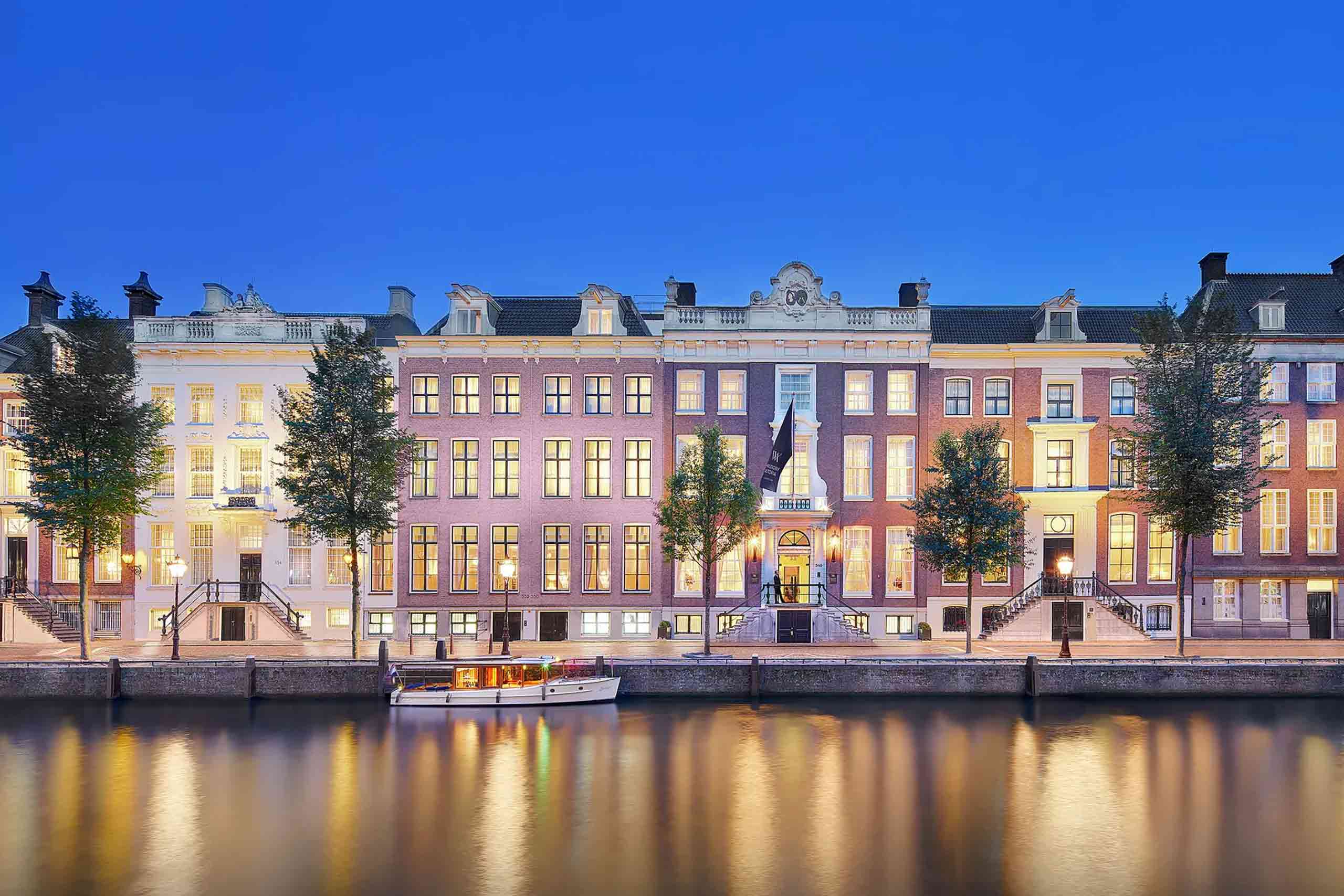




Within a former bank vault and spread across not one but six interconnected 17th-century canal houses, the Waldorf Astoria Amsterdam delivers the quiet confidence of its eponymous global luxury brand, framed within one of the city’s most compelling historic settings. For us, this was not simply a stay, but a carefully composed immersion in layered history, cinematic interiors and a hushed, almost conspiratorial sense of luxury – as though the most considered elements of Amsterdam had been quietly gathered and refined under one roof. Set along the UNESCO-listed Canal Ring on the elegant Herengracht, it unfolded as a rare architectural constellation that revealed itself slowly and with real drama, where checking in felt like stepping into a living, curated expression of the city itself – shaped as much by a deep understanding of refined hospitality as by its history.
The Waldorf Astoria Amsterdam understands drama not as spectacle but as sequence. Arrival, transition, reveal. And in Amsterdam – a city that has always excelled at concealment behind symmetry – that feels entirely appropriate.
Our arrival at the hotel was met with a sense of theatre in understatement. The canal-side entrance is discreet to the point of humility, marked only by the gentle choreography of doormen in impeccable livery who appear almost pre-programmed in their elegance. Luggage disappears with soft efficiency. The city outside recedes. Then, through a set of heavy timber doors, the tone shifts.
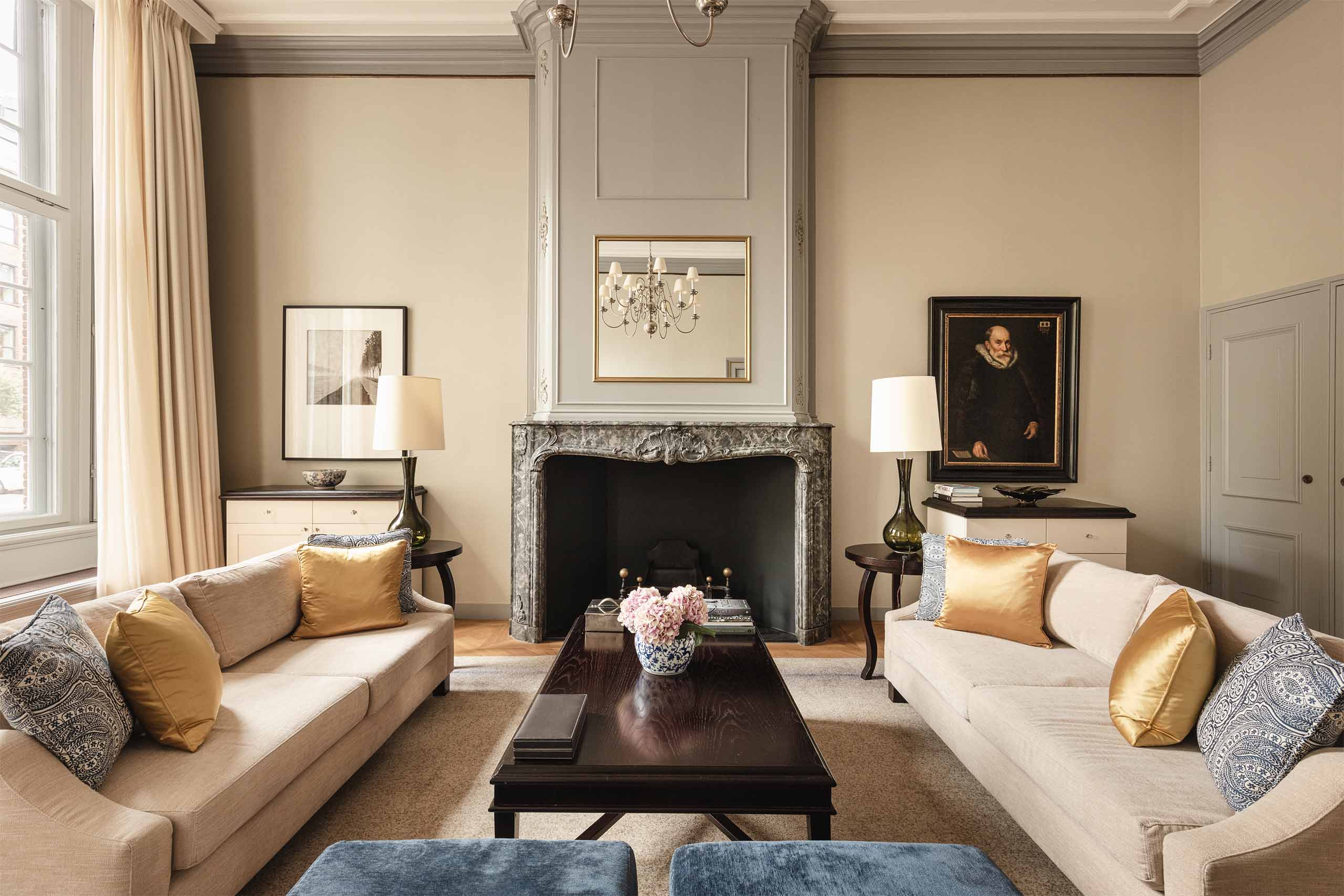
Inside, what immediately struck us was not opulence in the conventional sense, but the luxury of light. High ceilings, ornate cornicing and 17th-century detailing are rendered in a palette of whites and soft neutrals, allowing the architecture itself to breathe. Rather than overwhelming our senses, the interiors felt deliberately edited. The designers have carefully turned down the volume on history just enough for contemporary life to move comfortably within it.
Yet the building’s layered past is central to its identity. Six canal palaces, once home to wealthy merchants and even a former Mayor of Amsterdam, have been stitched together with remarkable subtlety, creating a satisfying friction between civic heritage and private luxury – a reminder that in Amsterdam, affluence was embedded in architecture long before modern notions of luxury took hold.
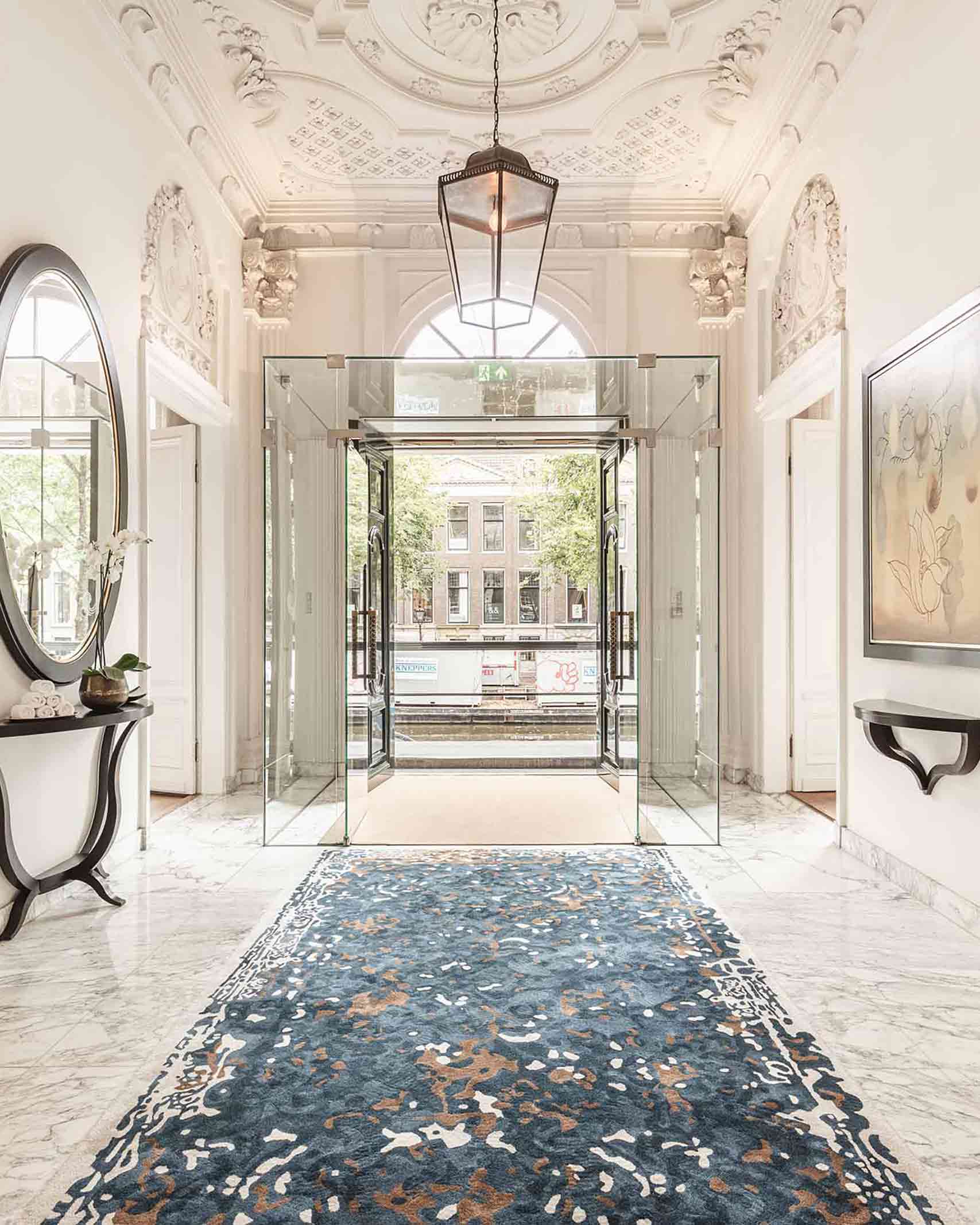
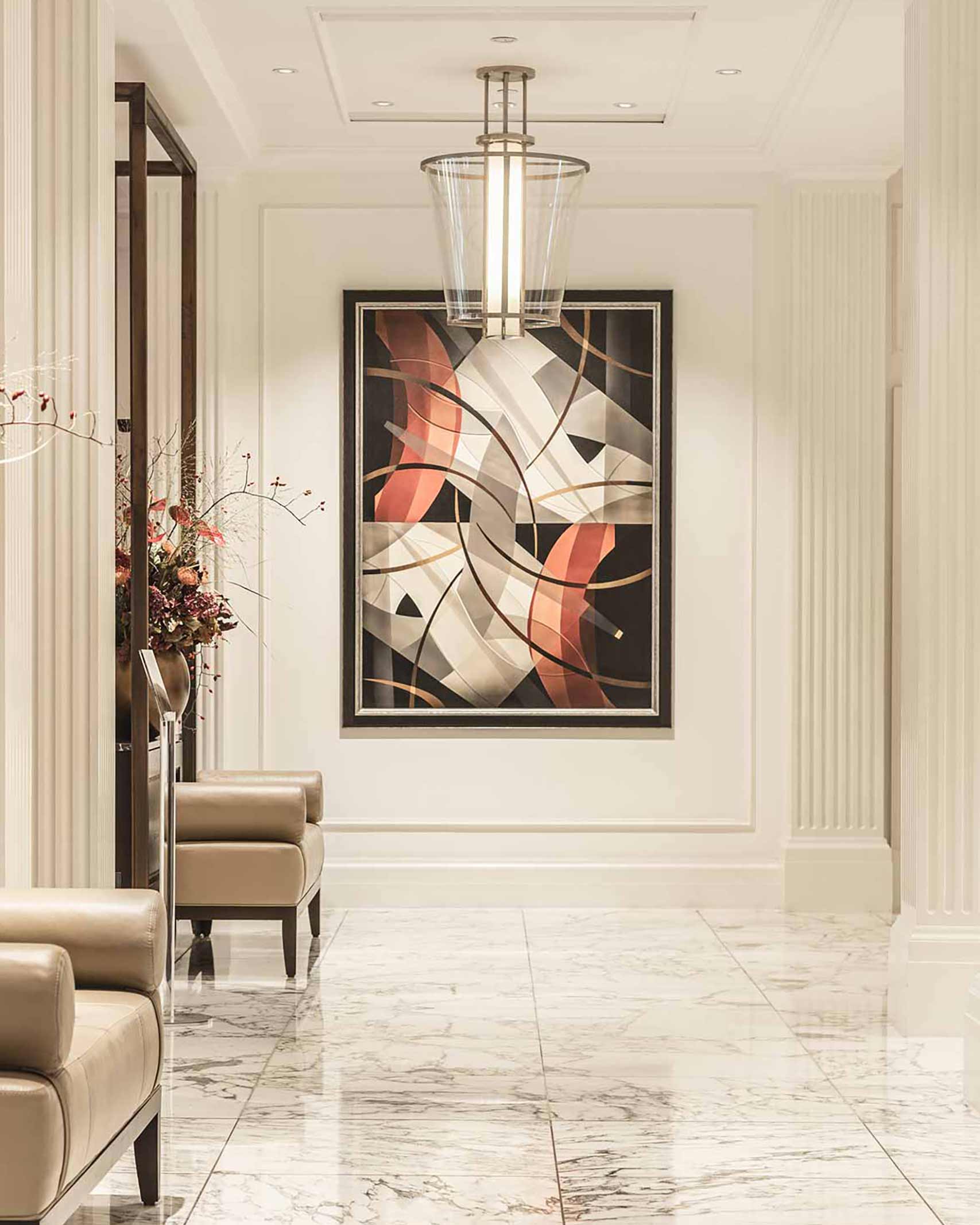
Our check-in unfolded in the Peacock Alley Lounge – a Waldorf Astoria signature, named after the grand connecting corridor between the original Waldorf and Astoria hotels in New York City – where the ritual felt less transactional and more sensorial. A glass of Pol Roger arrived without ceremony but with intent. Alongside it, an invitation to explore Trudon fragrances – the historic French candle maker once favoured by the court of Versailles. It was a small moment, but a memorable one. Choosing “Ernesto” – with its warm tobacco and leather notes – as the scent for our suite became a subtle way to anchor memory to place before the stay had even properly begun.
It was these layered gestures that defined the Waldorf Astoria Amsterdam experience. Nothing ever felt rushed, and nothing felt accidental.
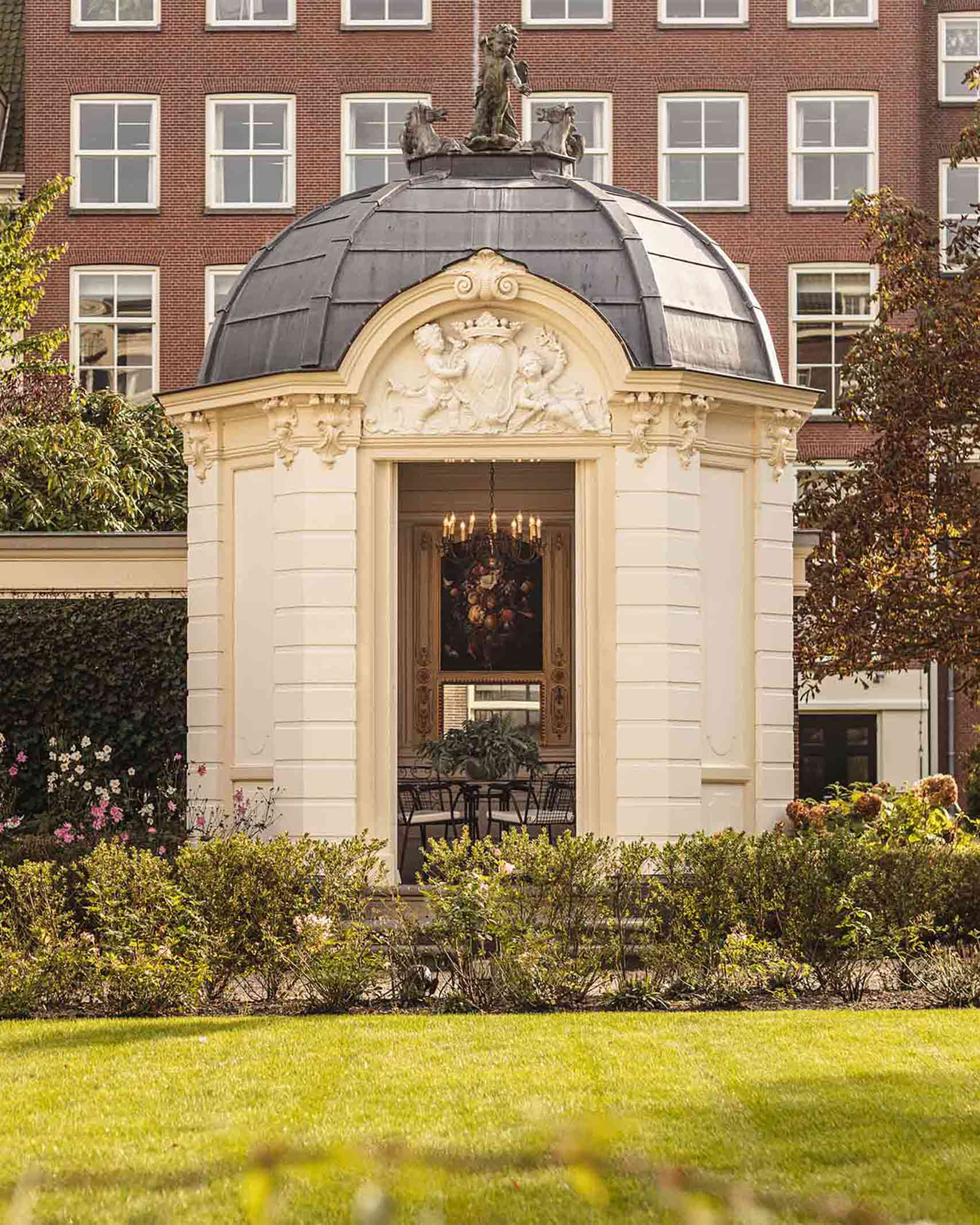
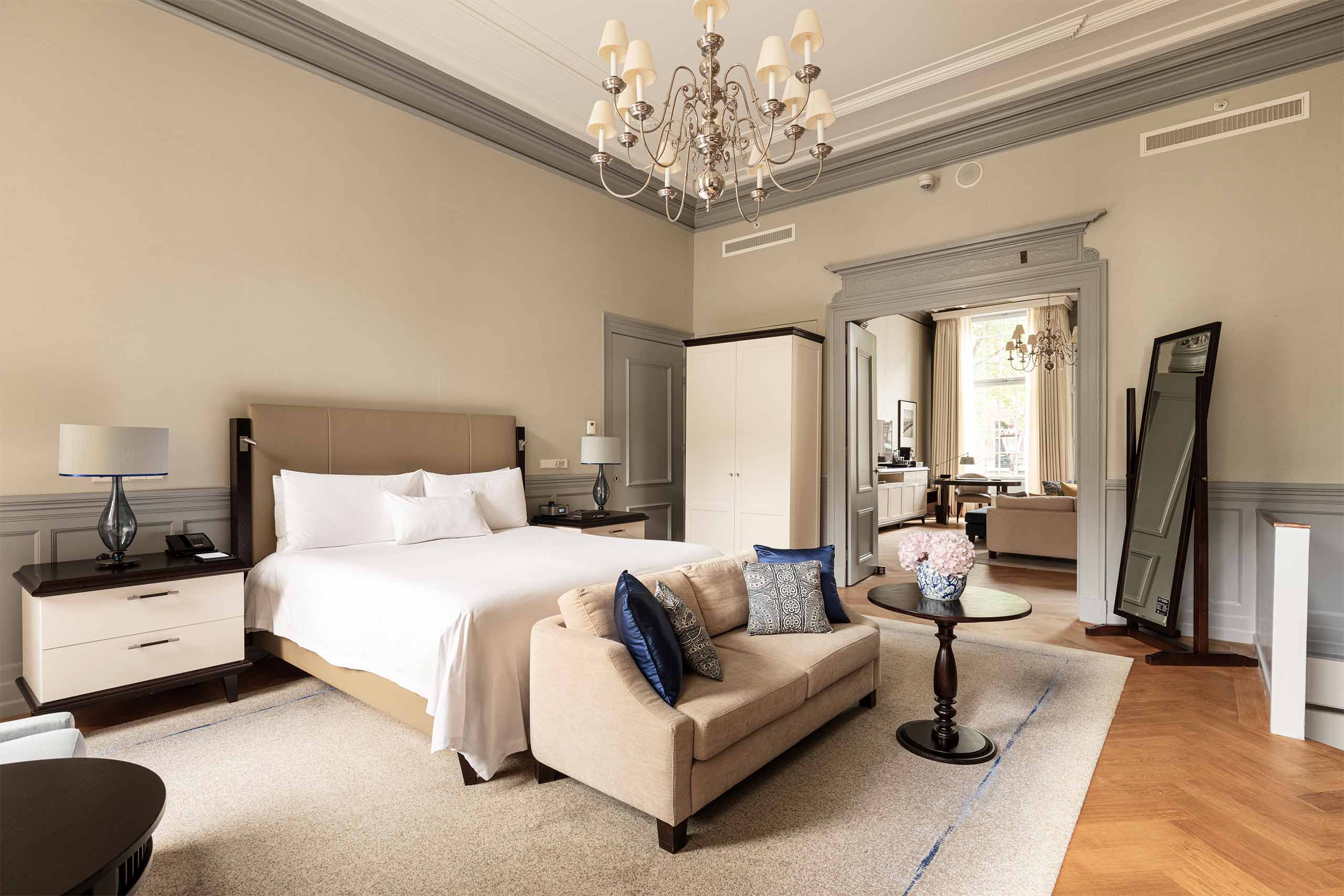
The rooms continue this narrative of precision. 103 keys in total – a relatively intimate footprint for a hotel of this calibre – are distributed across the canal houses, each with its own subtle personality. Ours, on the upper floors of the rear building, overlooked the hotel’s private garden – one of the largest of its kind in central Amsterdam and a rarity that still feels slightly improbable every time we looked down at it.
Inside our suite, the design language was restrained but tactile: whites dominated, softened by greys, muted blues and warm neutrals, which created a sense of visual calm. Plush textiles and marble bathrooms reinforced the feeling of considered luxury. There were no excessive flourishes – which at first surprised us – but over time it became clear that everything at the Waldorf Astoria Amsterdam was carefully measured. In a collection of buildings with such a strong architectural presence, restraint felt less like omission and more like the most considered form of respect.
The hotel treads a careful balance between heritage and modern comfort. Technology was discreetly integrated. Lighting, climate and entertainment systems were intuitive rather than intrusive. The result was spaces that felt neither frozen in time nor aggressively modernised – a balance many historic hotels still struggle to achieve.
If the rooms were about calm, the Guerlain Spa were about release. Housed within the former coach house and extending into a serene subterranean space, it is said to be one of the most accomplished spa experiences in the city. Treatments are considered rather than formulaic, drawing on Guerlain’s long-established expertise in fragrance-led wellness. Our full-body massages here felt almost architectural in its sequencing – as though tension was being carefully deconstructed layer by layer.
The indoor pool, edged in soft lighting and pale stone, reinforced the sense of retreat we felt. It is not large, but it is perfectly proportioned – a recurring theme throughout the hotel. A sauna and steam room completed the circuit and encouraged us to linger far longer than we should have.
But, stepping outside, the city immediately reasserted itself. The Waldorf Astoria’s location on the Herengracht places it within one of Amsterdam’s most elegant canal loops, yet still within walking distance of the city’s cultural core. The Rijksmuseum, Van Gogh Museum and Stedelijk Museum sit just under two kilometres away, while the Nine Streets, Rembrandtplein and Flower Market are closer still.
What made this positioning so compelling was the contrast it allowed. One moment, we were enveloped in hushed heritage interiors, the next we were navigating bicycle-filled bridges and café-lined streets. Amsterdam operates as a city of dual rhythms – and the hotel sits precisely at that intersection.
Returning in the late afternoon, there was a natural pull back to Peacock Alley for afternoon tea. The experience was framed through Dutch artistic heritage, with subtle references to the Dutch Masters woven into both presentation and flavour. We liked that it was a thoughtful, lightly playful nod to the city’s cultural identity rather than a literal interpretation of it.
As the evening settled, the Vault Bar became the natural gravitational point of the hotel. Located in the original bank vault of the former Twentsche Bank, it is – in our humble opinion – one of the most atmospheric hotel bars in Amsterdam. Heavy metal doors, exposed brickwork and low lighting create a setting that feels cinematic without effort. It is easy to imagine the building’s former life here, though today the currency is entirely social. Our cocktails were precise and unfussy, focused on classic execution rather than conceptual performance.
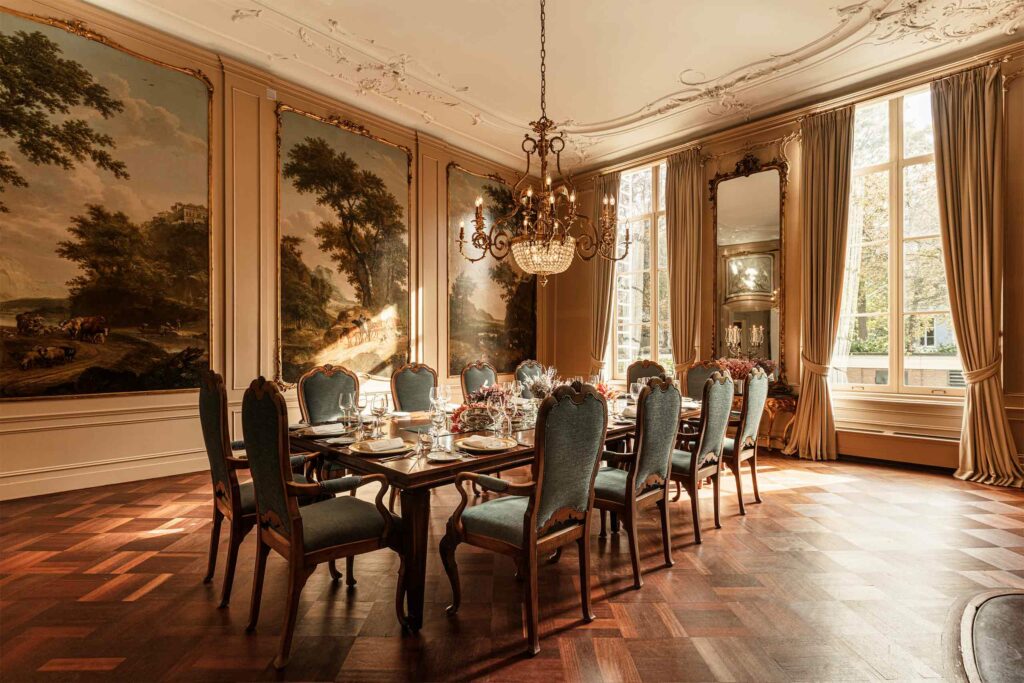
Dining at the hotel has evolved in recent years. The property no longer anchors itself around a single headline restaurant (it used to have two Michelin stars) but instead focuses on a more fluid culinary experience across Peacock Alley, the seasonal Garden Terrace and Goldfinch Brasserie, which offers an all-day menu with a distinctly Dutch sensibility. Together they reflect a shift towards ease, flexibility and contemporary informality while maintaining a clear sense of refinement.
Service throughout was surely one of the hotel’s defining strengths. It was polished without being intrusive, attentive without slipping into choreography. There was a confidence in the team that came most definitely came from a familiarity with excellence.
All this said, what we enjoyed most about our stay was not any single element but the cohesion between them.
The Waldorf Astoria Amsterdam is not a hotel that relies on spectacle. It does not need to. Its power lies in composition – in the way architecture, history, design and service are layered so carefully that the experience feels less like hospitality and more like inhabiting a living archive. It is a place where the past is not preserved behind glass but quietly integrated into daily rhythm, where luxury is not declared but inferred. And where the city outside – visually and culturally dense – is never really left behind, only momentarily reframed.
We have to give special credit to the coherence of it all – the sense of ease and the feeling that everything belongs exactly where it should. This is a place for travellers who value detail over decoration, calm over noise, and the quiet satisfaction of things done properly without needing to announce it. It will particularly appeal to those OutThere travellers who notice the grain of marble rather than the shine, who prefer discretion over display, and who find more pleasure in a perfectly judged gesture than in overt theatrics – and in the simple realisation that you are exactly where you are meant to be within a place so carefully composed around you.
Photography courtesy of Waldorf Astoria Amsterdam

Perfect for
The Escapist

Fly into
AMS

Right on time
GMT +1
While you’re OutThere
During your stay, be sure to visit the iconic Rijksmuseum, just a stone’s throw away. A true cultural cornerstone, it offers an enriching journey through Dutch art and history for culture enthusiasts and art lovers alike. Its galleries span everything from intricate Delftware ceramics to exquisite period furniture, but it is the Dutch Golden Age collection that truly defines it, with masterpieces by Rembrandt and Vermeer among its most celebrated works.
A standout moment for us was standing in front of Rembrandt’s The Night Watch – a monumental canvas that captures the scale, ambition and spirit of 17th-century Amsterdam in a single frame. When you’ve had your fill of art and culture, step out into the museum’s beautifully maintained gardens. Lush and quietly contemplative, they offer a welcome pause from the city’s energy – a calm, green interlude for reflection before rejoining Amsterdam’s rhythm.