




Between the 17th-century façades and postcard canals, Amsterdam keeps slipping into reinvention – a city where design, culture and hospitality are constantly being reimagined into a contemporary streak of mischief running through everything: design studios that has shed its seriousness, galleries that’s about entertainment rather than art and public installations that sometimes looks like it was conceived after someone said “what if we just… didn’t behave today?” Andaz Amsterdam Prinsengracht dives headfirst into that spirit, a wonderfully whimsical, design-led hotel that treats hospitality as, let’s call it, “a creative experiment” and is a playful counterpoint to the city’s more heritage-heavy luxury stays.
Amsterdam has always felt like a city in constant conversation with itself, some might say even a full-blown argument in public.
The past is everywhere, naturally. It peers out from gabled façades, ripples across canal reflections and reminds you that most of its buildings have already lived several lives before. Yet for all its reverence for history, beneath the postcard imagery is something far more contemporary: a place that’s carving out a modern Dutch identity without losing sight of where it came from.
People say there is a distinct sense that Dutch culture is comfortable laughing at itself. Not in a self-deprecating, apologetic way, but in a very deliberate “yes, we know this is all a bit odd, but we are doing it anyway” kind of way. You see it in fashion, in graphic design, in the way exhibitions will happily place something profound next to something that looks like it escaped from a dream involving cheese, bicycles and mild existential confusion.
Contemporary Amsterdam does not separate high culture from playfulness. Instead, it blends them until you are never quite sure whether you are supposed to be intellectually elevated or entertained. It allows irony, humour and a certain lightness to sit right next to serious artistic intent. And somehow that combination feels very Dutch – pragmatic, inventive and just self-aware enough to know that taking everything too seriously would be the least interesting option.
And this is exactly what makes Andaz Amsterdam Prinsengracht such an interesting place to stay.
The hotel occupies a former public library designed in the 1970s by Dutch architect J. van Mourik Vermeulen. Unlike many luxury hotels in Amsterdam that lean heavily into centuries-old canalside grandeur, Andaz begins with a different story entirely. Its origins are civic rather than aristocratic, practical rather than romantic. Perhaps that is why it feels so comfortable challenging expectations.
Andaz, Hyatt’s lifestyle-led luxury brand, has always positioned itself slightly outside traditional hospitality conventions. Across its global portfolio, individuality, local culture and design-led experiences take precedence over formality and ceremony. The Amsterdam property embodies that philosophy.
From the moment we stepped inside, the tone was established.
Designed by local architect and designer Piet Boon, the interiors at the Andaz Amsterdam Prinsengracht feel like a creative project inspired by Dutch culture, folklore and contemporary life. Artworks emerge unexpectedly. Ceramics, oversized installations and playful visual references interrupt the building’s original bones. Everywhere we looked, details invited a second glance – because they should not work, yet somehow do.
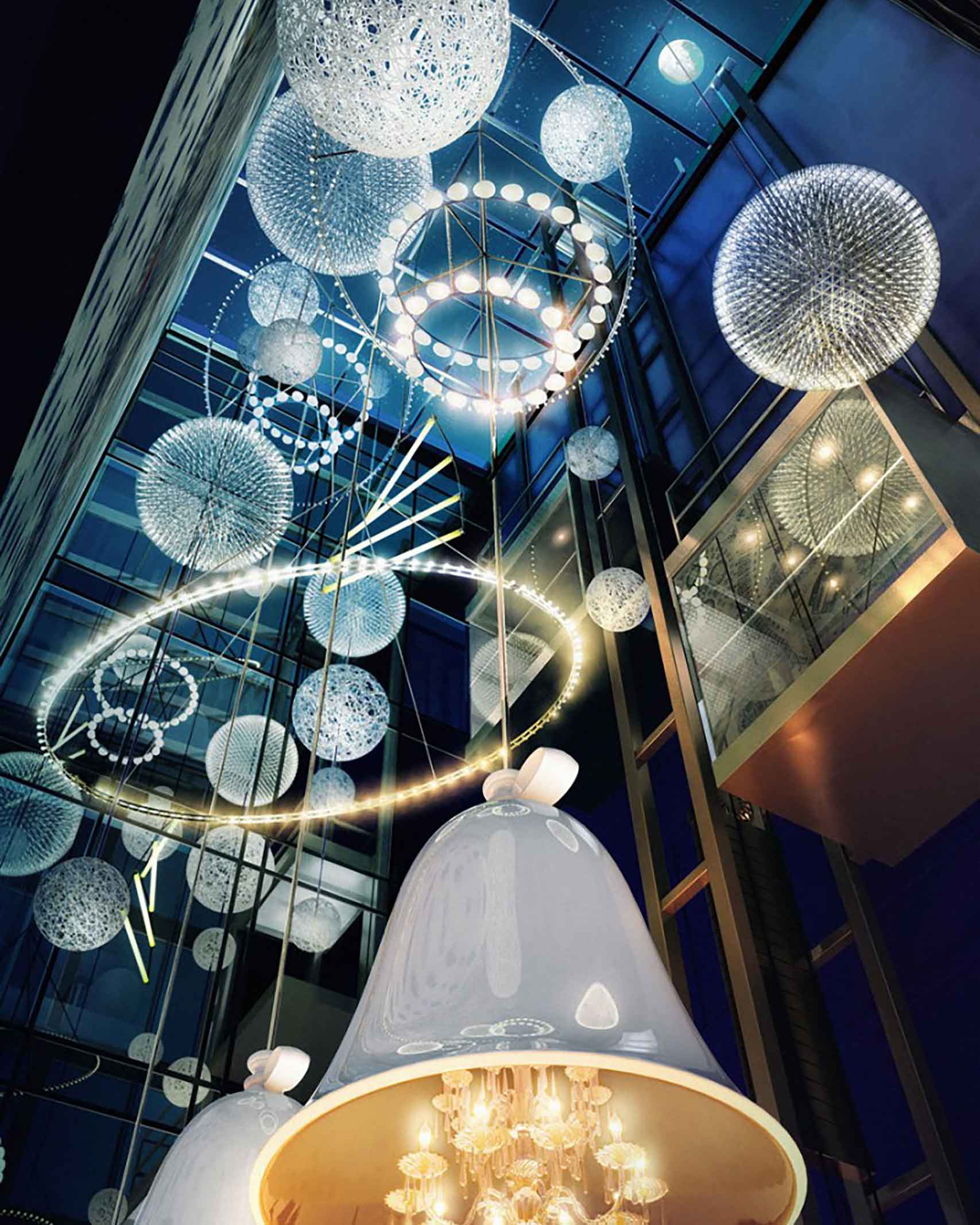
Rather than being anchored by a single artistic statement, the lobby is shaped by accumulation. Contemporary works and design interventions sit alongside one another without hierarchy, curated under the broader vision of Marcel Wanders Studio. The result is an interior that feels alive with competing ideas – playful, expressive and deliberately resistant to staidness.
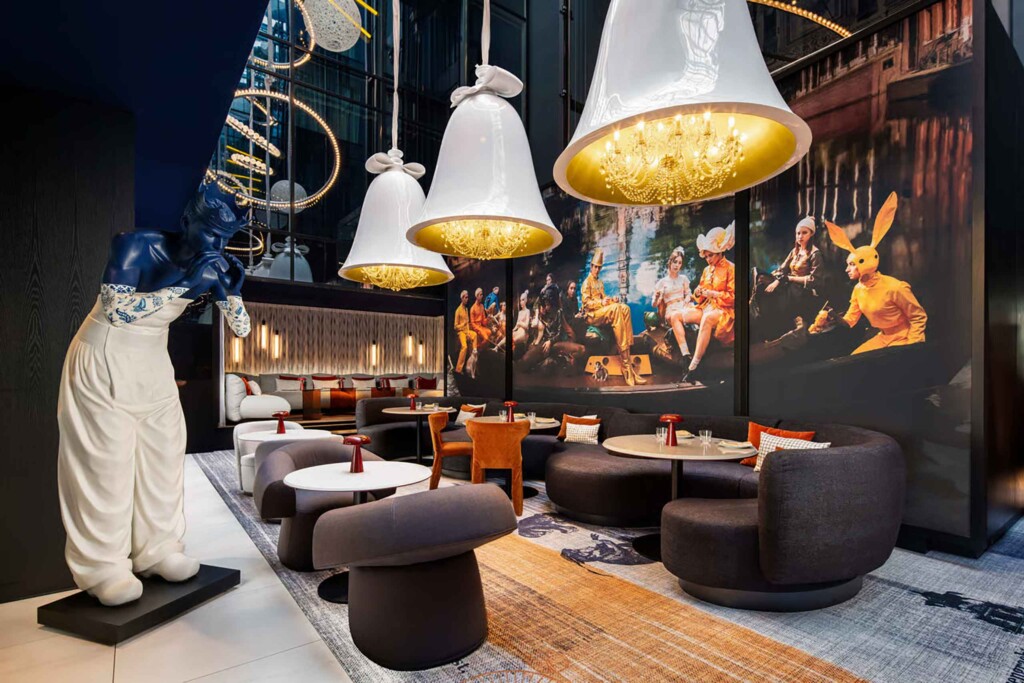
Above the central space hang three white bell-shaped chandelier covers – yes, it’s a thing – sculptural and theatrical, like planets suspended in a celestial system of lighting, casting soft pools across the floor as we moved through the room.
Colour plays a central role. Deep blacks, blues and browns sit alongside saturated accents of red, orange and yellow, interrupting otherwise muted architectural tones and creating a rhythm that feels intentionally off-centre. Nothing is strictly coordinated in the conventional sense, yet everything feels considered.
One of the most striking focal points is a sculptural figure of a man with his head and torso dipped in vivid blue. He appears to be shouting, almost screaming, frozen mid-declaration – part character, part symbol, positioned as though the lobby itself is a stage for performance and interpretation.
Along one wall runs a frieze-like installation of photographic panels that sits somewhere between Dutch cultural storytelling and Alice in Wonderland surrealism. Faces, fragments and narrative hints appear and dissolve as we move past them, creating the impression of a story that refuses to settle into a single meaning.
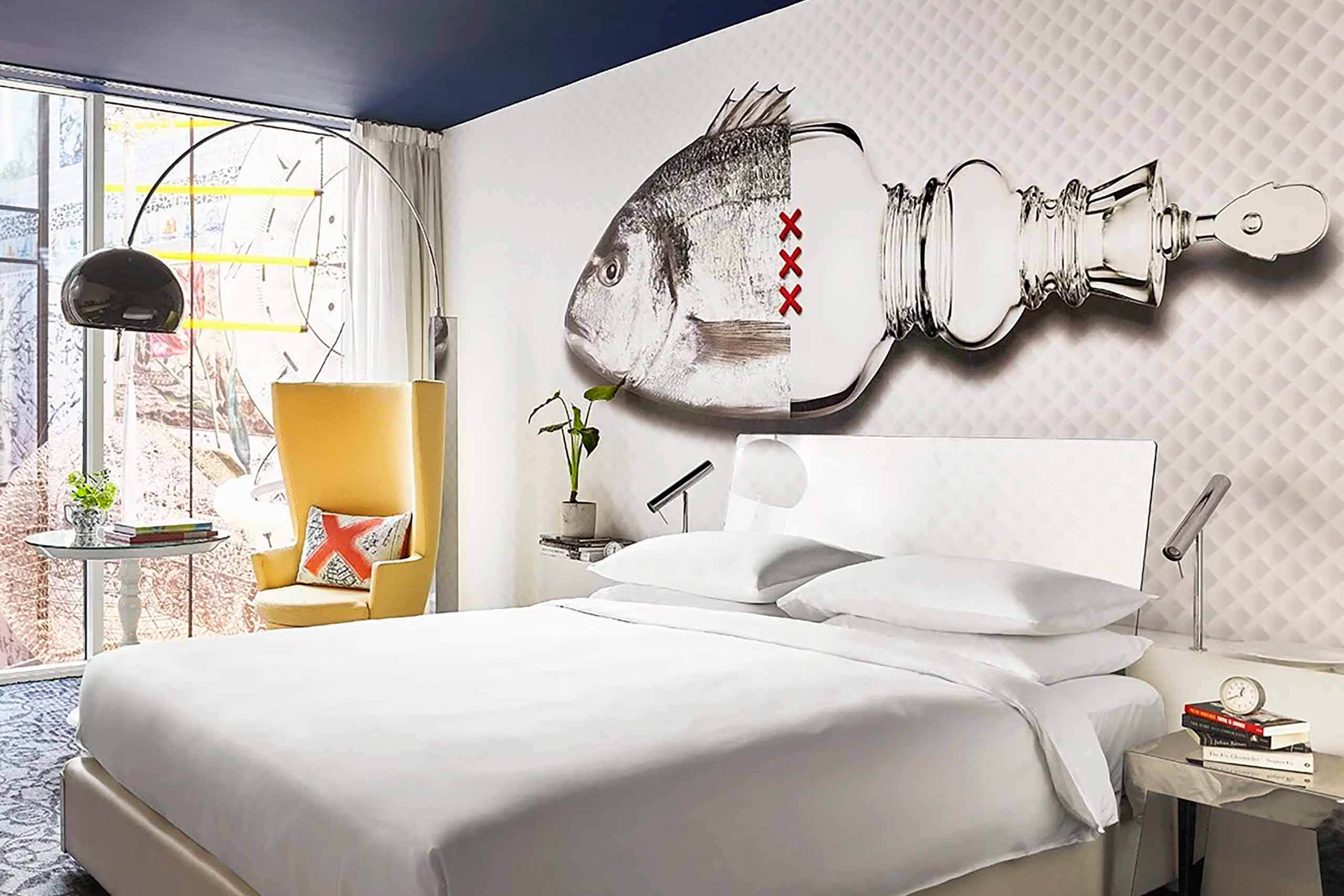
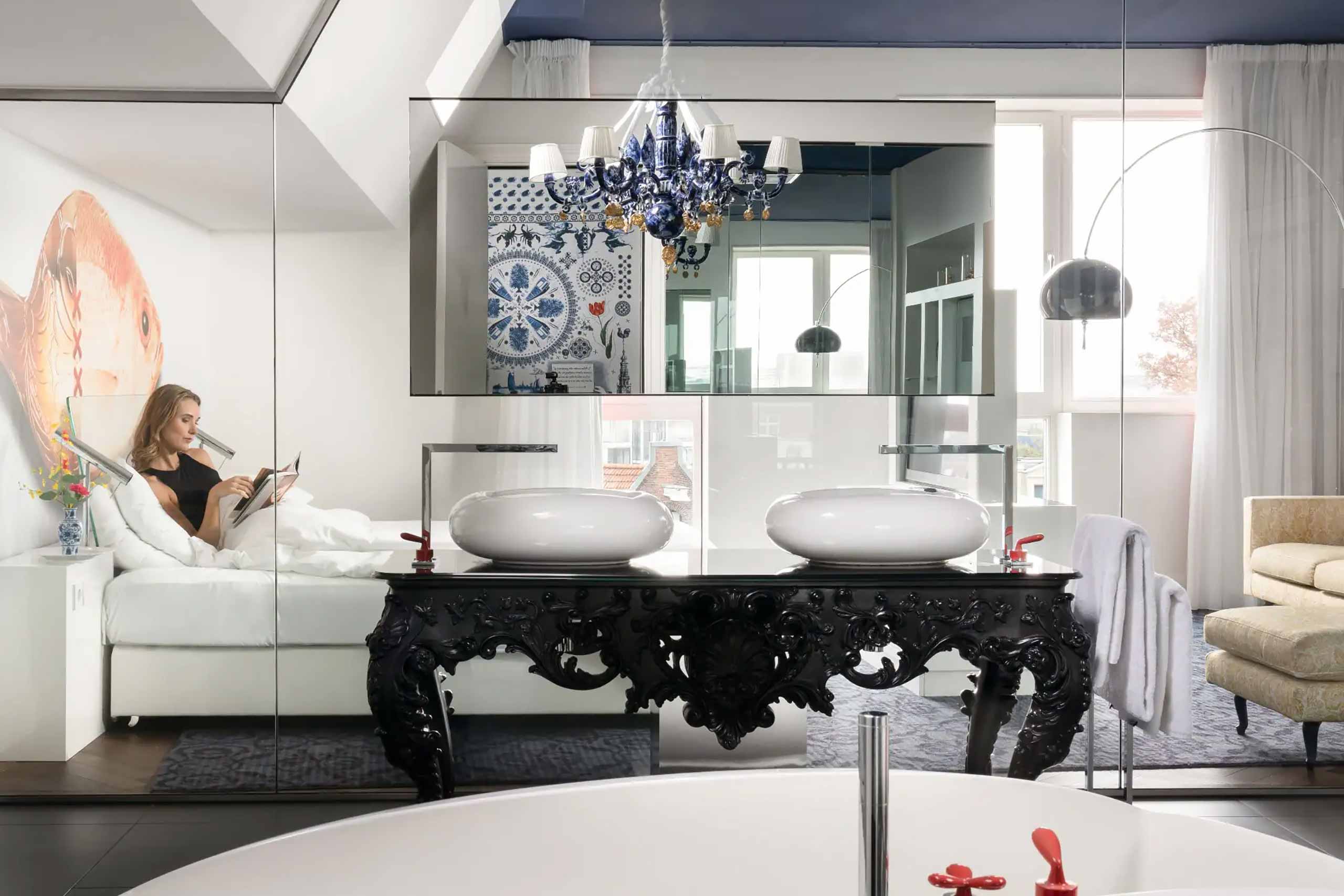
That attitude extends throughout the rest of the property. Our suite at the Andaz Amsterdam Prinsengracht reflected the same surreal, design-forward ideals as the common areas, but in a more spacious residential register. There was a sense of openness from the moment we entered. The layout is open plan with the bathroom dissolving rather than dividing the space. A freestanding roll-top bath sits almost theatrically within the suite itself, more sculpture than utility.
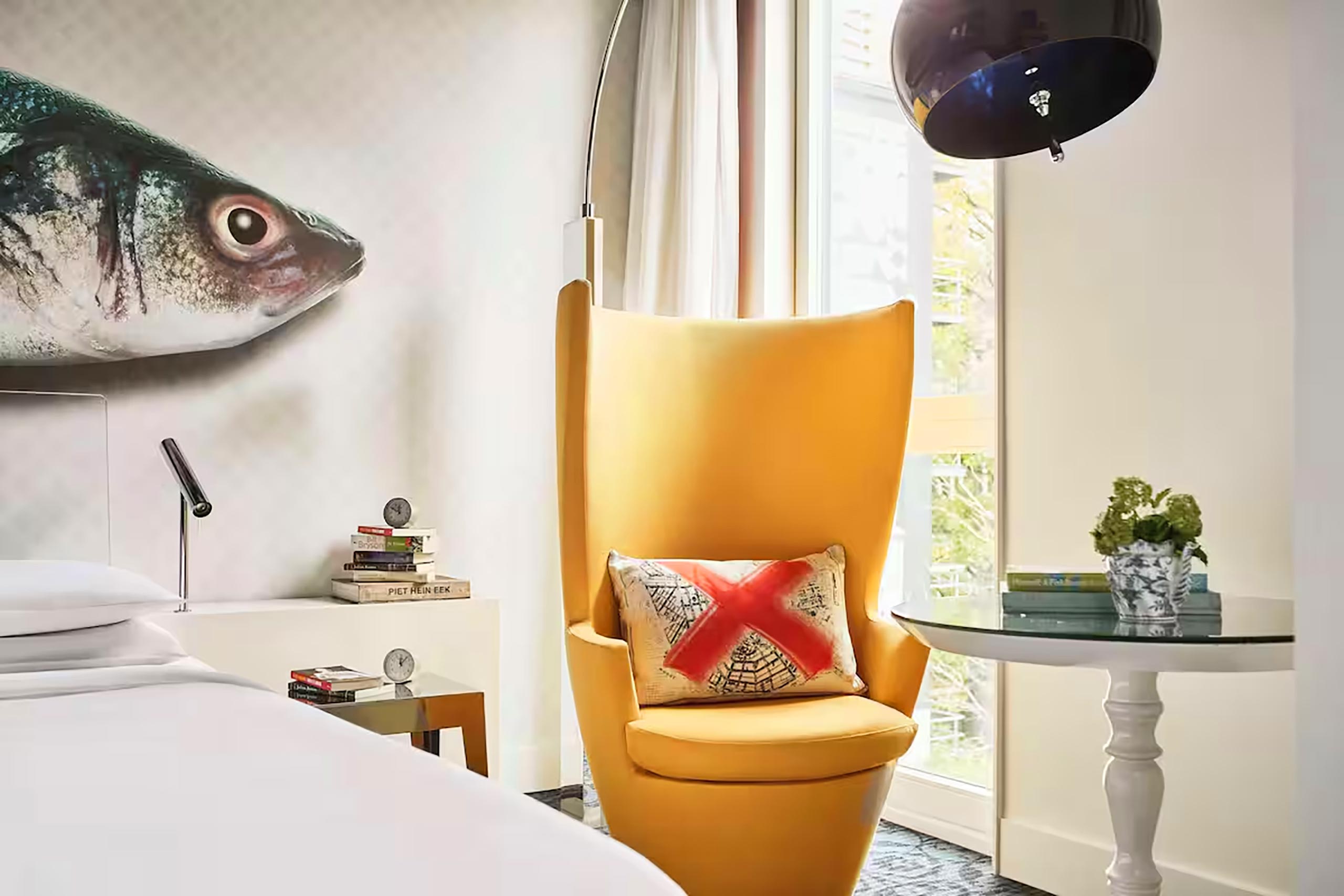
Above the bed, a signature visual motif – a stylised fish-like form stretched across the wall – is deliberately ambiguous and playful. It resists a single interpretation, sitting somewhere between design object and visual joke, which feels entirely in keeping with the hotel’s wider personality. Though there were times, just as we switched off the lights for the night, we found it slightly disconcerting.
Like the bathroom fittings, the furniture is sculptural and brightly coloured, with pieces that feel more like curated museum objects than standard hotel furnishings. Shapes are bold without tipping into heaviness, and there is a consistent sense of lightness in the way everything is placed. This is all set against a restrained palette of whites, creams and pale neutrals that gave the suite a calm, almost gallery-like backdrop. The effect is intentionally balanced – expressive design elements layered over a quiet base – so the space never feels chaotic despite its creativity.
The staff were attentive and knowledgeable, but interactions never felt rehearsed. There is an informality to the hospitality that suited the vibe of the hotel perfectly. Conversations happened naturally. Recommendations felt personal.
Perhaps that is why the guest mix felt so varied. During our stay, we noticed fashionable travellers, gay couples on city breaks, solo guests working remotely, and locals using the hotel as much as a social base as a place to sleep. Andaz Amsterdam Prinsengracht actively cultivates this atmosphere.
Tucked below ground, the hotel’s Essence spa offered perhaps the only true retreat from this constant sense of curated chaos. It provided a quieter, more introspective opposite to the energy above. Yet even here, the experience was refreshingly uncomplicated. Restoration was offered to us, without the usual, excessive ritual.
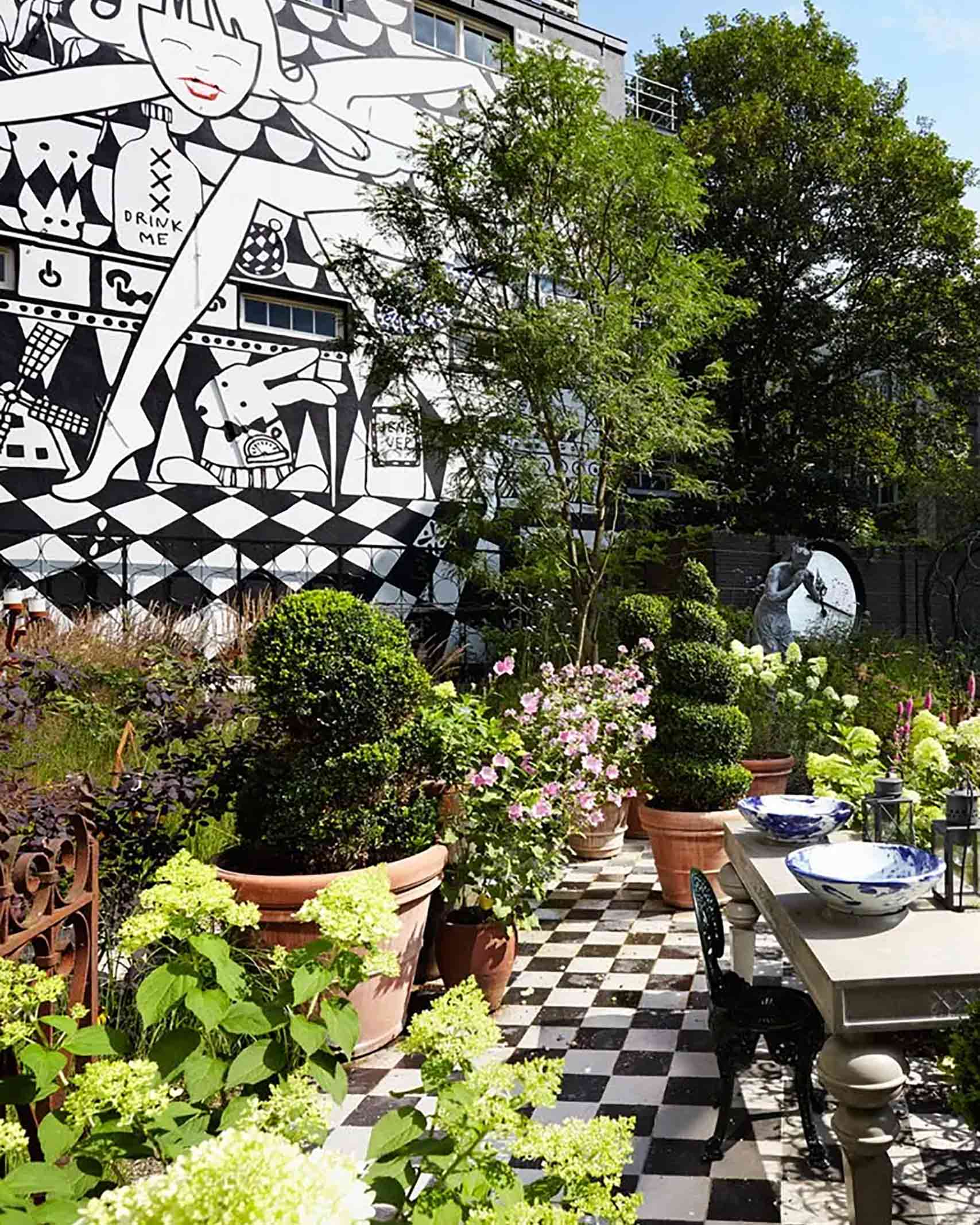
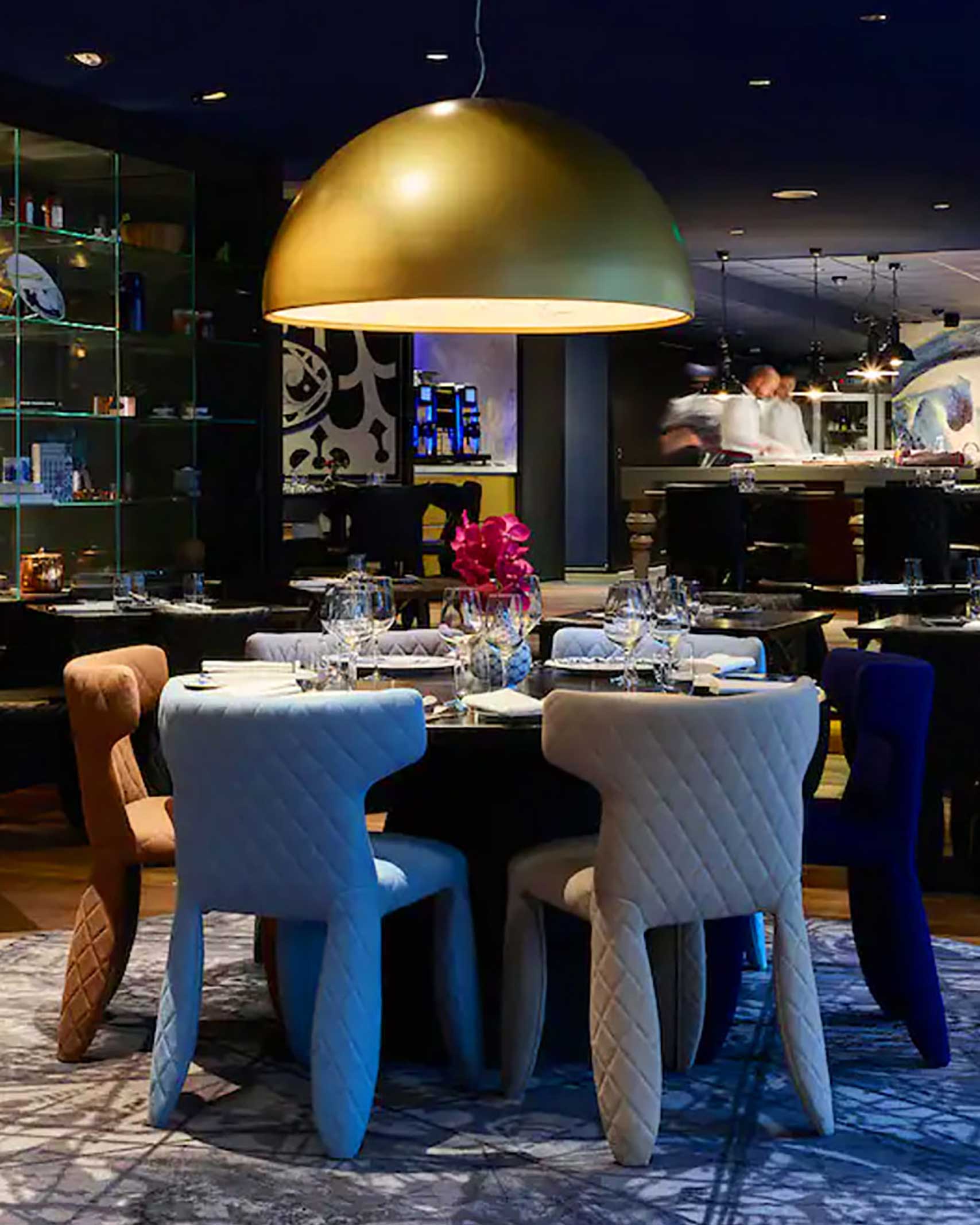
In a city where so many luxury hotels trade on history, permanence and preservation, this unabashed sense of whimsy feels refreshing. There is a lightness here. A confidence that does not need to constantly reference the past to justify the indulgence and whimsy of its present.
If some Amsterdam hotels feel like beautifully preserved chapters from an old novel, Andaz Amsterdam Prinsengracht feels more like an open page already covered in fresh doodles, scribbles and ideas: ever evolving, always surprising and entirely comfortable with it.
Photography courtesy of Andaz Amsterdam Prinsengracht

Perfect for
The Hedonist

Fly into
AMS

Right on time
GMT +1
While you’re OutThere
For those wishing to continue the Andaz’s wonderfully off-kilter view of Amsterdam, skip the more traditional cultural trail and head instead for Moco Museum. Housed in a grand villa on Museumplein, it takes a refreshingly irreverent approach to modern and contemporary art, mixing Banksy, Basquiat and immersive digital installations colourfully and playfully, blurring the line between serious culture and entertainment.
As evening falls, make your way to De Nieuwe Anita, a gloriously eccentric neighbourhood institution that feels part bar, part living room and part cultural experiment. Filled with mismatched vintage furniture, live music and a crowd that ranges from artists to lifelong locals, it captures the same creative energy as the hotel.