
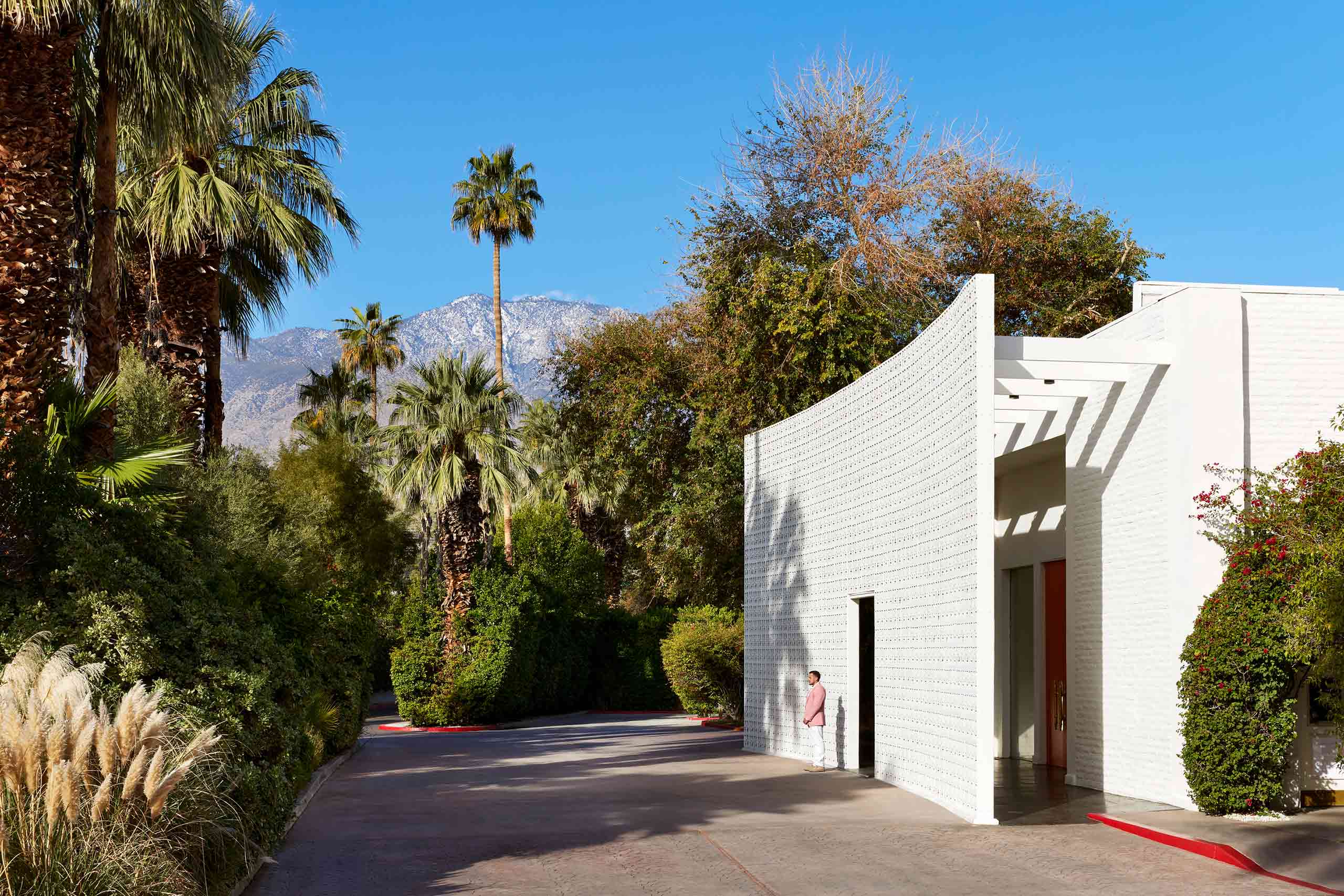




Palm Springs has always been a place of reinvention – a sun-drenched stage where Hollywood glamour, desert escapism and architectural experimentation collide. At the centre of it all sits the Parker Palm Springs, a hotel that has lived many lives and embraced each one with gusto. But today, it is a place where mid-century history, design and a healthy dose of eccentricity come together to create something special.
The story of the Parker Palm Springs begins in 1959 with its opening as California’s first Holiday Inn – perhaps not the image its owners today would like to conjure of a hotel. For the avoidance of any doubt, the Parker is nothing like a Holiday Inn today. But for those of us who revel in nostalgia and remember the heady days of retro resort hospitality, when air conditioning, carpeted optimism, tiki cocktail vessels, and ice vending machines were the height of sophistication, there is something oddly cinematic about framing the Parker this way. Plus, for us British travellers raised on faded seaside B&Bs and aggressively floral wallpaper, there is something almost mythological about mid-century American resorts. They feel like the set of a movie we vaguely remember but cannot quite place.
The Parker Palm Springs understands this instinctively. It leans into it later, but even in its earliest incarnation, it was already performing a version of California that the rest of the world was desperate to believe in. In 1961, the property was acquired by Hollywood legend and ‘Singing Cowboy’ Gene Autry, an archetypal and wholesome American country and western star (though one of his most famous songs was That Silver-Haired Daddy of Mine – go figure). Autry repurposed the hotel into ‘Melody Ranch’, a name that sounds like morals were optional and every sunrise was accompanied by a steel guitar.
This first reinvention under Autry is arguably the moment the hotel discovers its enduring identity as a playground. It is here that the Parker’s storytelling begins to take hold.
One wonders what Gene Autry would make of the place today. If his ghost still walks the corridors, presumably in immaculate rhinestone boots, he would likely approve of the loyalty to true leisure. He might pause and raise an eyebrow at the eclectic interiors – but then again, he might not. He would almost certainly ask why the carpets in certain corridors resemble those from the Outlook Motel. But he would understand the instinct and surely raise a smile, knowing that it was he who set up the place to be able to cash in on performance.
The next decades are a blur of celebrity ownership and shifting identities. Merv Griffin appears in the legend of the Parker, and there are even rumours of Givenchy involvement, though perhaps that was just marketing speak to make everything sound more expensive, even when no one is entirely sure if it really happened.
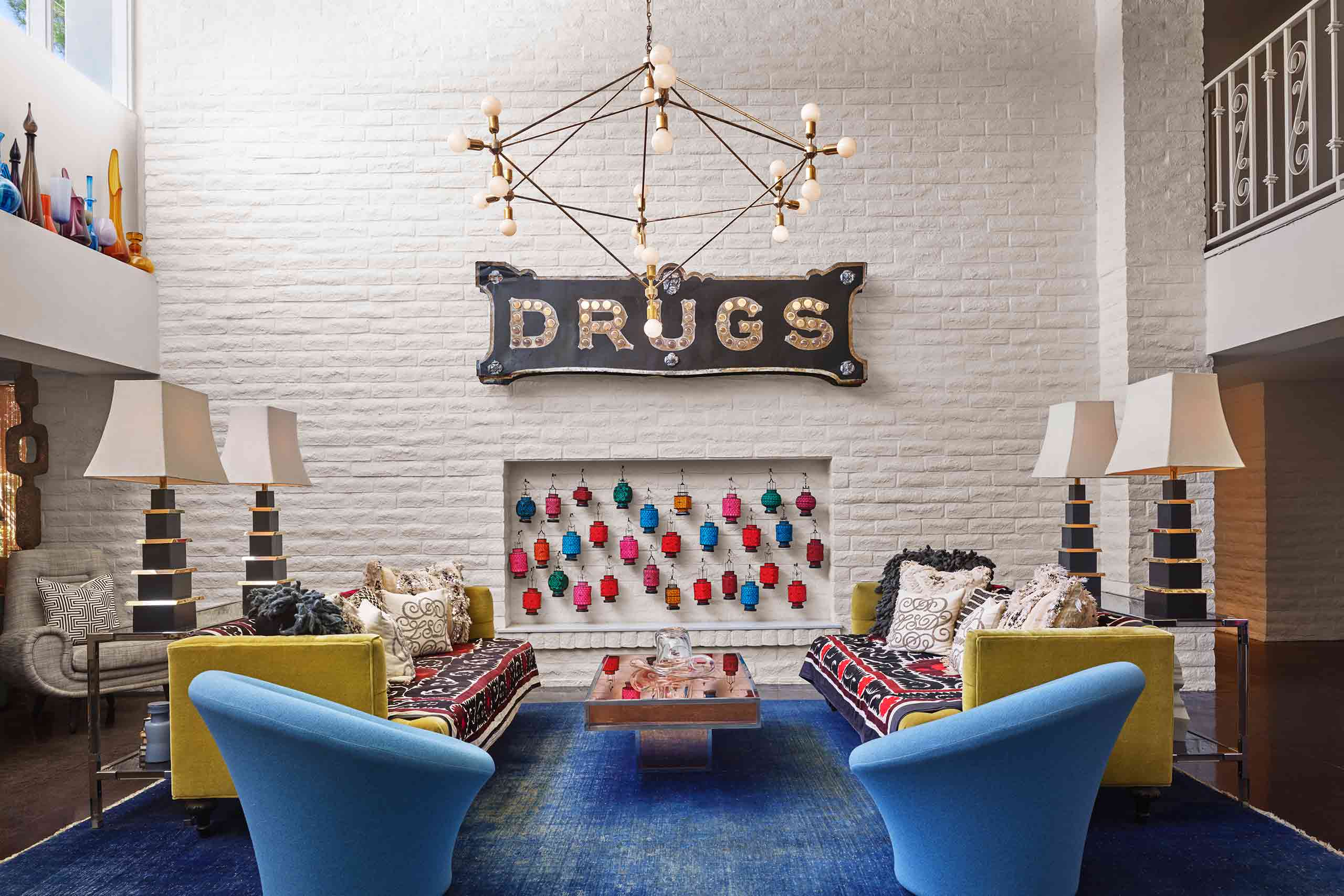
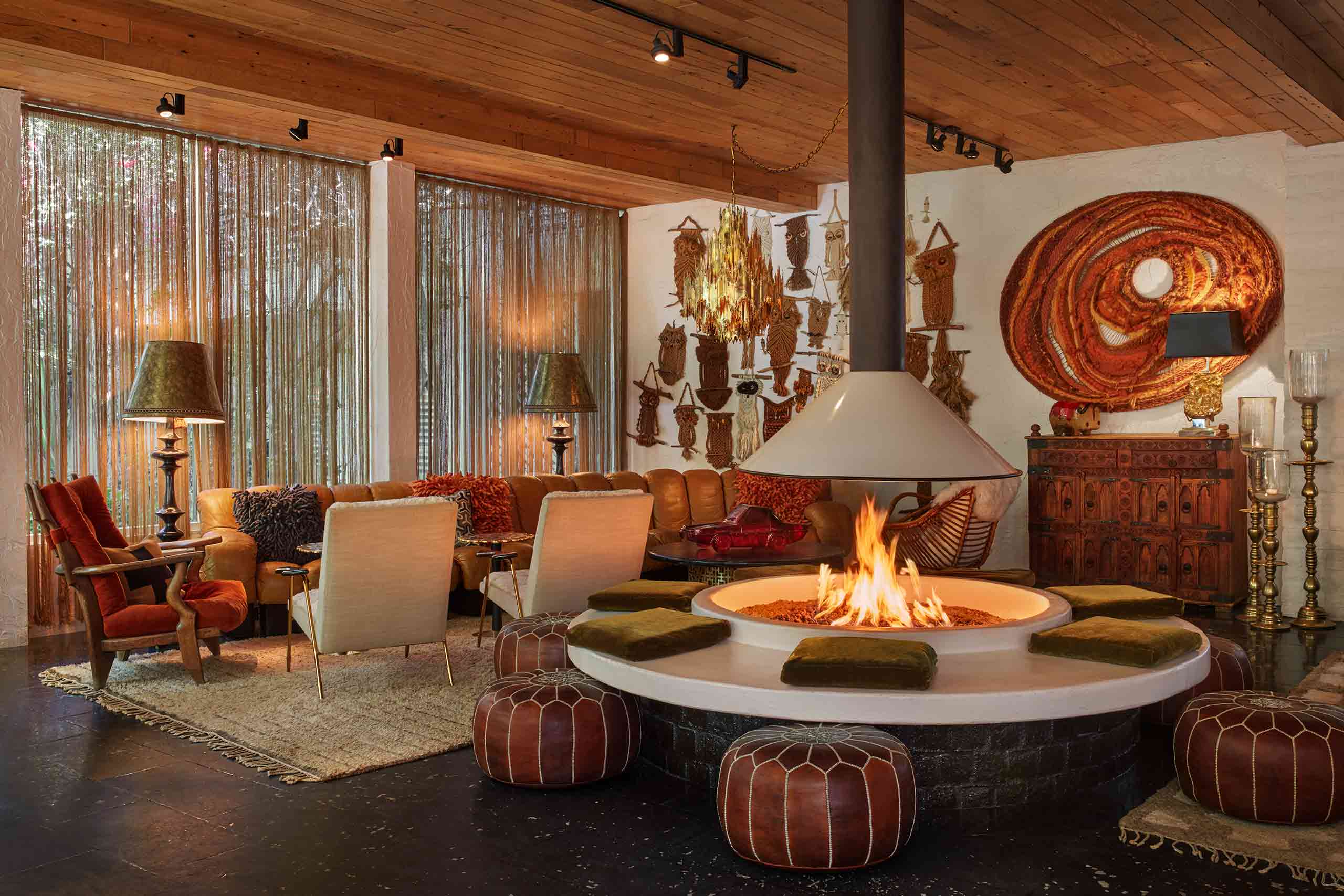
Then, in 2003, came the great resurrection. Hotelier Jack Parker acquired the property and handed it as a blank canvas to America’s most colourful interiors guy, Jonathan Adler, a designer who believes restraint is something that happens to other people.
After a reported $27 million renovation, it reopened in 2004 as the Parker Palm Springs. The transformation was immediate and gleeful, which summed up our own mood as we walked through its doors. Unapologetic, boundless, mischievous joy.
Jonathan Adler’s design philosophy is often described as modern American glamour with mid-century roots, but even that feels oversimplified. It is more like maximalism with a sense of humour and a firm belief that interiors should occasionally make you laugh out loud. His influences range from mid-century modernism to pop art to the decorative boldness of 1970s interiors, shag carpets and all.
At the Parker, this manifests in totality as a kind of curated chaos. Nothing feels accidental, yet everything feels slightly surprised to be there. Suits of armour stood casually as if they were waiting for us to offer them a cocktail. An impossibly large vintage drug store sign (it reads “Drugs”) took centre stage, with a hint of nostalgic optimism and a nudge-nudge wink-wink of the party-hearty set today. Upcycled mirrored coffee tables played right into it, reflecting not just the room but our increasingly confused sense of reality. There are African masks, curious pottery, Tiki references, iconic bric-a-brac, fire pits, Regency sofas and objects that appear to have wandered in from entirely different aesthetic universes and thought, “you know what, we’re going to hang out here”.
It reminded us quite a lot of Kit Kemp’s hotels by way of a slightly surreal American dream. But it is also undeniably confident. The kind of design that says “Yes, that works there” without ever really explaining why. Also, the kind of hospitality architecture that says “Build it, and they will come – and if they don’t, I don’t give a f*ck!” But judging by the sheer volume of wares on sale in the gift shop that allows guests to take a part of the hotel’s eclecticism home with them, people are, quite literally, buying into it.
That’s because it does work. Somehow. The result is not chaotic so much as layered. Like a story told by someone who keeps remembering new details halfway through.
Furthermore, some two decades on, the hotel continues to evolve with the quiet determination of a place that knows it must remain interesting or risk becoming merely beautiful or museum-worthy. There is always a new idea a minute. A new corner reimagined. A new reason to return. After all, in Palm Springs, loyalty is built through reinvention.
Adler’s vision meant that our stay here felt less like checking in and more like being admitted into someone else’s very stylish and theatrical private home.
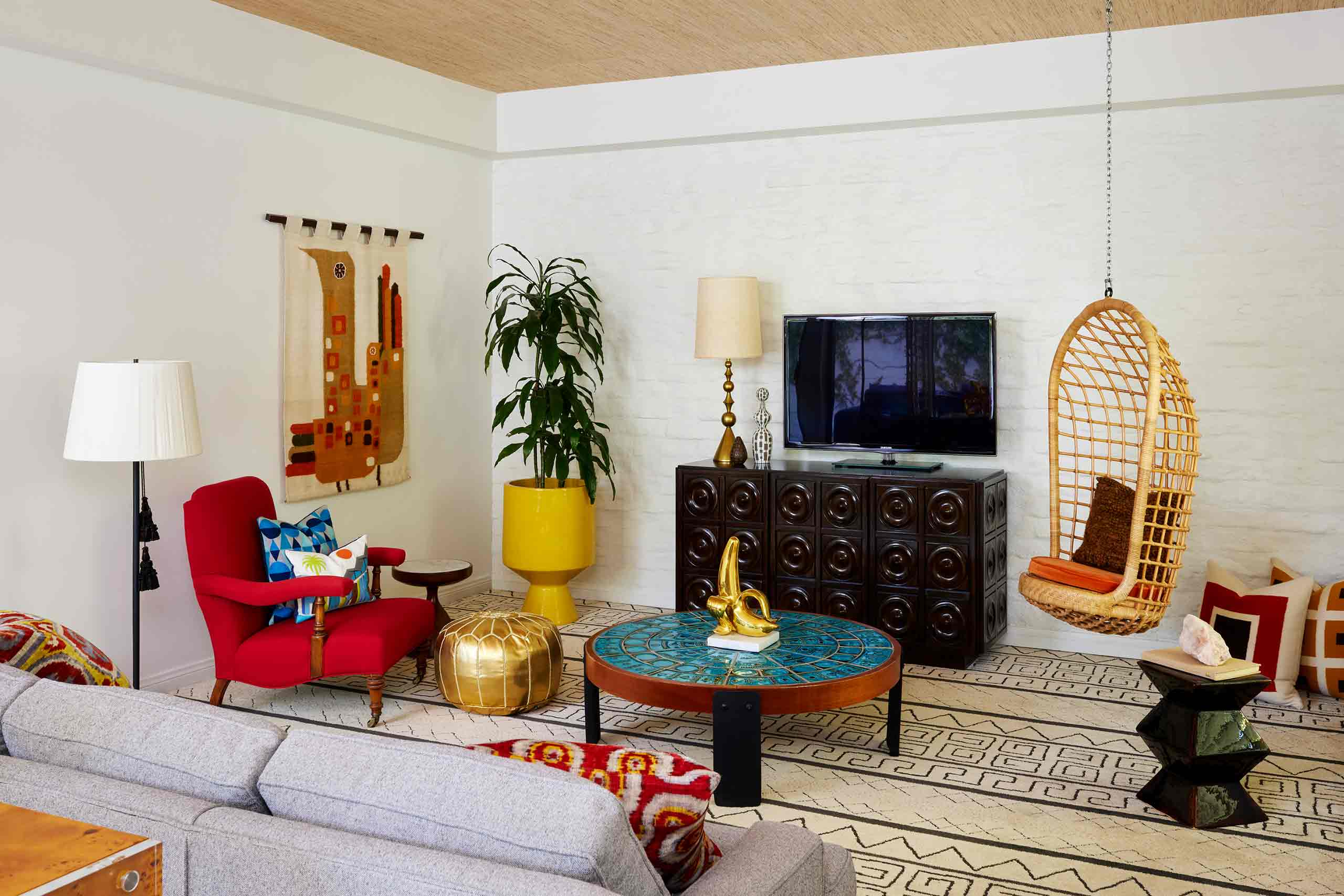
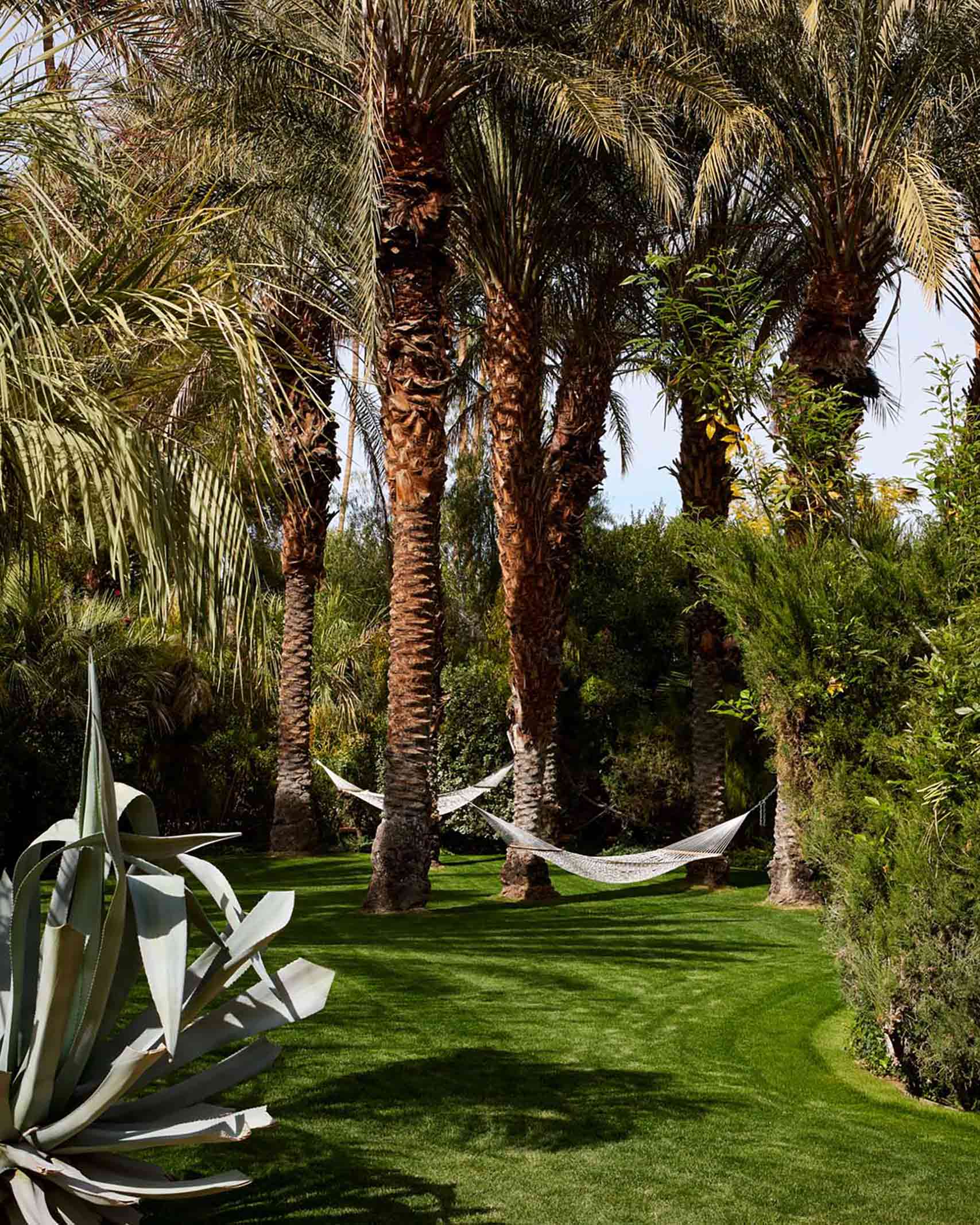
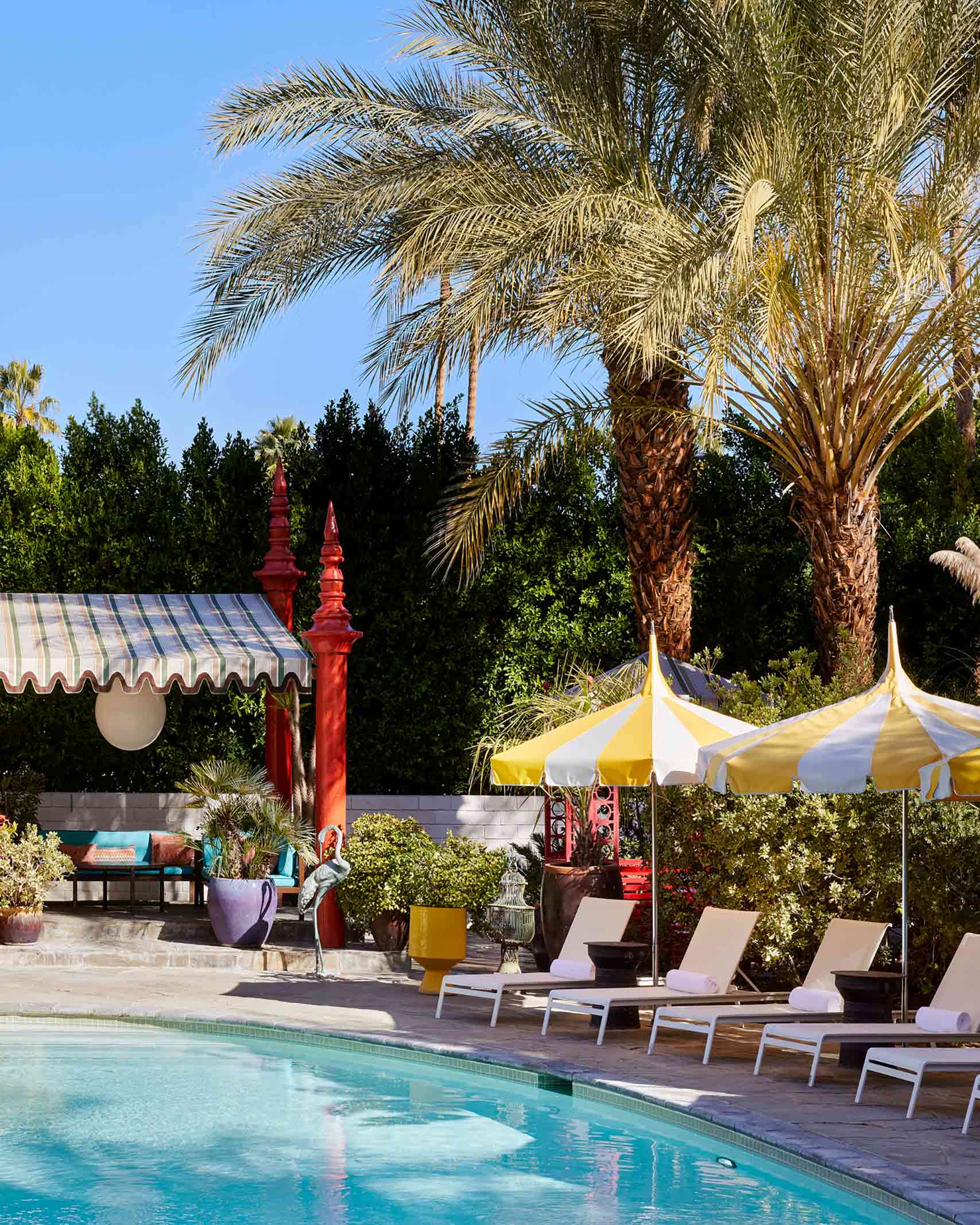
The grounds at the Parker Palm Springs reinforce this impression. Thirteen acres of manicured unpredictability. Sculptures that propose whimsy (like the giant bronze peeled banana). Lawns that feel designed for both contemplation and spontaneous Instagram photography. Hidden corners that seem engineered for secret midnight hook-ups. An amphitheatre for events that may or may not include Oscar after-parties. Padel courts that appear with the quiet confidence of a sport that knows it’s rising in popularity. Three stunning pools to see and be seen. The landscaping is as carefully composed as the interiors. Nothing is accidental. Even the shade feels considered.
Accommodation at the Parker is divided into villas, suites and rooms, but the distinctions feel less like categories and more like personality types.
Our villa felt like a little home within the larger estate, complete with its own fan palm on the front porch. Private enough to make us feel like we had been invited somewhere rather exclusive, but social enough that we were still aware that we were part of the larger performance. Inside, design continues its joyful contradiction – albeit on a more liveable scale. Our accommodation had Studio 54 black-and-white photographs on its walls, alongside mid-century collector pieces – a crimson armchair, wooden garlic-bulb lamps, Aztec print cushions, macramé throws and a four-poster bed. Our bathroom featured arabesque shower tiling that felt like a Moorish daydream filtered through California sunlight. Heavy gold dolphin taps gleamed with the confidence of objects that know they are slightly ridiculous but are committed to the bit.
We spent our stay drifting between believing that either someone had thought about this very carefully or just had a hell of a lot of fun. It is residential design as theatre. Or possibly theatre as residential design.
The suites and rooms in the main buildings offer a slightly more restrained interpretation – but only slightly. They still carry Adler’s signature layering. The difference is scale rather than tone. You are never far from something unexpected. A chair that looks like it has a story. A lamp that feels mildly opinionated.
And then there is Mr Parker’s. Dining here in the moody, swanky dark dining room requires a jacket, which feels like a charmingly anachronistic rule in a place where everything else suggests freedom. But of course, the hotel has anticipated this. If you arrive without appropriate attire, you are gently directed to a dressing room (aka theatrical prop department). Choose from velvet tuxedos, brocade jackets and outfits that suggest you might at any moment be asked to invest in a casino or solve a minor international mystery.
The Parker even has a “mini bar”. Not an in-room fridge, mind, but an omakase-style, limited seating bar that feels kind of pop-up but is part of the whimsy. You’ll need a tasselled room key to drink here and access the cocktail specials dreamt up by the hotel’s imaginative mixologists.
Other dining areas stretch in every direction, each as playful as the other. Our favourite was Counter Reformation, which felt like the hotel’s most delicious secret – a hidden wine bar tucked into the gardens that you arrive at almost by accident. It is all low-lit European wine cave energy, with counter seating, no reservations and a sense that time is something you have temporarily agreed to ignore. Conversations here naturally drift closer and slower, helped along by excellent wine and very creative small plates. For us, what really sealed the deal was the atmosphere and that slightly mischievous confessional booth tucked within the space, as if the hotel knows exactly what indulgences are taking place and is offering you a tongue-in-cheek moment of absolution before you stumble back out into the night.
Also worth talking up is Norma’s, the hotel’s all-day diner that sits somewhere between Palm Springs nostalgia and contemporary brunch culture turned up to eleven.
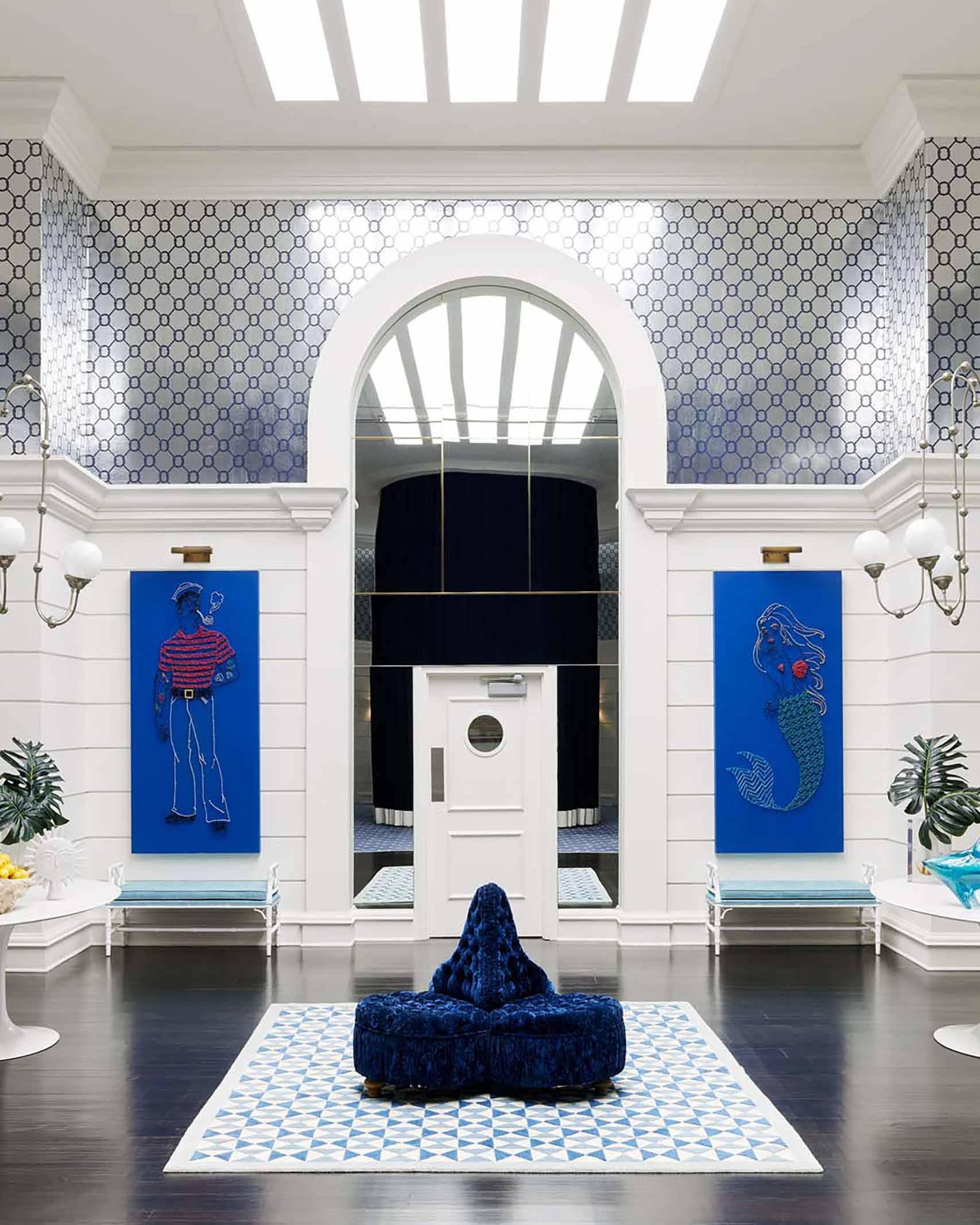
The Palm Springs Yacht Club spa, or PSYC by acronym, is where the Parker demonstrates its abandonment of any lingering sense of restraint, which is very unusual for resort wellness spaces. The spa is nautical themed in the most theatrical way possible. Guests are greeted with a cheerful “welcome aboard” as if they are about to set sail rather than lie down. Vodka shots appear as a welcome drink rather than the California-standard kombucha.
Inside, there are portholes and striped fabrics and a palette of blues and whites that suggests maritime nostalgia. Fringed canvas evokes deck chairs on imaginary transatlantic journeys. Our massage was deeply indulgent. We most definitely sailed away for a generous 90 minutes. If we were at all interested in more fitness-driven activities, the Boiler Room, with its vintage monochrome images of hunky sailors, would have been an inspiring place to work out.
It is hard to tell you everything about this hotel. There is just so much to share. So, best explore it for yourself. Honestly, the sense of discovery at the Parker Palm Springs is most tantalising, so book in and discover away.
But of course, it is our job to sum it up for you. So, what makes the Parker Palm Springs so compelling is not just its design or its history, but the way it refuses to settle into a single identity. It is also fundamentally fun and rather mischievous. It gives you permission and authority to be flamboyant, to be downright strange, to be yourself. The campness is not accidental either. It is a kind of coded openness – which is exactly as it should be. In an America where exclusivity is all ‘country club’ and about locking people out, and where you worry about whether you are wearing the right version of the right thing, the whimsy at the Parker is an invitation to just be you. And in today’s era of beige properties touting normcore luxury, it is refreshing to see a brand actively refusing restraint.
So walk in, down your shot of vodka and offer a fellow guest a cocktail. Let’s go party! After all, we are in Palm Springs…
Photography courtesy of Parker Palm Springs

Perfect for
The Hedonist

Fly into
PSP

Right on time
GMT -8
While you’re OutThere
With so many layers and so many artful pieces on the property, it’s sometimes hard to take it all in. But to miss any part of the whimsy would be a waste, so we recommend signing up for the hotel art tour to get you acquainted with the estate’s collection and why they were chosen.
Then, with design on your mind, head out into the Coachella Valley for a Mid-Century Modernism tour that will give you a deep dive into some of the incredible architectural icons in town. Ask the concierge to arrange a tour with private access that actually gets you inside a home or two, rather than just gawping at them from the pavement.