


Intersectional Amsterdam is our favourite Amsterdam. As the Dutch city readies to host WorldPride 2026, we take a look at the activists and performers who have had a lasting impact not only on Amsterdam itself, but also on communities – queer and not – beyond its urban borders. Help us honour the fierce, kind and powerful individuals who have helped make the world a better place for everyone.
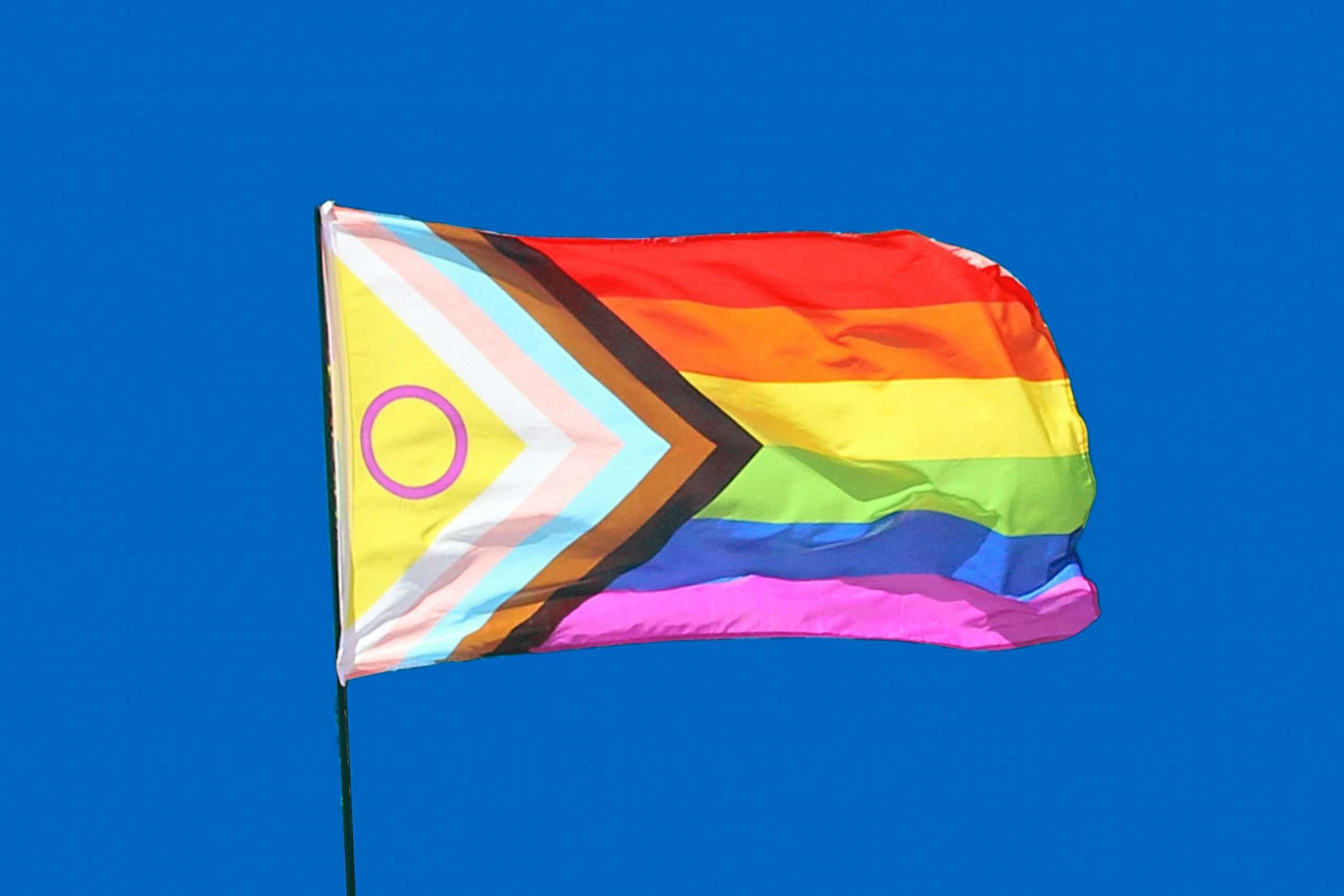
There are crosswalks all over Amsterdam where zebra stripes have been painted in rainbow colours and sidewalks with rainbow art. A lot of this isn’t for WorldPride. It’s simply part of how the Netherlands sees itself. After all, this country is the home of the world’s first gay marriage.
Like a lot of liberal places, however, Amsterdam’s rainbow community has some blind spots. Throughout its progress towards LGBTQIA+ equality, people of different backgrounds have played a huge role. Sometimes that role is forgotten, pigeonholed, or misunderstood.
As with so many issues, Amsterdam’s smaller size and intense community documenting make it a good lens with which to see what’s happening elsewhere. Intersectionality does not stop at borders, and we need to acknowledge the lived experiences, contributions and obstacles faced by all those who, like queer people, have had to fight for their rights. If the stories below – and the inspiring people behind them – resonate with you, it’s a testament to Amsterdam’s impressive history of progress.
International links
Some people find it easier to appreciate icons from a distance, while not acknowledging how those distant stars affect their own community. The ur-example of this for Amsterdam is Audre Lorde.
Possibly best known today for the line “Your silence will not protect you”, Lorde described herself as “black, lesbian, mother, warrior, poet”. Long before intersectionality became an academic buzzword, Lorde was preaching its existence in poetry, prose, and speeches. Most Amsterdammers who know her work assume she just inspired our citizens from afar.
This couldn’t be further from the truth. Lorde visited in 1984 and 1986 at the invitation of Surinamese lesbians who were being excluded from many queer spaces. The knowledge and inspiration Lorde shared with them led to the founding of Sister Outsider, a black lesbian action and support group named after Lorde’s work.
The poet’s work and activism have also had indirect impacts, including inspiring Marsha P. Johnson. While Europe’s first pro-gay protest happened in the Hague in January of 1969, New York’s Stonewall Riot in June inspired LGBTQIA+ people around the world to fight – and black trans woman Marsha P. Johnson is widely credited for helping lead the riot.
In the public eye

On the opposite end of the spectrum, some LGBTQIA+ Amsterdammers are remembered only for the uproar around their identity, not for what they did. Gloria Wekker was one of the founding members of Amsterdam’s Sister Outsider group. She is a writer and professor who has worked in and with the government to illuminate and alleviate the effects of discrimination of all kinds.
Her writing is compassionate and nuanced, while her perspective is sharply clear-sighted. She investigated feminism and sexuality within the Afro-Surinamese diaspora just as dispassionately as the effects of racism in the Netherlands. And yet, for some Dutch people, who have never read a word she’s written, she is the face of all they feel threatened by.
Another important voice is the reporter and author Mounir Samuel. Born in a Dutch-Egyptian family and assigned female at birth, Samuel became an important voice in Dutch media during the Egyptian Revolution. Reporting on cultural freedom in the wake of the Arab Spring, he realised that he needed to seize his own freedom. When he came out publicly as a man a few years later, he changed his name to Mounir.
Unfortunately, this is sometimes all he is known for. In a country that still doesn’t have many media figures of North African or Middle Eastern descent, he is sometimes made to be the queer representative of the entire community. Mounir, however, is an internationally awarded scholar and cultural thought leader. He’s published articles and books, and curated a museum installation on a wide range of cultural and political topics. To reduce him to his race or gender identity is to miss a fantastic and influential body of work.
Forgotten contributions
It might sound strange, but sometimes change can become so ingrained that people forget about the very person who first set the wheels in motion. And other times, those first innovators are intentionally removed from the story.
Drag, cross-dressing, and trans identity are so accepted in many Amsterdam cultures that it’s a bit of a shock to realise how new this acceptance is. Queer spaces in the 70s, 80s, and 90s tended to cater only to cisgender expressions. Enter Nickie Nicole, a black drag queen from NYC.
Almost as soon as she got to Amsterdam, she was hired to perform at queer clubs Exit, Richter, Havana, and RoXY. As she says, “I was a transvestite of colour, which the Dutch found very interesting. I was a bird of paradise”. Not only did this work help make inroads in the queer community, but her roles on Dutch TV also broke ground.
In the 1990s, she was the jury leader of the drag queen competition De Travestitieshow, which introduced drag to a wider audience. Her television appearances continue to this day, and she even released a single called Funkee in 1996. Nickie is still respected today – in fact, she was a Pride Ambassador in 2024, but we’d like to argue that she deserves more credit for the decades she’s spent introducing Dutch people to the gender spectrum.
Vuyo Raymond Matinyana, on the other hand, has been written out of some of his contributions. Raymond was a South African immigrant who lit up the drag scene as Miss Thandi. Based on South African divas, her performances were joyfully exuberant (so much so, in fact, that her act at the 1998 Gay Games is still remembered).
Raymond was a kind man who became the glue of the African immigrant community throughout his life. On a larger scale, he hosted African performers passing through and introduced them to the community. On a smaller scale, everyone who met him seems to have a story of an act of kindness.
His major contribution, which lives on to this day, was founding the AfroVibes Festival. Dedicated to African music and art, it was created for the African community that he himself had helped bring together. Now, it’s a weeks-long festival across the country, but information about its queer founder is notably absent from its online footprint.
Dual identities
One of the most universal ways that a queer person’s impact can be negated is to remember their work but not their sexuality. Remember discovering that James Baldwin, Josephine Baker or Alexander the Great were queer? Amsterdam has a couple of examples of its own.
Edgar Cairo wrote books, plays, and poems that beautifully explored the black experience and the culture of Suriname, a former Dutch colony with many ties to the Netherlands. He played with language, writing in a Surinamese Dutch later referred to as ‘Cairojaans’. His work, which addressed black grief and collective guilt, is widely admired. However, few profiles of him on literature pages or databases refer to his bisexuality.
Likewise, Twie Giok Tjoa is known for her relentless work to improve the position of women in Dutch society, especially that of black, migrant and refugee women. She’s active in Surinamese-Dutch institutions, including helping establish the new Suriname Museum. The sociologist received multiple awards for her work and was even made a knight by the Dutch king.
And yet, acknowledgement of her sexuality has been strangely absent. Tjoa has been a board member of a grassroots foundation for LGBTQIA+ women of colour, Mil Colores, for more than a decade and yet, many know her predominantly for her anti-racism work, as though there were a hierarchy, and it had to be either one or the other.
There are many ways that stories of LGBTQIA+ people with different backgrounds can get pushed to the side. As queer people ourselves, it is our duty to remember and think about the people our community might be overlooking. That’s because those who have paved the way for themselves and others should never be forgotten. And because by acknowledging the lives and situations of other communities who are routinely discriminated against, we can understand that they are ultimately fighting the same battle. It’s only by thinking with intersectionality in mind that our activism expands beyond the boundaries of our own people and helps to better the lives of all. With this in mind, we’ll be celebrating some of the lesser-known heroes during WorldPride Amsterdam 2026 – and we hope that you will be, too.
This article was produced in collaboration with Badass Tours, the Amsterdam-based walking tour company giving visitors to the city a behind-the-scenes look at iconic, yet frequently overlooked sites that tell the stories of diverse people who have shaped it: from LGBTQ+ and BIPOC communities to women’s history and Jewish history.