

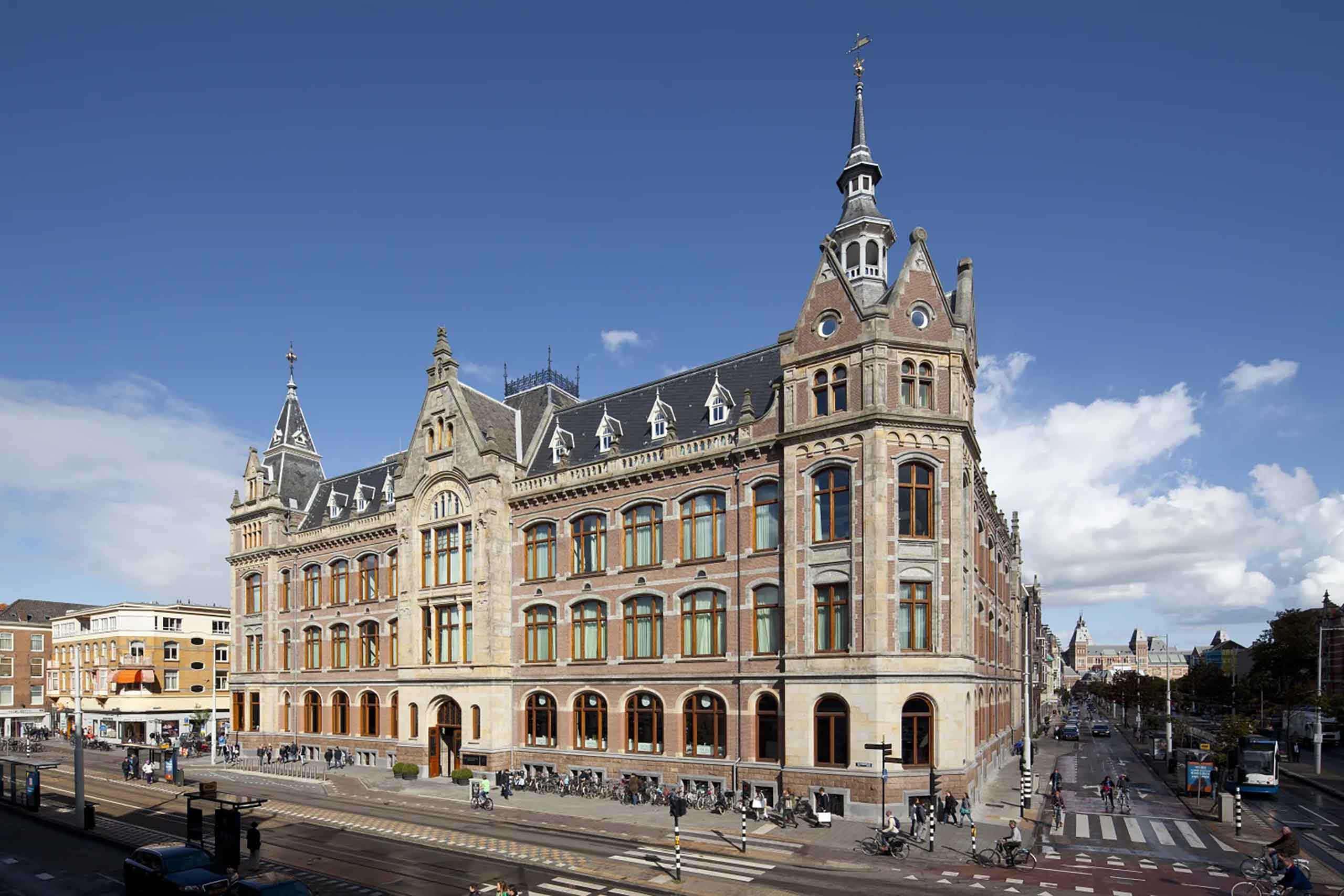




The Mandarin Oriental Conservatorium Amsterdam resists the easy categorisations that luxury hotels so often lean on – partly because the building it inhabits was never really one thing to begin with. It began as a government bank, became a conservatoire, and after a few years of careful reinvention into a high-brow Amsterdam hotel, has been fully adopted into the Mandarin Oriental family. You don’t simply stay here so much as attune to it – as though the building is subtly adjusting the tempo at which you register space, sound and time – and you only realise the shift has happened once you’ve stepped back outside, slightly out of sync with the city’s more frenetic pace.
We arrived in Amsterdam on a fresh winter morning, with that characteristic sense of disorientation this city of canals always seems to inspire – as if it was already rearranging our internal compasses while we were still trying to fasten the toggles on our duffle coats. (Incidentally, we learned on this trip that the Dutch have a rather endearing word for this sort of coat fastening – “knevelknopen,” translated literally as “moustache buttons” – yes, we digress, but this is for those of you who enjoy a little bit of destination trivia!)
We had read about the building before arriving, but of course, nothing quite prepared us for experiencing it in person.
The hotel occupies a building that first opened in the late 19th century as a financial institution – the National Postal Savings Bank, or “Rijkspostspaarbank” – designed by Dutch architect Daniël Knuttel in his role as chief government architect, or “Rijksbouwmeester”. The earliest iteration of what is now the Mandarin Oriental Conservatorium Amsterdam was rooted in civic trust and institutional confidence, expressed through Neo-Renaissance stone, symmetry and solidity.
At the time, the building embodied permanence. That legacy remains present in its fabric today – in the composed façade, the careful proportions and the quiet authority of its spaces, which continue to convey reassurance even in its current life.
But then, like many great European buildings, it evolved. By the late 20th century, it had become the Sweelinck Conservatorium, a music school. This is where things become particularly interesting, because the Mandarin Oriental Conservatorium Amsterdam today carries that transformation in its very atmosphere – money turning into music, structure giving way to expression.
When the building was later transformed into a hotel in the early 2000s, the GBP£60 million / USD$80 million intention was not to erase those histories but to layer them. The redevelopment was led by a team that included Dutch architect Wiel Arets and Italian designer Piero Lissoni, who brought a restrained contemporary clarity to the interiors. What they did well was not to overwork the narrative. It was not turned into a themed heritage hotel. It was allowed to remain itself, simply re-tuned for a different kind of visitor.
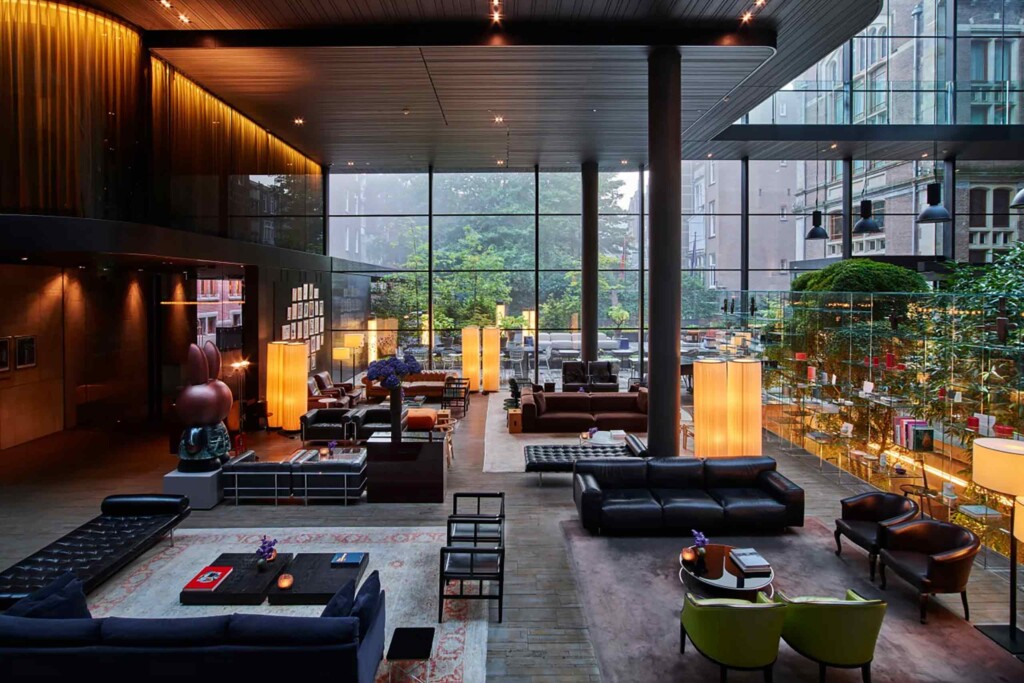
We kept thinking about that as we stood beneath the glass atrium, listening rather than looking at its history. We imagined its second life – students arriving with instrument cases, echoing corridors filled with scales and repetition, the soft collision of ambition and practice. That energy still feels present.
The imposing atrium rose through the centre of the building. Light poured down from the glass roof in long, shifting planes. People – guests, locals and team members – moved through slowly, unconsciously adjusting their pace in response to the space. The faint sound of piano music drifted through the air, the building’s conservatoire past still finding ways to surface. We remember stopping without really deciding to stop. We often looked up instinctively without prompting, our travel stresses dissolving away in a space far calmer than anything we had expected.
Check-in happened somewhere within the vast openness of this atrium, handled with the fluency one would expect from a Mandarin Oriental property. It set the tone for everything that followed – bags disappeared, names confirmed, credit card swiped, bottled water appeared, and we were guided towards our suite with an almost symphonic ease.
We made our way through corridors which had a rhythm to them – long sightlines, subtle turns and occasional glimpses back into the atrium. Then, in a masterful diminuendo, the room itself softened everything.
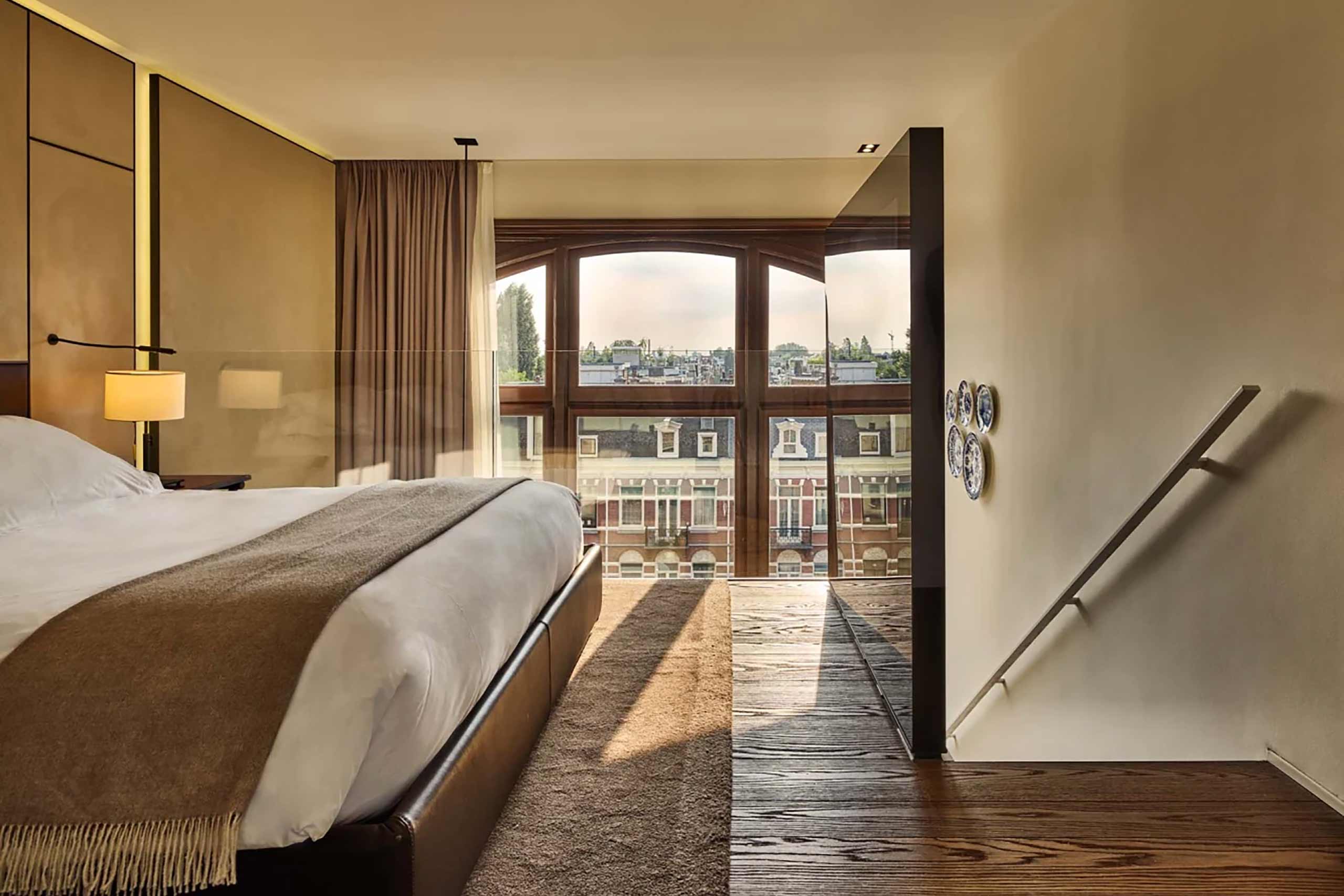
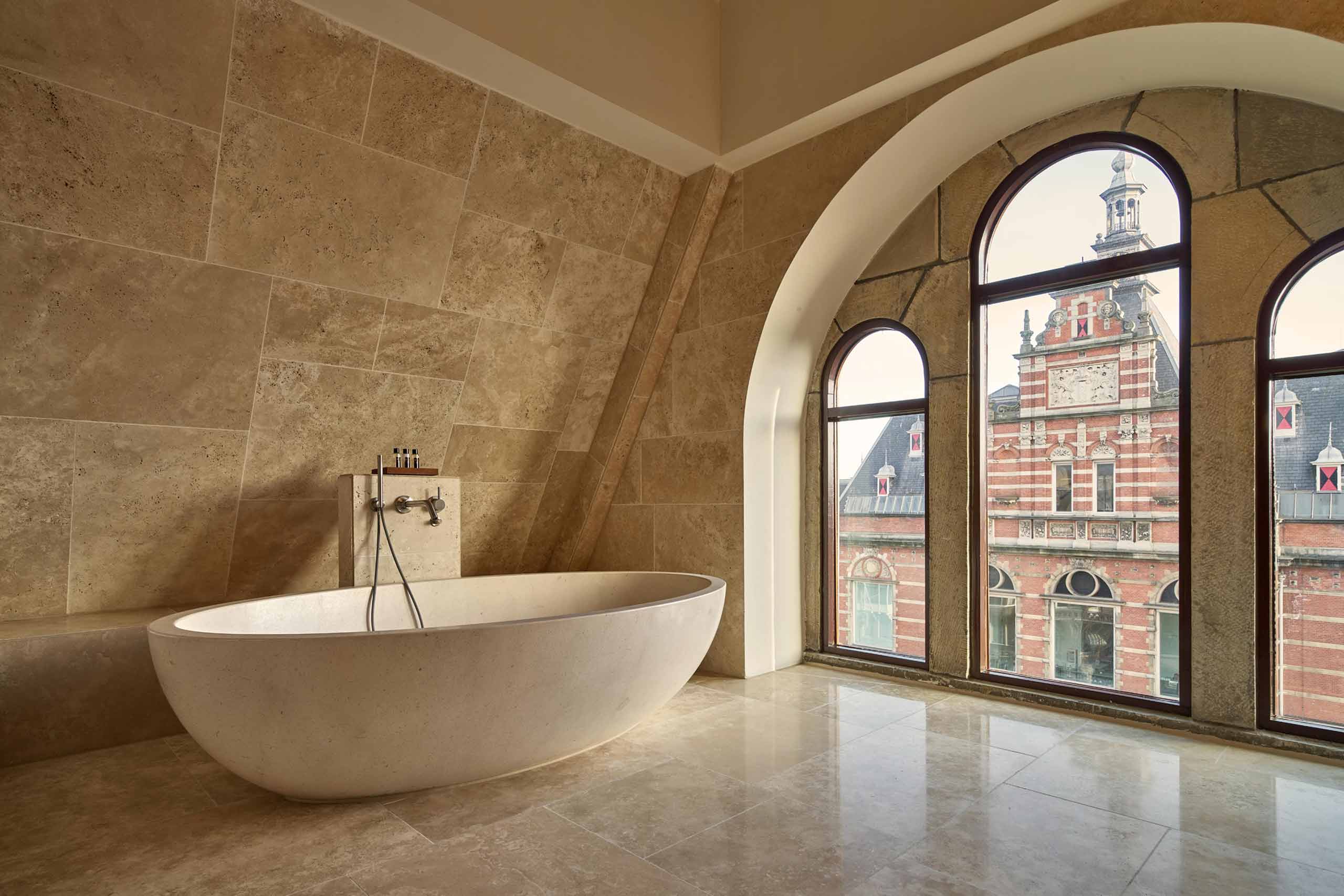
Inside our suite, the language shifted completely. The historical weight of the building stepped back just enough to let contemporary comfort take the lead. The design was calm without being sparse – warm woods, soft textiles and lighting all felt carefully considered.
We found ourselves noticing how light behaved differently during each part of the day. Morning light arrived generously as we woke. Afternoon light during our post-sightseeing respite flattened everything into quiet geometry. Evening light softened edges until the room felt almost suspended: perfectly chilled, natural mood lighting before a night out on the town.
Back downstairs, the atrium became our anchor point. We returned to it often without planning to – for breakfast, for coffee and for those in-between moments when we were not quite ready to leave the premises. It is, after all, a social space without insisting on sociability… unlike in the many properties these days where the idea of gathering feels somewhat enforced.
The restaurants are also natural hubs in their own right. Our personal favourite was Taiko Cuisine, where dinner unfolded as a sequence of tightly composed Japanese- and Asian-inspired plates that balance the region’s richness with clarity: from delicate sashimi and crudo, finely judged for texture and sharpened with precise acidity, to deeper, more grounded dishes such as Barberie duck and Kagoshima wagyu beef. There is a quiet irony in its setting: food so precise and immersive, but its dining room occupies what was once the conservatorium’s loudest corner – the percussion lab.
For something altogether different but equally considered, Ottolenghi Amsterdam provides a brighter, more expressive counterpoint just beyond the hotel’s immediate orbit – vibrant, produce-led dishes arranged with characteristic generosity and colour, suited to a lingering family-style lunch or an unfussy, well-executed breakfast.
The spa at the Mandarin Oriental Conservatorium Amsterdam, known as Akasha, is conceived as a holistic urban sanctuary, rather than a traditional hotel spa. Located beneath the building, the spa extends the hotel’s sense of layered storytelling into something far more introspective. The Mandarin Oriental Hotel Group’a approach to wellness – blending Eastern-inspired philosophies with Western therapeutic techniques – was present in a very precise, yet understated way. We moved almost liturgically through treatment rooms, an 18 metre / 60 feet indoor pool, sauna, steam hammam and hydrotherapy areas designed for restoration and quiet. We emerged as disoriented (in the best possible way) as when we first arrived in Amsterdam.
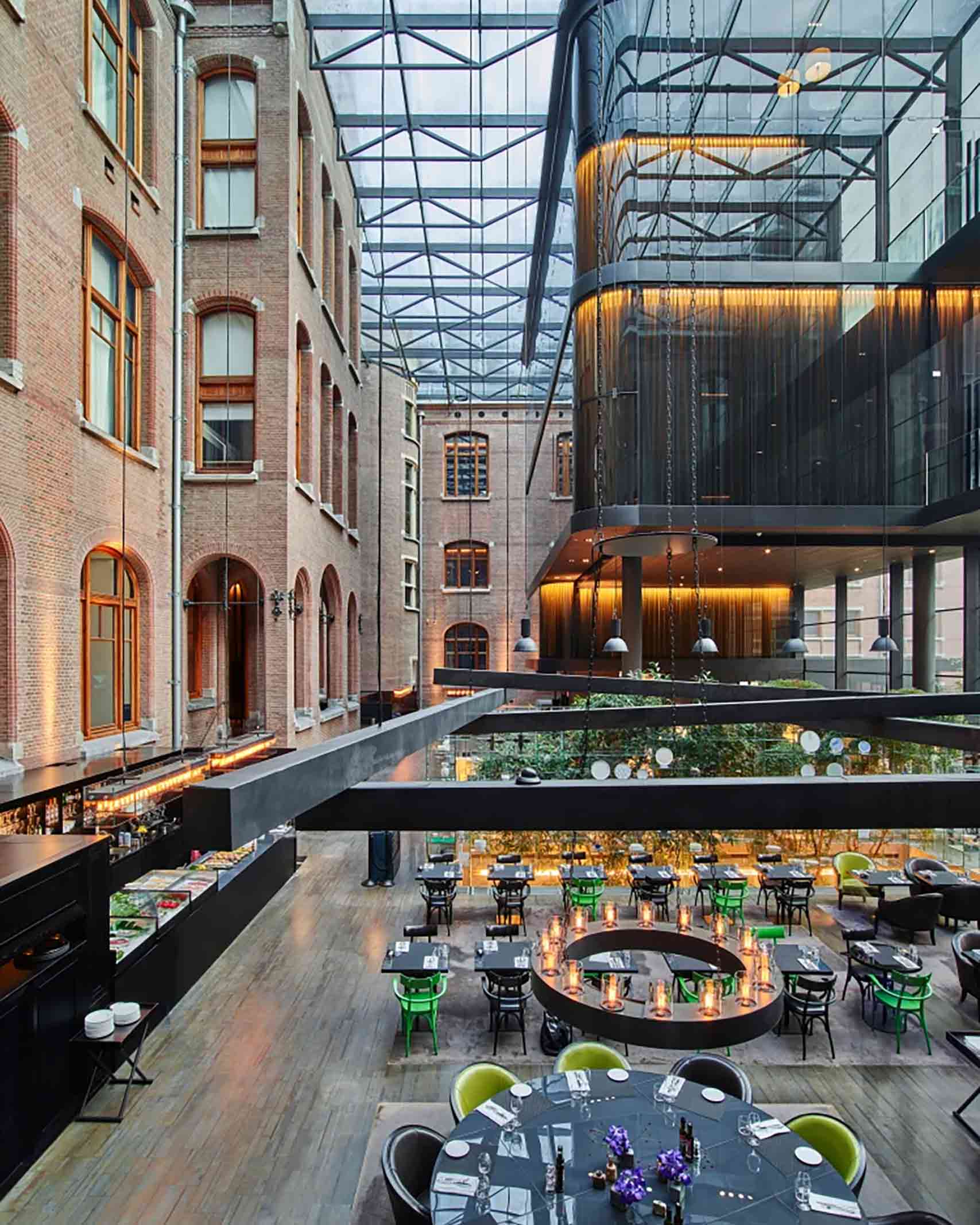
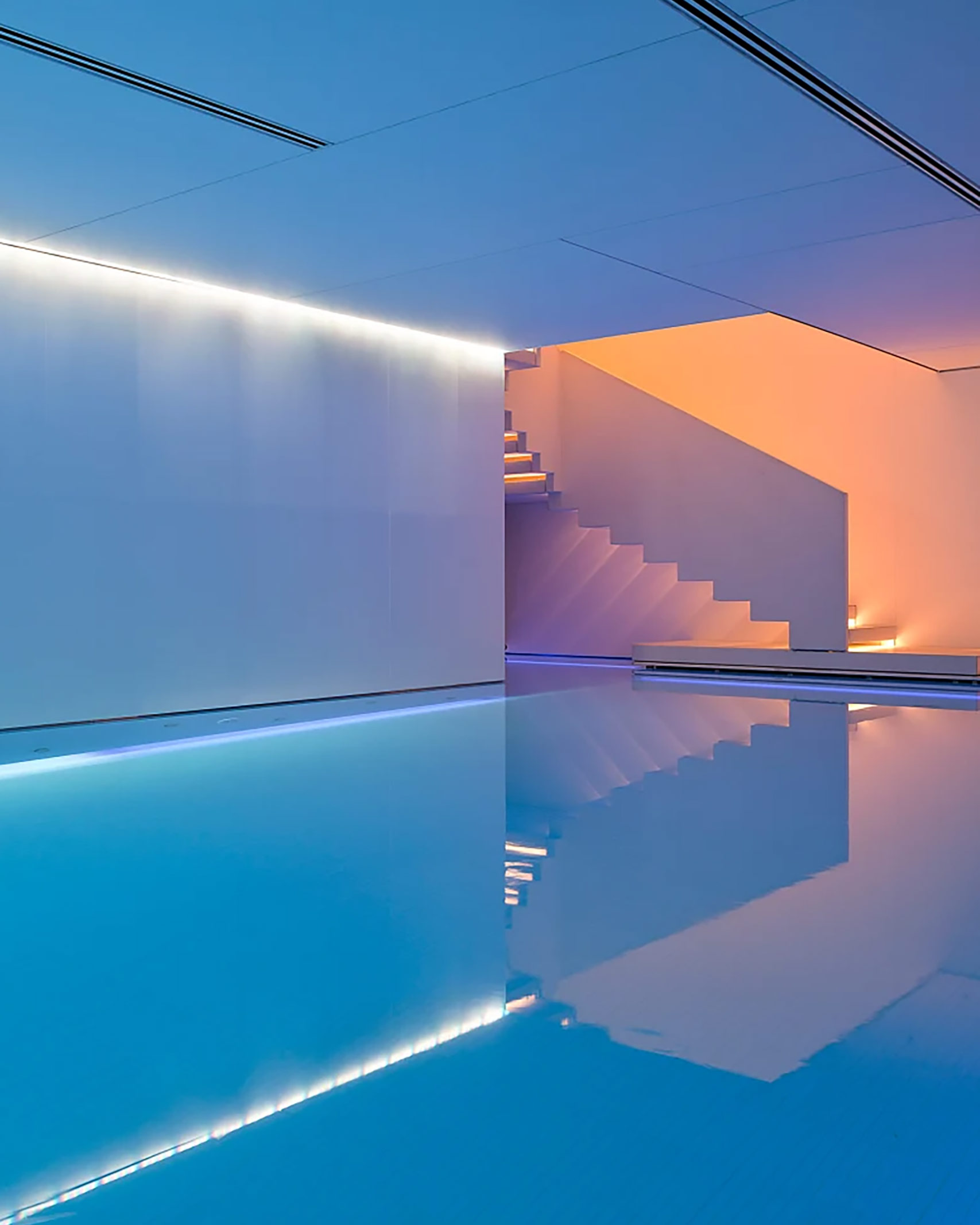
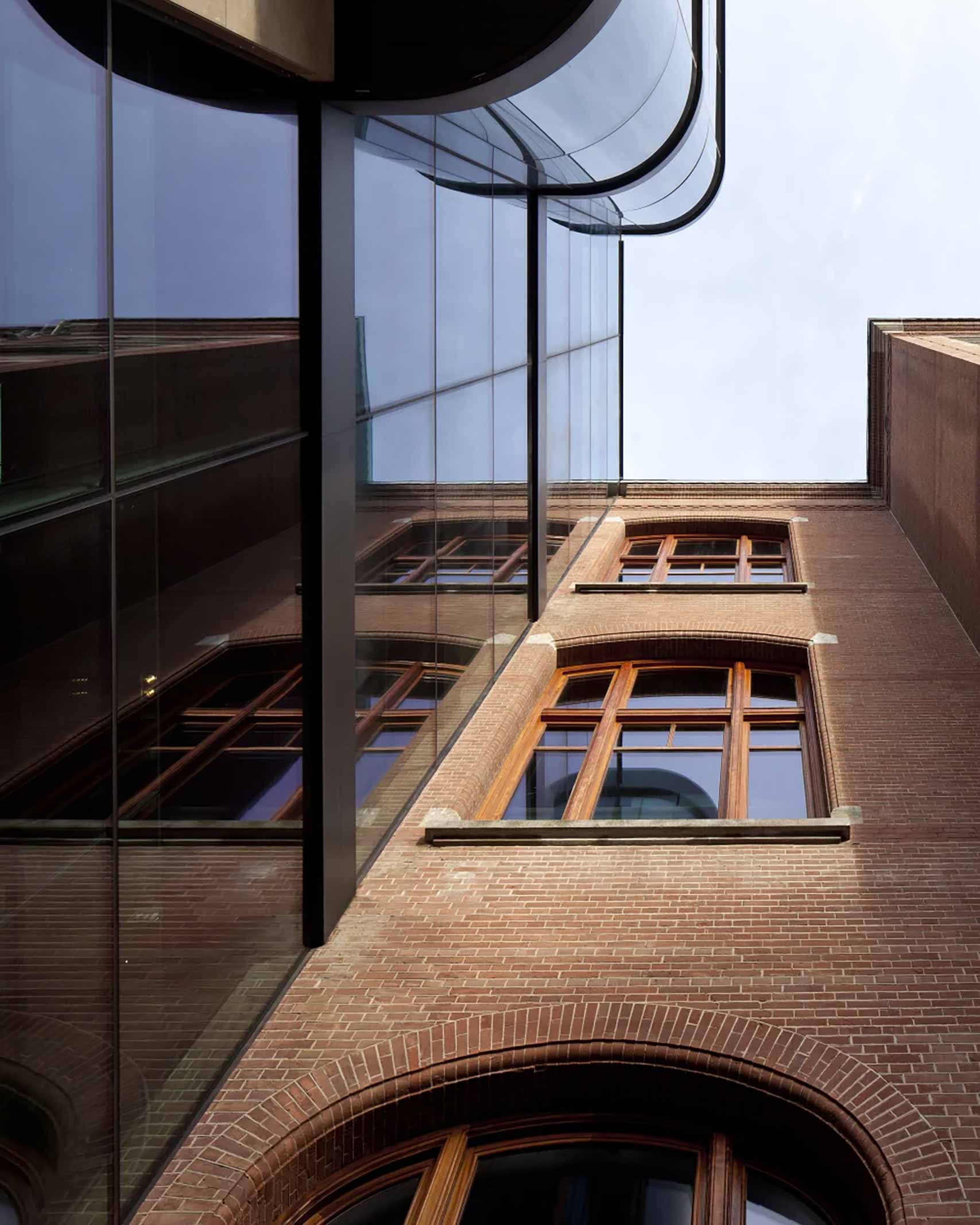
After check-out on our last morning at the Mandarin Oriental Conservatorium Amsterdam, we sat idly in the atrium longer than we intended to. We watched the light shift across the floor. We again watched people pass through in quiet rhythm. We listened to the building absorb the noise and play it back with ease.
It was then that we noticed just how effortlessly the Mandarin Oriental Conservatorium handles diversity of presence. Guests move through the space in all configurations – solo travellers, couples, families and friends – and nothing ever feels out of place. There is a quiet inclusivity embedded in the rhythm of its five-star, personalised service. That matters, especially refreshing in a space that could easily have leaned into formality or exclusivity. Instead, it felt welcoming without needing to announce it.
And we find ourselves thinking again about its origins. A bank built on permanence. A conservatoire built on practice. A hotel built on experience. Three lives layered into one structure – all still audible.
And then there is what it is now.
A Mandarin Oriental property, yes, but not one that overwhelms the building. The global luxury superbrand’s presence is felt in the service, in the refinement and in the consistency of care – but still it behaves like a guest rather than a takeover. They understand that the past is already a complete story, and that they are contributing to a new chapter rather than rewriting what came before.
When we finally left and stepped back into Amsterdam’s restless energy, the contrast was immediate. The city felt louder, more kinetic and more fragmented than ever before.
Photography courtesy of Mandarin Oriental Conservatorium Amsterdam

Perfect for
The Culturalist

Fly into
AMS

Right on time
GMT +1
While you’re OutThere
Walking from your base at the Mandarin Oriental Conservatorium Amsterdam, slip first into the uncanny hush of Begijnhof, where a hidden medieval courtyard suspends the noise of the city as if it has been gently edited out of the air, before drifting onward into the stone-arched passage of Oudemanhuispoort, where second-hand books spill history into the walkway, begging you to browse. From there, reality tilts just a fraction at Electric Ladyland, a compact, quietly surreal space where fluorescent minerals and reactive light transform perception into something almost hallucinatory. And finally, dissolve into the layered reflections and narrow canals of De Negen Straatjes (The Nine Streets), where life feels a little slower and more self-contained – echoing, in its own way, the calm, unhurried rhythm of the hotel.