



The generational grand dame that wrote the playbook for Alpine winter luxury, Badrutt’s Palace Hotel, has little left to prove. And yet, St Moritz’s unofficial treasure trove of little eccentricities and glamorous anecdotes has entered an ambitious new era with the opening of its Serlas Wing – a signal, perhaps, that Badrutt’s has its eyes set on ever-higher peaks.
The year is 1896. The first patents are filed for wireless telegraphy, the Olympic Games return to Athens, and the Klondike Gold Rush sends prospectors north in search of fortune. Across Europe, the Belle Époque is in full swing with steam trains and peripatetic aristocrats, and high in the Engadin Valley, overlooking the frozen lake of St. Moritz, Caspar Badrutt opens the doors to his turreted palace hotel. Caspar was the son of Badrutt family patriarch Johannes Badrutt, who – with his nearby hotel Kulm – had made a bold wager with English summer guests decades earlier: to return in winter and, if they didn’t like it, he would reimburse them for their efforts. They came, they loved it, they paid, and winter tourism in the Alps was effectively born.
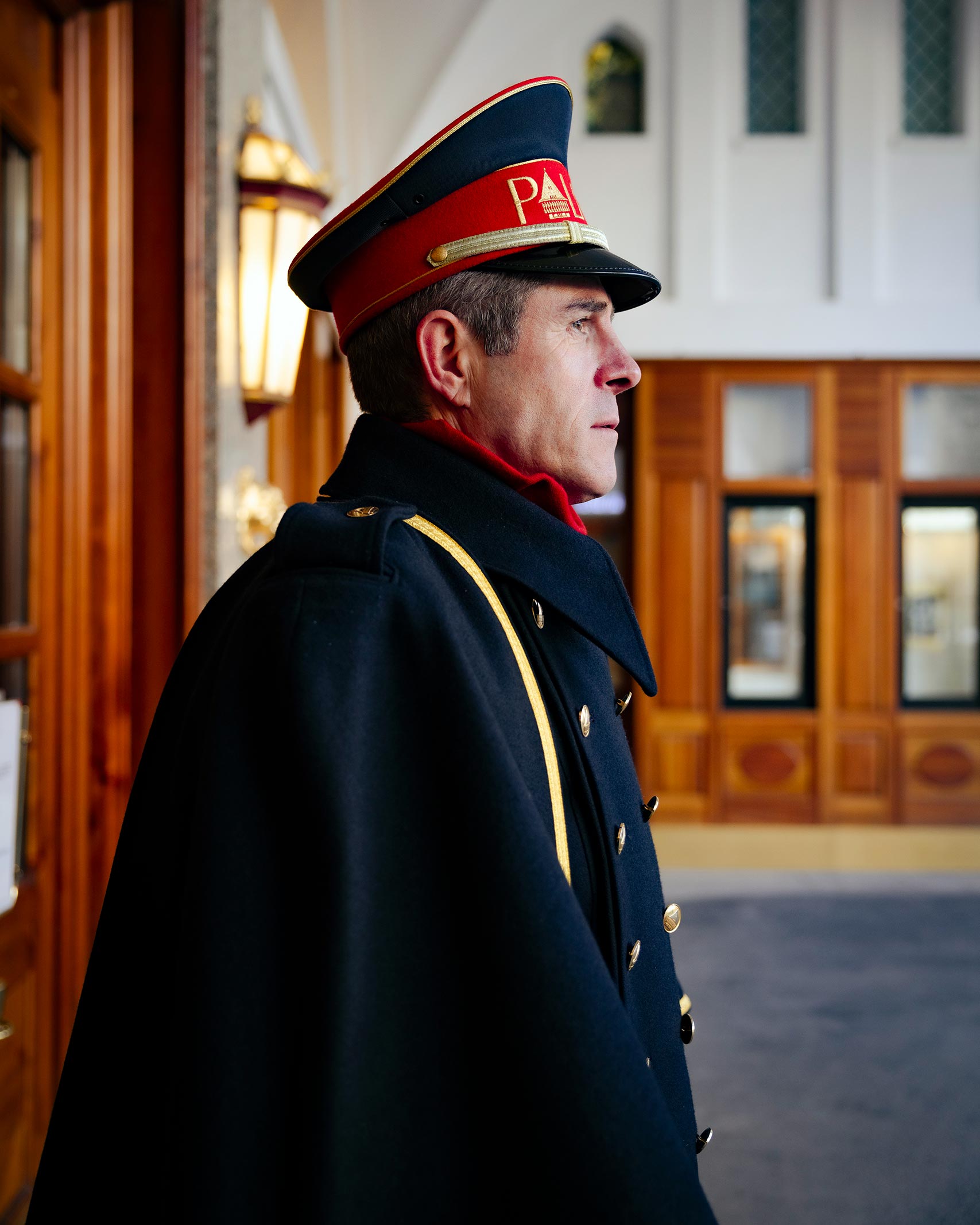
A hundred and thirty years later, we didn’t so much fly to reach Badrutt’s Palace Hotel as time-travelled to it. From the moment we walked through the front doors (held ajar by doormen in grand navy-and-red military-style uniforms), we were awash in the theatrical, precise, buzzy atmosphere of a first-class transatlantic steamer from another era. Few hotels embody a bygone time so completely, and this is truly the apex of Swiss old-world luxury.
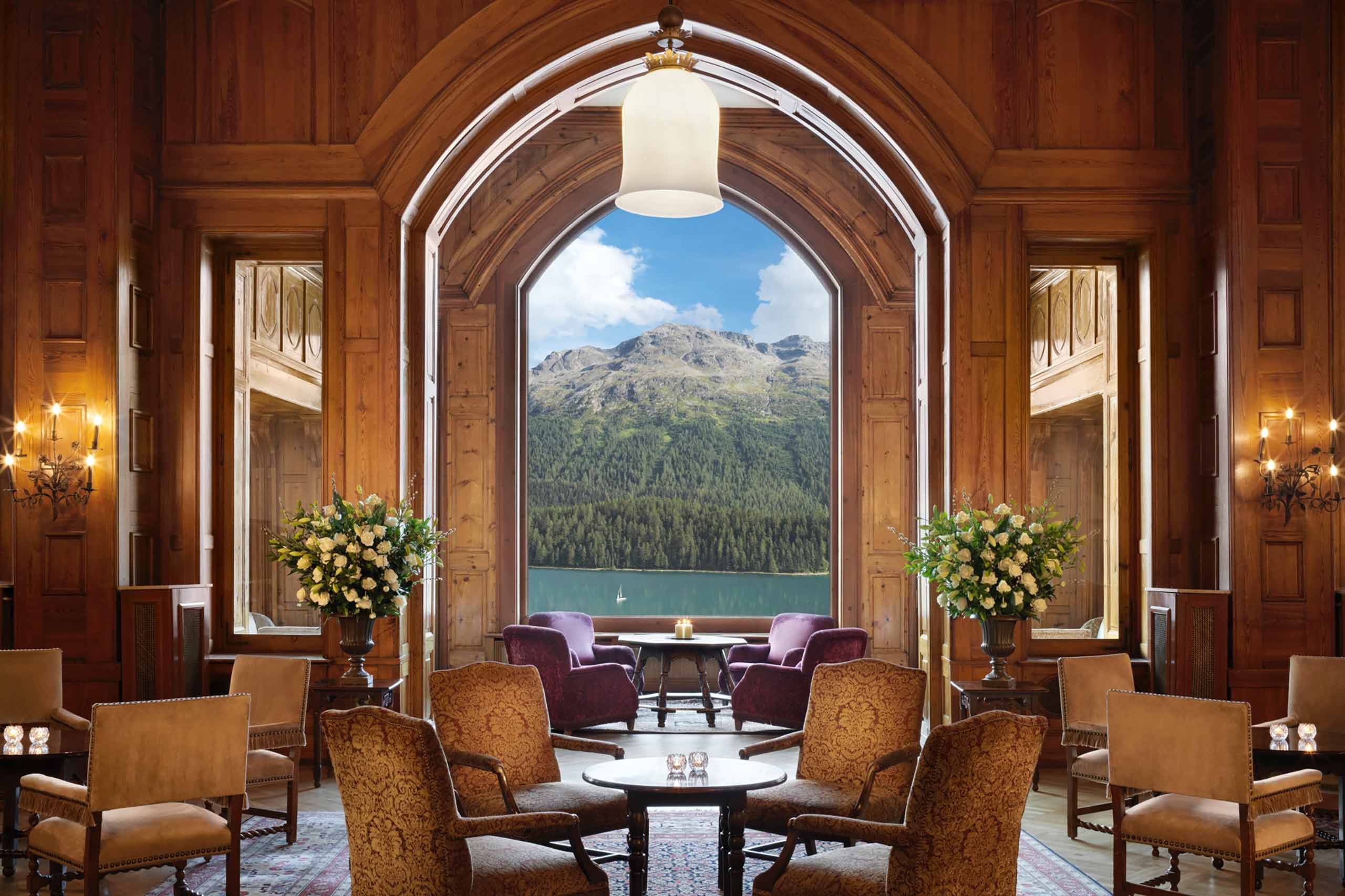
Check-in happened later in our suite (which we loved; paperwork in public is so gauche), and so we were left to make first impressions in the oversized lobby: a spectacle of jewel tones, warm woods, and patrician couples in designer ski wear. Very Ralph Lauren Christmas. Everything (and everyone) looked beautiful, expensive, and highly ornamental. The staff told us roughly 60 per cent of guests are repeat visitors, a figure that explains the comfortable familiarity in the air.
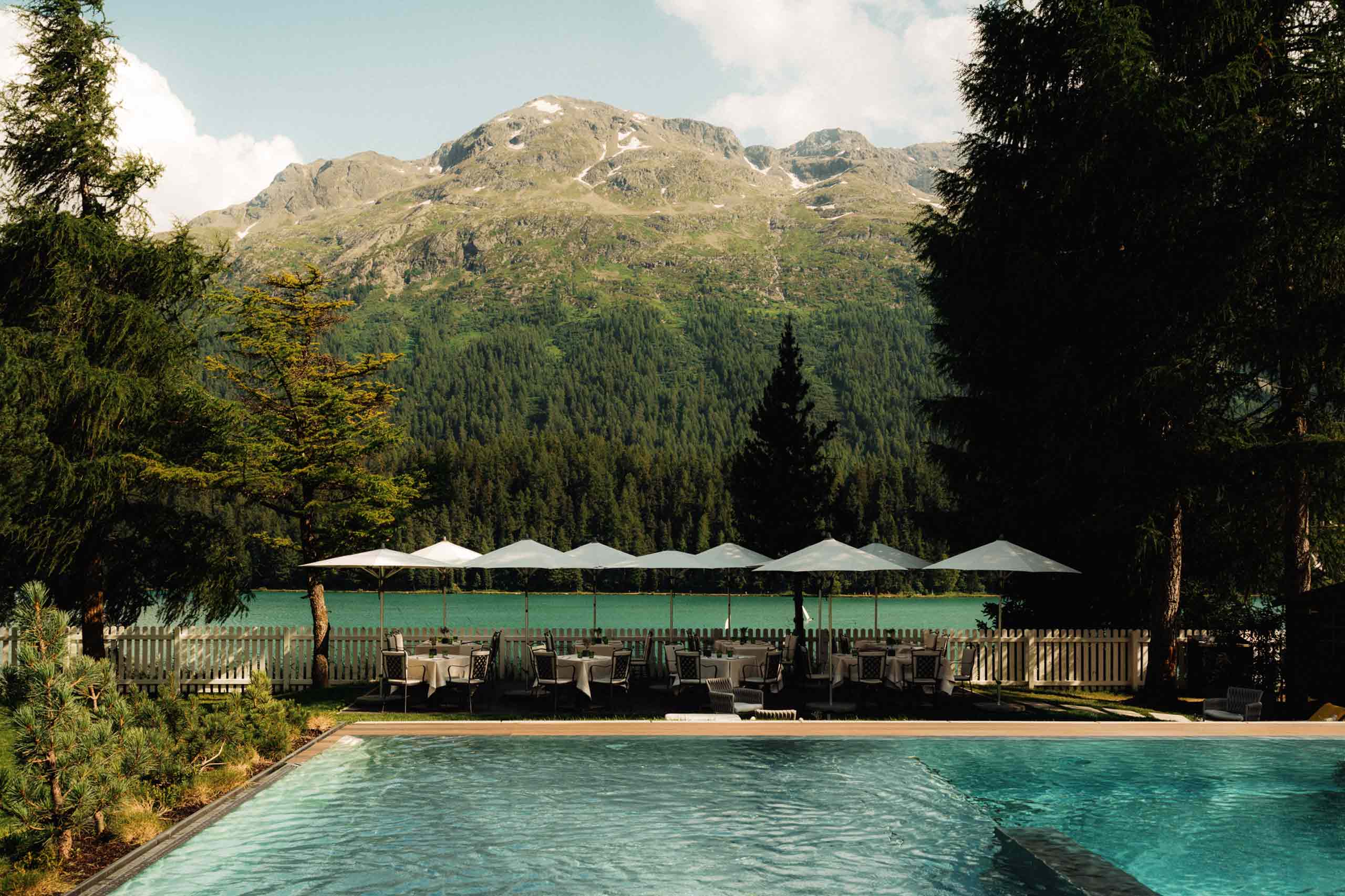
Outside the massive lobby windows, the snow-white Engadin unfurled like a fluffy duvet. St. Moritz sits in an unusually wide alpine valley with around 300 days of sunshine a year (snag a table on the terrace to soak it in). From every angle, there’s sugar-dusted mountains, frozen lake, and glacial forest.
Beyond the lobby, it was the little eccentricities that reinforced the hotel’s personality for us. There was an old telephone booth tucked into the entry foyer, and two vintage Rolls-Royces sat out front ready for transfers to the pistes (one dating to 1968 and once owned by the British royal family). In the underground garage, there was even a private car wash for guests’ vehicles, a delightfully absurd extra that perfectly sums up the Palace’s philosophy of going way above and beyond.
With 11 restaurants and multiple bars, Badrutt’s Palace is also an overachiever on the gastronomic front. The social centrepiece is the lobby restaurant, Le Grand Hall. Here, waiters in white jackets with gold buttons swan about with silver trays, while we lingered over long lunches. The menu runs the gamut from international classics to Indian dishes (the butter chicken is a cult favourite), but we leaned into Alpine tradition and ordered schnitzel followed by an off-menu kaiserschmarrn, the beloved Austrian dessert of shredded caramelised pancakes dusted with icing sugar and served with plum compote. The hotel’s long-standing pastry chef extraordinaire, Stefan Gerber, prepared it tableside and dished it up on Italian Ginori 1735 porcelain, drawing the attention of everyone in the room (we never mind causing a stir, though).
Nearby, in an opulent robin’s-egg-blue salon splashed with winter sunshine, a palatial breakfast buffet is served each morning with a side of live harp music. We especially loved the bottles of help-yourself Ruinart, resting in a vasque à champagne filled with snow-like flake ice. The list goes on with La Coupole – Matsuhisa, by Nobu, housed inside a vintage indoor tennis hall, and the underground, neon-sign-lit King’s Social House, care of Jason Atherton. Then, there’s the après-ski hotspot Paradiso, accessible via chairlift (the resort may be one of the world’s most famous ski destinations, yet here skiing comes second to socialising). We say this spot is a must; try the onion soup and the winter spritz.
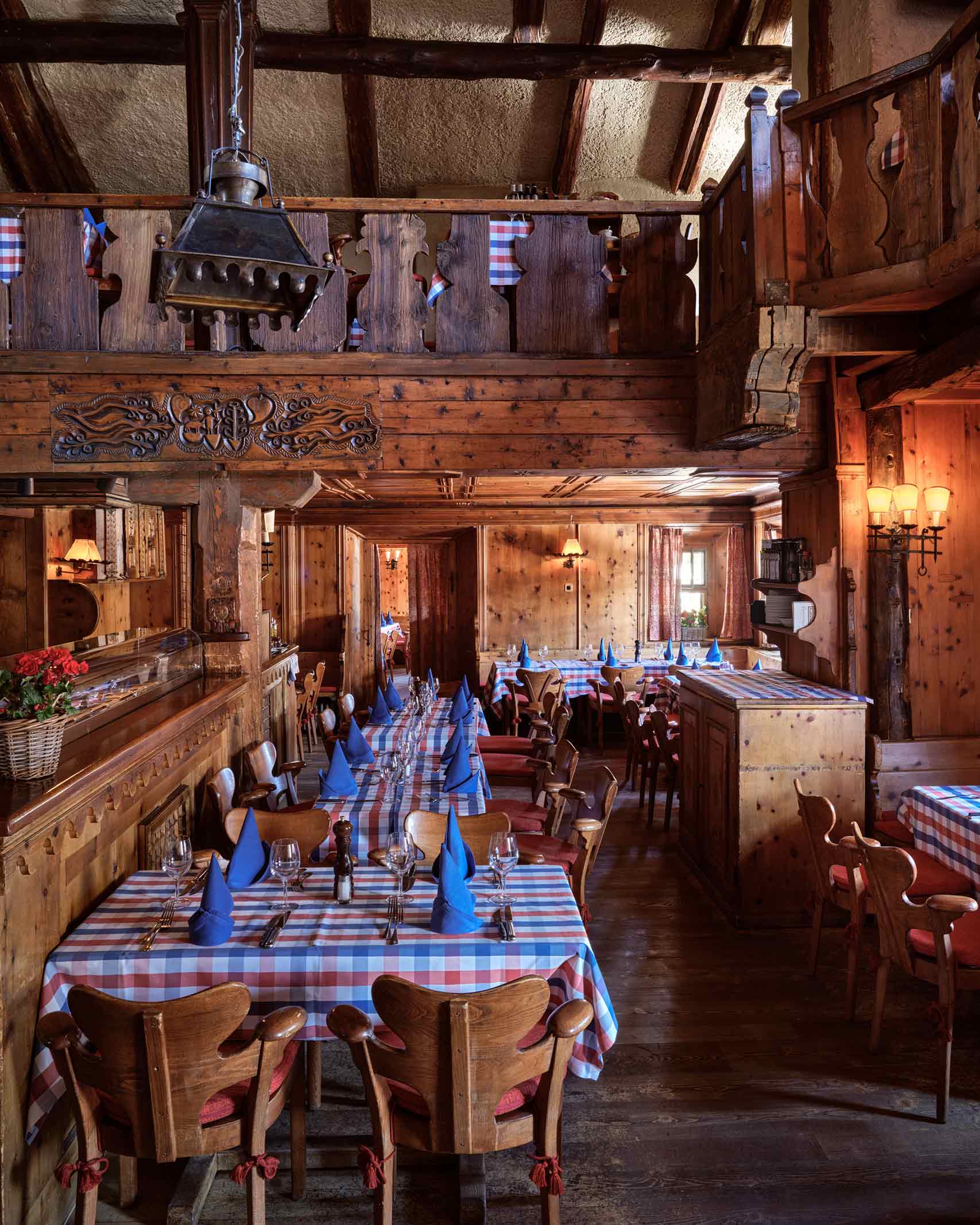
Stretching 160 metres underground, the cellar reveals the hotel’s obsession with wine. Around 30,000 bottles line the shelves, and the hotel has also been a Krug Champagne ambassador since 2017. However, the most popular dining spot (and our favourite) lies across the street, accessible via an underground tunnel at Chesa Veglia, a 17th-century farmhouse purchased by the Badrutt family in the 1930s.
A pile of wood-panelled stübli-style rooms, it’s the hottest ticket in town, containing several restaurants under one roof. We especially adored the tiny 12-seat fondue room – a lactose fever dream with pure Heidi vibes (see: timbered walls, glowy candlelight, and tendrils of steam rising from the ceramic, cheese-filled caquelons).
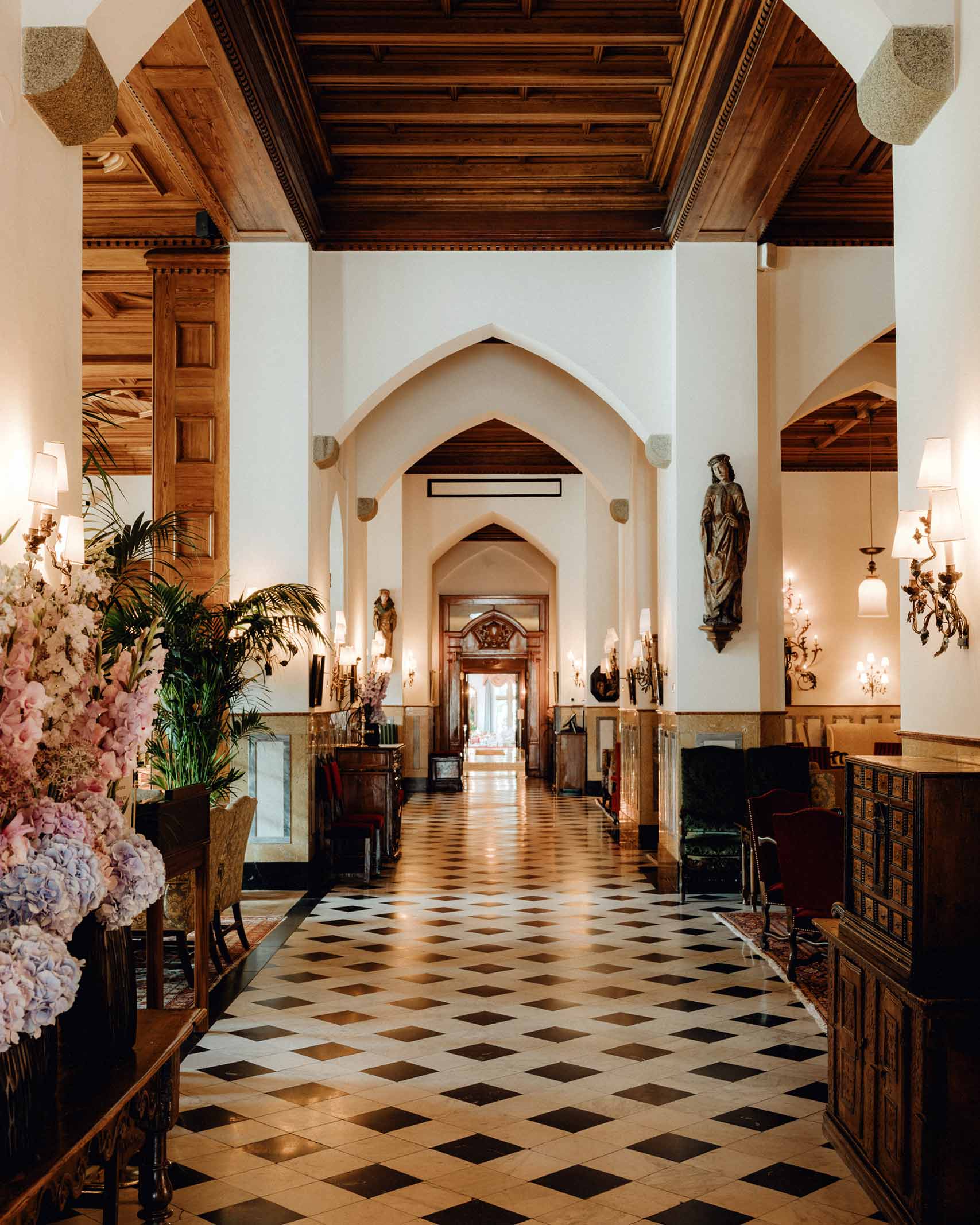
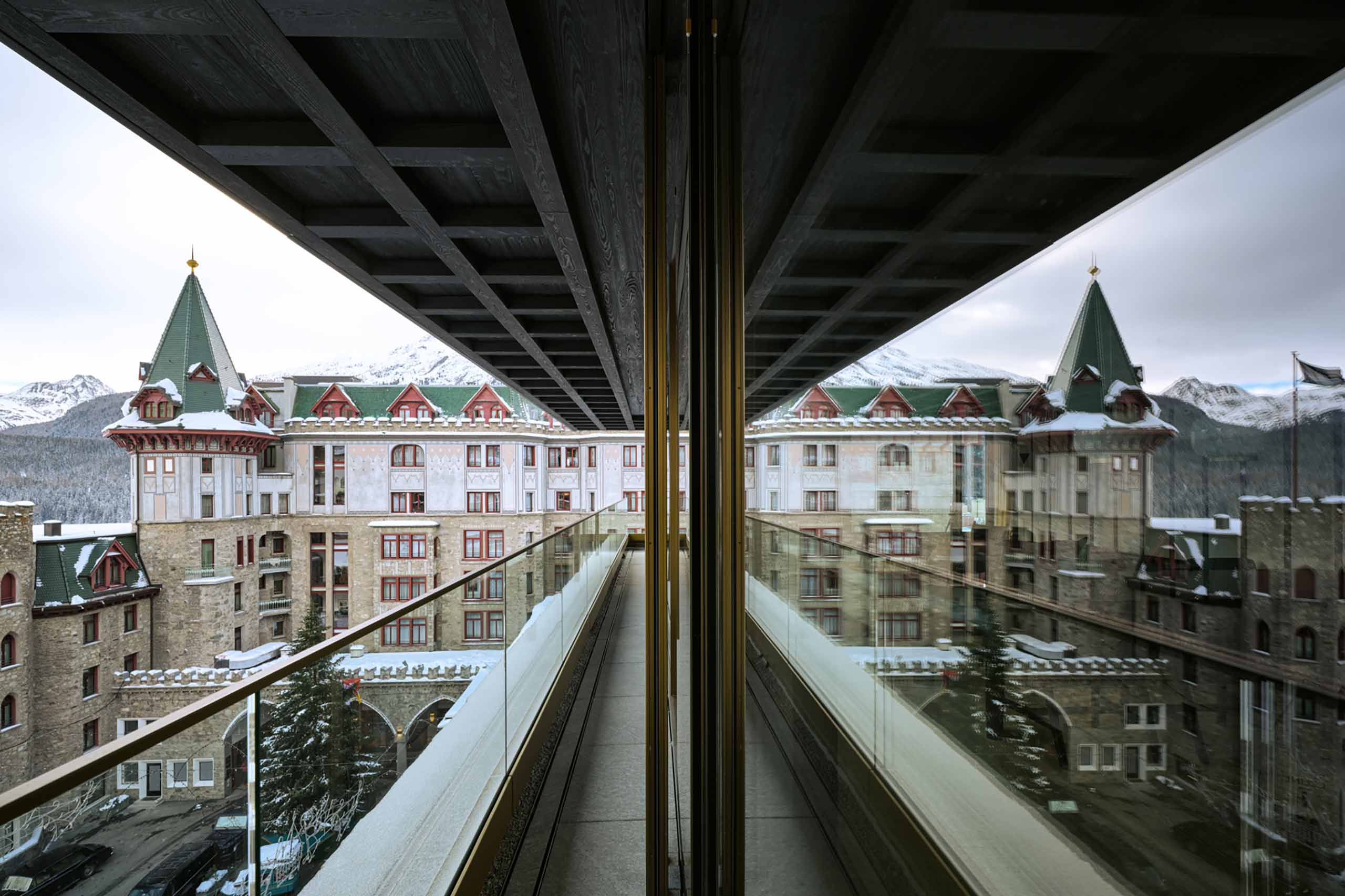
After all this food and drink, a comfortable retreat is essential, and rooms are set across two wings. Constructed from local Crema Julia granite, the castle-like heritage wing feels like an Austro-Hungarian hunting lodge, with hallways strung with oil paintings and sconces and rooms bedecked in antiques, glazed-tile fireplaces, and fluffy beds with headboards resembling iced gingerbread. It was here that we found the Alfred Hitchcock Suite. “He was a regular guest and a very good friend of the Badrutt’s family”, the staff told us: “Now we’re the only hotel in the world with a Hitchcock suite” (mind, some team members speculate that Hitchcock may have drawn inspiration for The Birds from the black alpendohle birds that swirl dramatically over the frozen lake.
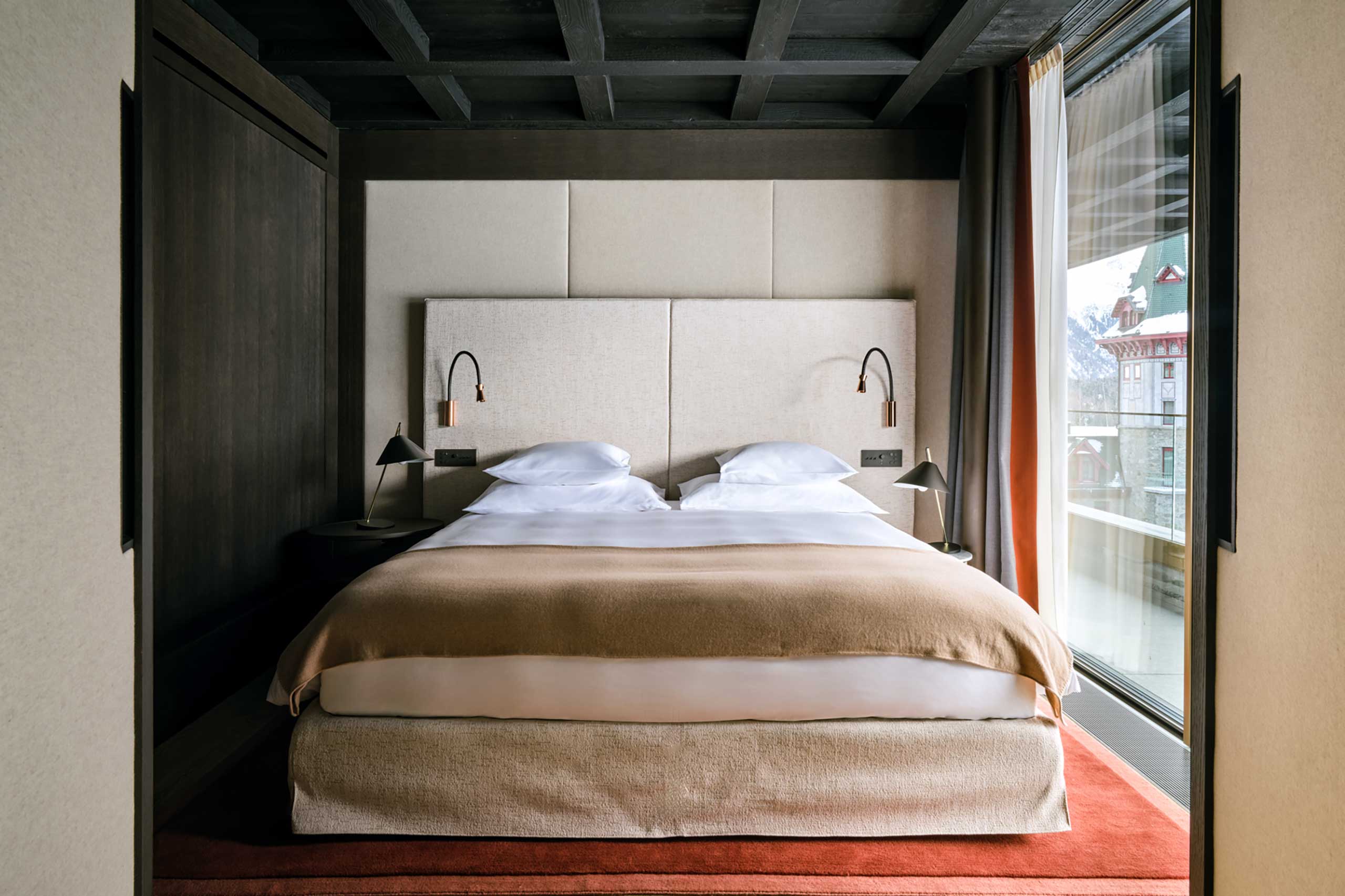
Then, there is the new, 2025-born Serlas Wing, by ACPV Architects, the team behind several Bulgari Hotels & Resorts properties (co-founder Antonio Citterio even has a home in town). With 25 keys, it feels very au courant, dressed in Loro Piana fabrics with a calm, safe, and tailored personality. It was a bit too modern for our taste (we want to feel like we’re living in another time period, thank you very much), but the original wing suited us perfectly.
Even with this stylish new addition, it’s abundantly clear that Badrutt’s Palace is not a hotel that tries to reinvent luxury. In a world obsessed with the next trend, the Palace remains steadfastly itself: slightly eccentric and deeply charming. After more than a century, Badrutt’s wager continues to pay off. We will not be asking for a refund.
Photography by Steve Herud and courtesy of Badrutt’s Palace Hotel

Perfect for
The Sophisticate

Fly into
ZRH / SMV

Right on time
GMT +1
While you’re OutThere
Duck into the small-but-spellbinding Segantini Museum, perched on a slope above St. Moritz. The domed stone building was constructed in 1908 to honour the Symbolist painter Giovanni Segantini, whose luminous landscapes helped mythologise the valley. It’s a reminder that St. Moritz has long served artists as much as aristocrats.