




Beyond Fort Lauderdale’s sunlit shoreline, cruise-ship gateways and spring-break mythology lies a city shaped by coastal ease, subtle reinvention and queer sanctuary that brings with it a deeply rooted sense of belonging. Now, with a new wave of design-led luxury arriving along its waterfront – the most striking of which being the Four Seasons Hotel and Residences Fort Lauderdale, a yacht-sleek study in oceanfront refinement – the city is stepping out from Miami’s long shadow not by imitation, but by leaning into something altogether more restorative, more grounded and, dare we say, more compelling.
For all its notoriety, the seaside city of Fort Lauderdale, Florida, has tended to sit in the shadow of its neighbouring destinations – particularly when it comes to luxury travel – often cast as a sun-drenched stopover between Miami’s operatic excess and Palm Beach’s old-money hush. Yet to reduce it to a way station is to miss the point entirely, because while its coastal counterparts basked in the spotlight for decades, Fort Lauderdale was quietly rising in the margins.
It rose first as a spring break legend, then as a cruise hub for Caribbean island-hopping, and somewhere in between, it became one of the most significant LGBTQ+ destinations in the United States. Not in the polished, branded sense of later Pride marketing, but in the lived geography of belonging. Wilton Manors, its famously queer enclave, became shorthand for a kind of suburban utopia where ‘Pop-and-Pop’-owned gay guesthouses outnumbered chain hotels and where luxury was about recognition rather than resplendence.
Those early stays were not about grand oceanfront hotels. They were about being able to breathe fully: a sense of community and a social rhythm that said, “you are safe here, you are seen here, you are among your own” – oh, and clothing-optional pools, of course.
Fort Lauderdale still carries that legacy in its bones today. But the skyline, particularly on its beachfront, is changing. Over the past decade, luxury has certainly arrived. After all, it is often said that wherever the gays are, fabulousness follows.
Where Miami once held the monopoly on beachfront sophistication, we watched it spread northwards to Hollywood and Fort Lauderdale beyond it; destinations that have rewritten the geography of desirability on this long stretch of Atlantic coast. They have better beaches, arguably, certainly calmer ones, and now with the rise of the Brightline train connecting Fort Lauderdale effortlessly to Miami and Orlando, the city feels less like a secret and more an inevitability.
The irony in all of this is that Fort Lauderdale was never lacking in appeal. It was simply lacking the kind of hospitality architecture that translates place into prestige. That has now shifted. A new wave of elevated stays has reshaped the shoreline and leading that charge with confidence is Four Seasons Hotel and Residences Fort Lauderdale, arguably the best – if rates are any indication – property in the city.
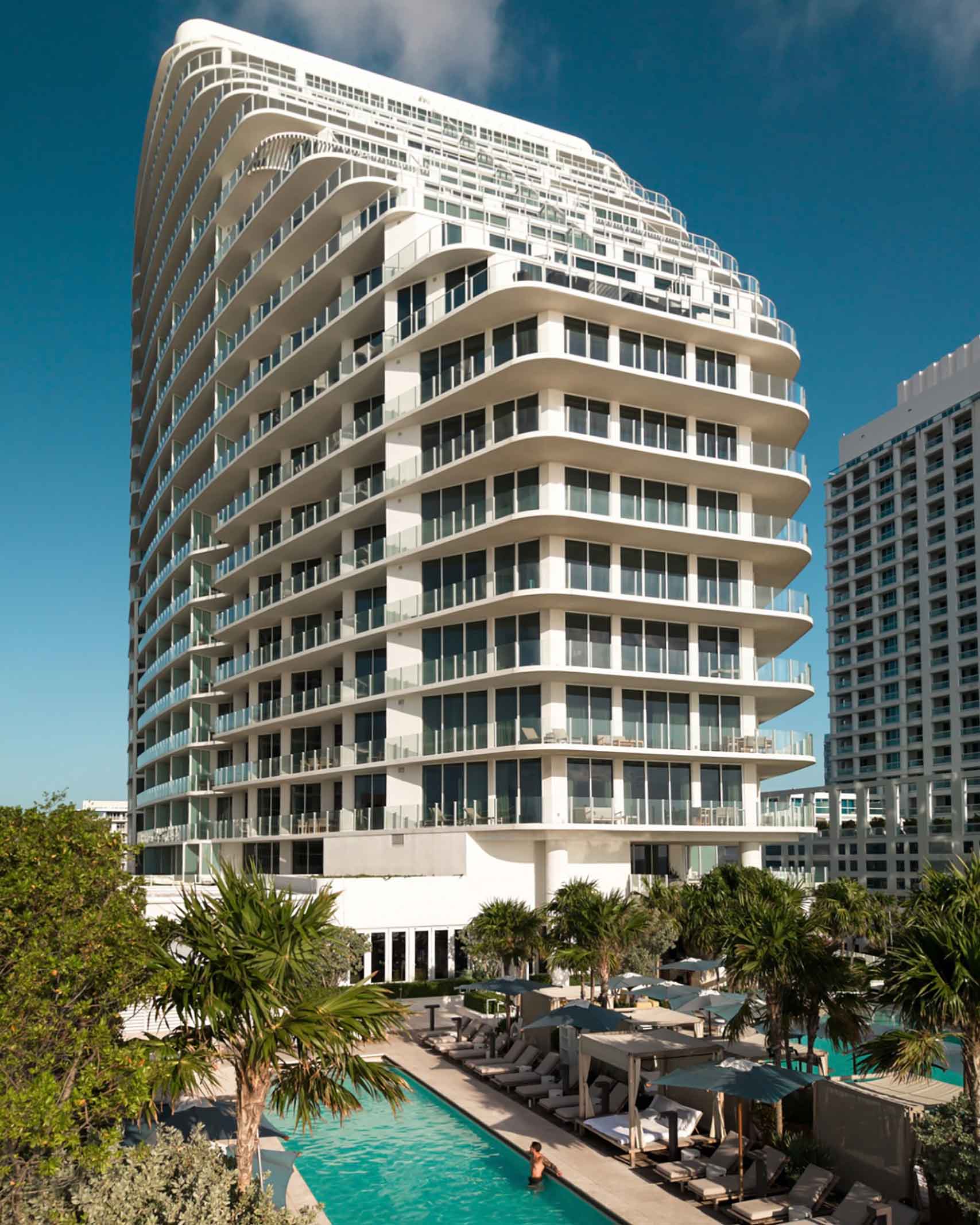
The Four Seasons Hotel and Residences Fort Lauderdale sits on the oceanfront with a distinctly Floridian sensibility, shaped by Atlantic light, tropical ease and a relaxed yet refined way of living. The building itself, designed by architect Kobi Karp, is conceived as a curved, yacht-inspired form that draws the eye towards the Atlantic.
That Floridian maritime philosophy flows inward, though the lobby reveals a more restrained, almost homely design language. The interiors of the hotel were led by Tara Bernerd, whose approach is deliberately restrained yet textural, drawing on a Riviera-meets-yacht-club aesthetic with mid-century references, pale woods, stone finishes and a palette that leans into sun-washed coastal tones.
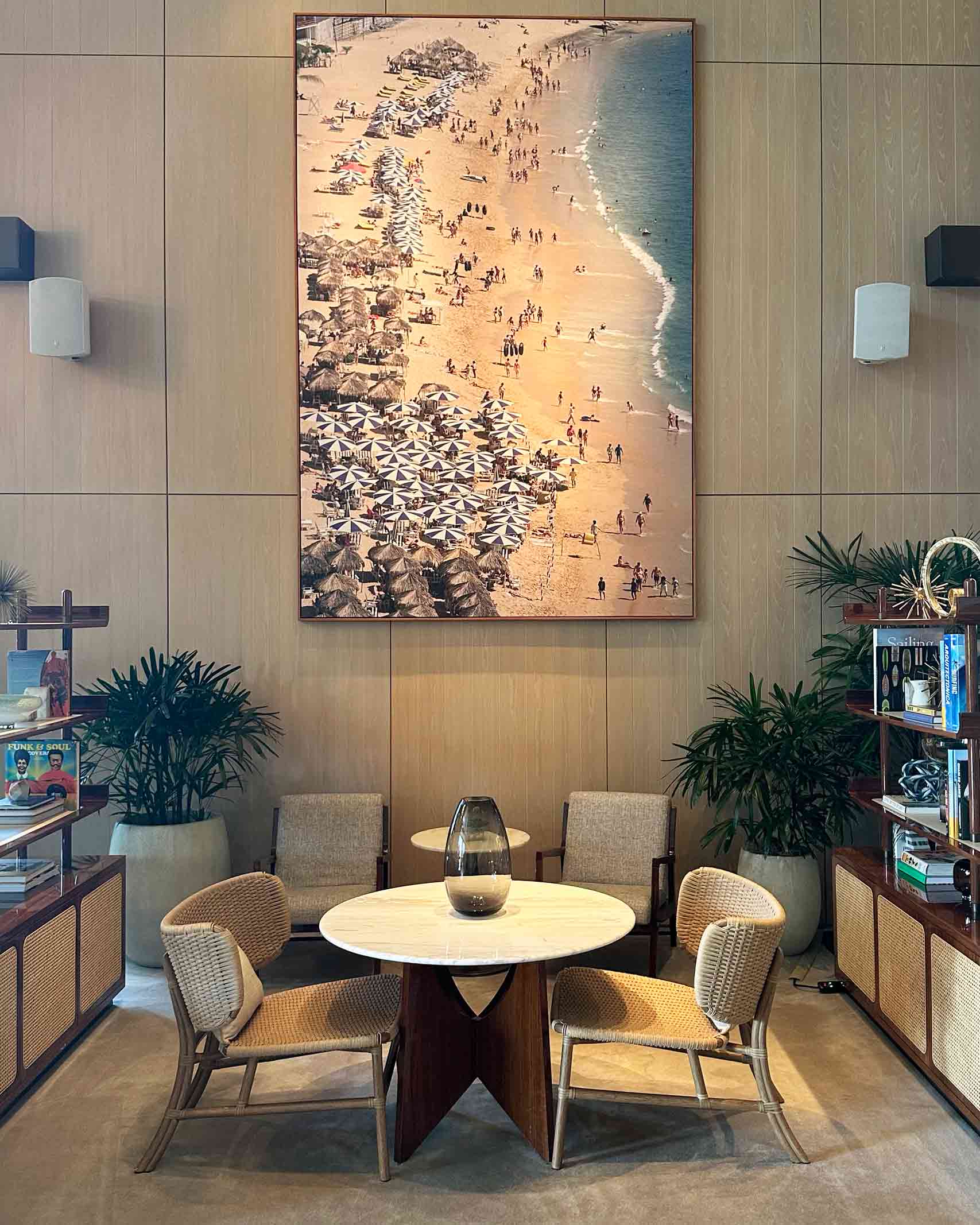
Within that framework, lobby art is integrated as part of a broader ‘collected’ atmosphere. Think curated contemporary pieces, hardback books, small souvenir-like objets d’art and bespoke decorative works placed on wooden shelves and sideboards. It all feels curated and assembled over time rather than imposed, designed to sit comfortably within the double-height volume of the space rather than compete with it.
Bernerd’s interiors often favour what you might call ‘quiet drama’, where art is embedded into texture and proportion rather than isolated as spectacle. The intention is not to stop you in your tracks, but to slow your pulse without you noticing.
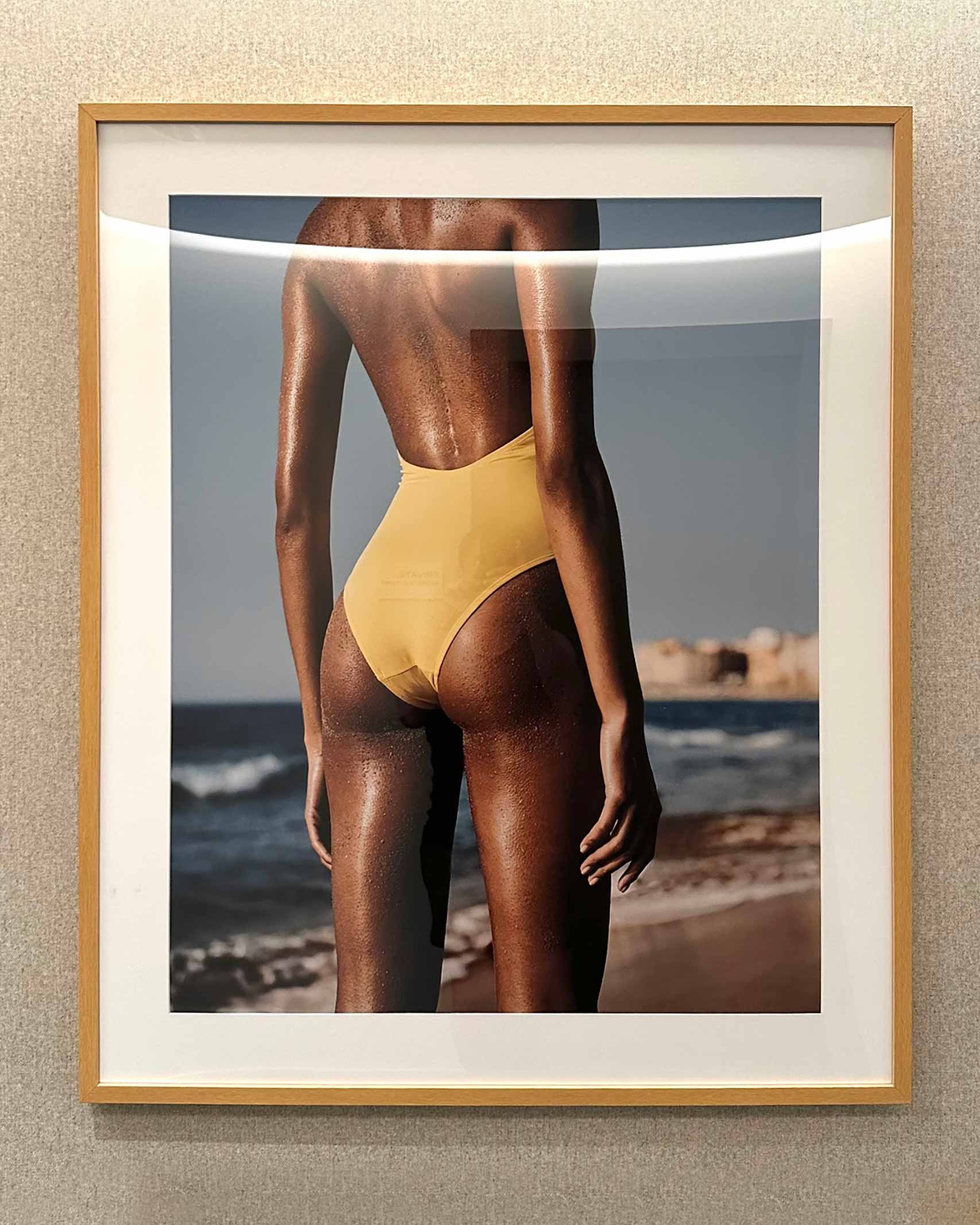
That said, there is a standout piece in the lobby – a gargantuan print of Nik Wheeler’s photograph A La Playa. It forms part of a collection of beach photography peppered throughout the Four Seasons Hotel and Residences Fort Lauderdale, setting the scene as you might expect from an oceanfront address – part of the visual language of the place. A lot of it feels as if someone has torn pages from a high-gloss magazine’s summer issue and allowed them to drift through the corridors. But there is a deliberate chromatic confidence to it all: brightly coloured fashion-shoot-style works that lean into sun, salt and skin without ever tipping into cliché.
Jan Welters’ Summer Beauty, featuring model Cindy Bruna’s backside in a bright yellow swimsuit, is perhaps the most immediate of them. Nearby, Gray Malin’s Fontelina Beach Club softens the register into something more observational, a Mediterranean memory rendered in light and leisure, while Craig Marlon’s surfer imagery introduces a looser register altogether, salt-air energy caught mid-motion.
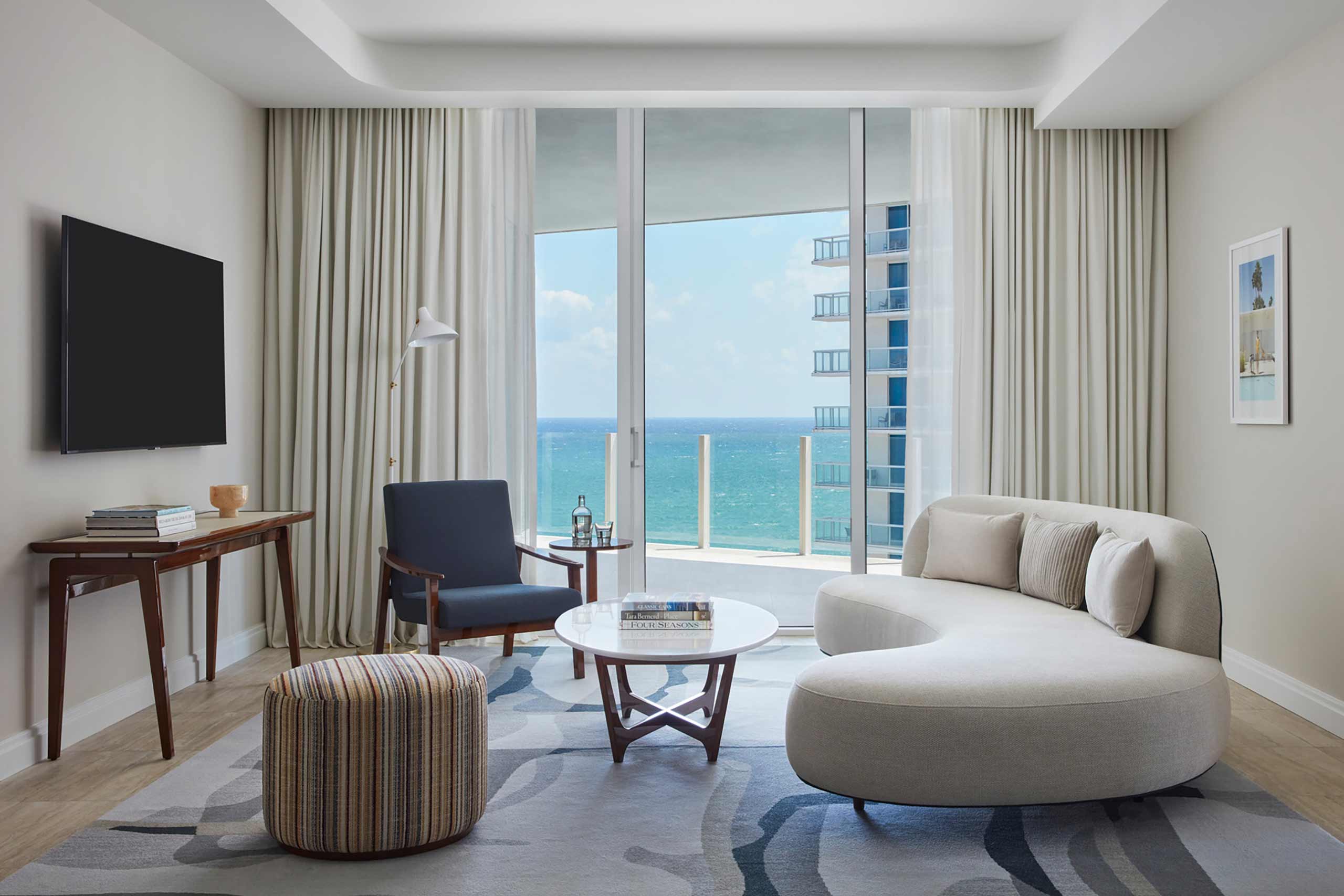
Our Junior Suite at the Four Seasons Hotel and Residences Fort Lauderdale was a lesson in calibrated calm. It is often said in travel writing that a suite can ‘unfold’ – a notion we used to dismiss as silly, but this time it felt entirely apt – a slow reveal of space, light and proportion that made us realise just how rarely hotel rooms understand the human desire to drift.
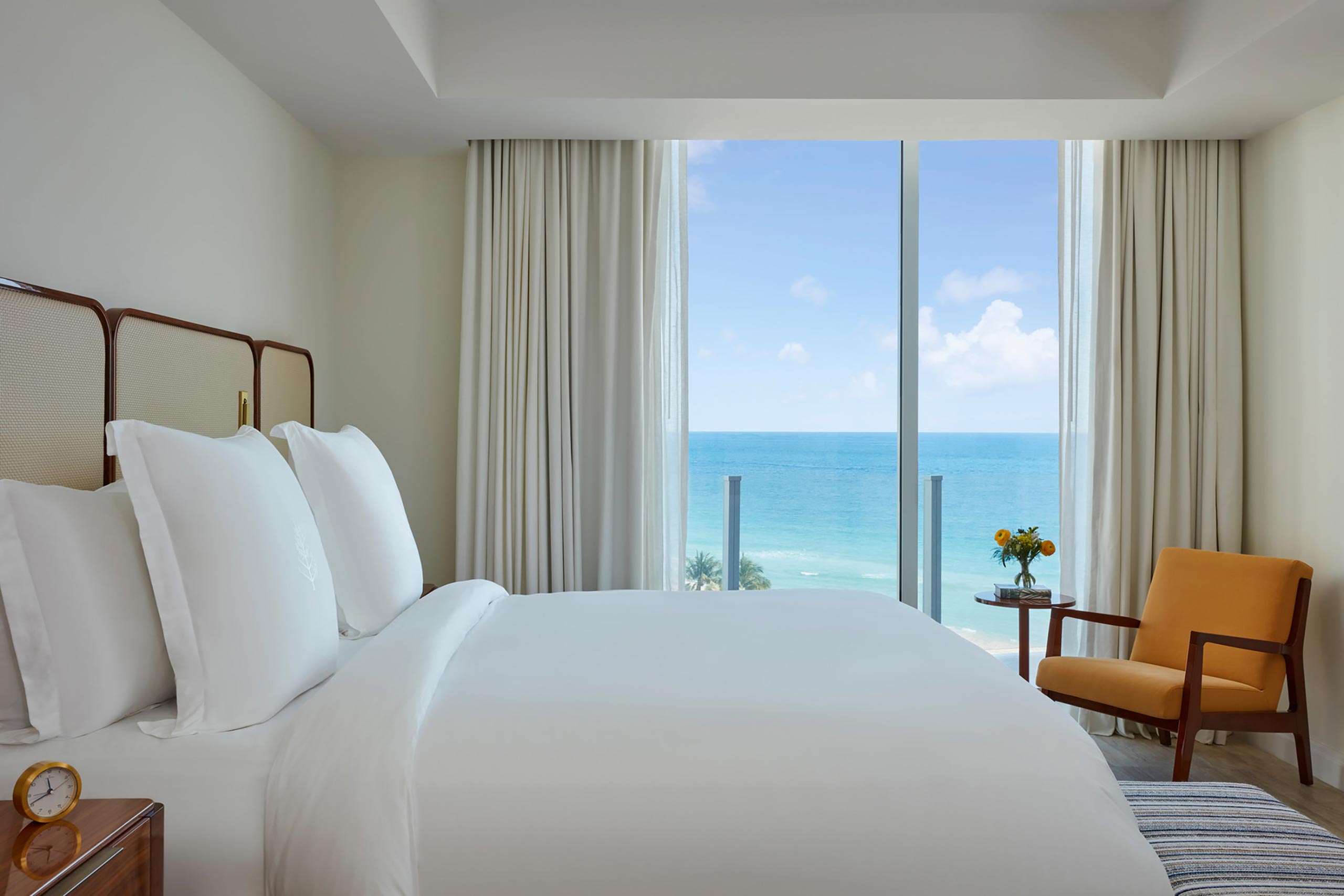
From the moment we entered, we felt a sense of softened geometry. The corridor was long enough to create anticipation before releasing us into an open-plan living space. Floor-to-ceiling glass drew in Fort Lauderdale’s most persuasive asset, that Atlantic light. It poured across pale timber finishes, sandy neutrals and upholstery in washed coastal tones that sit somewhere between cream and driftwood.
We felt the décor leant into a kind of mid-century Floridian modernism interpreted through a contemporary luxury lens. It was less Palm Springs revival, more coastal editorial spread. There were subtle nods to nautical form and Caribbean chic, from the curved edges of our desk to rounded sofa corners and wicker wardrobes. And instead of literal anchors, ocean-inspired blues appeared in accents rather than declarations, alongside artworks that behaved like visual pauses rather than focal points. Across the suite, there was also a consistent sense of texture over decoration. Fabrics were tactile without being fussy. Surfaces invited touch without demanding attention. Even the technology – speakers, iPad-driven intuitive controls, perfectly placed charging points – discreetly blended into the space.
The bedroom was in its own separate area, with floor-to-ceiling glass doors leading onto an ample terrace. The bed itself was positioned to catch the first suggestion of morning light, filtered through sheer curtains that turned our jetlagged early awakening into a softened, forgiving and ultimately restful sunrise.
Our bathroom continued the language of restraint but added a touch of spa-level indulgence: double vanities, pale stone, oversized mirrors and a generous soaking tub. Le Labo amenities were arranged on every surface with almost architectural precision.
We liked the residential undertone, which subtly elevated the in-suite experience. The room was not designed purely for transient stays, but could comfortably accommodate a longer rhythm – a week, perhaps even an indulgent ten days – rather than just a couple of nights.
Down at the spa, we enjoyed one of the most compelling interpretations of wellness we have encountered in the United States. The space is a sanctuary that distils the destination into sensation. The dry heat of the sauna lands like Florida sunshine – intense and enveloping – while the steam room rolls in thick like one of the region’s sudden subtropical storms.
The signature Ebb and Flow treatment was the standout. Aromatherapy blends into lomi lomi, Swedish structure and Thai stretching techniques, all inspired by the tides just beyond the hotel’s shoreline. Long wave-like massage movements rose and receded across the body. Pressure shifted and released like tide lines on sand. At moments we felt weightless, at others grounded, and then somehow both at once. It left us in that rare state of silent appreciation and gratitude.
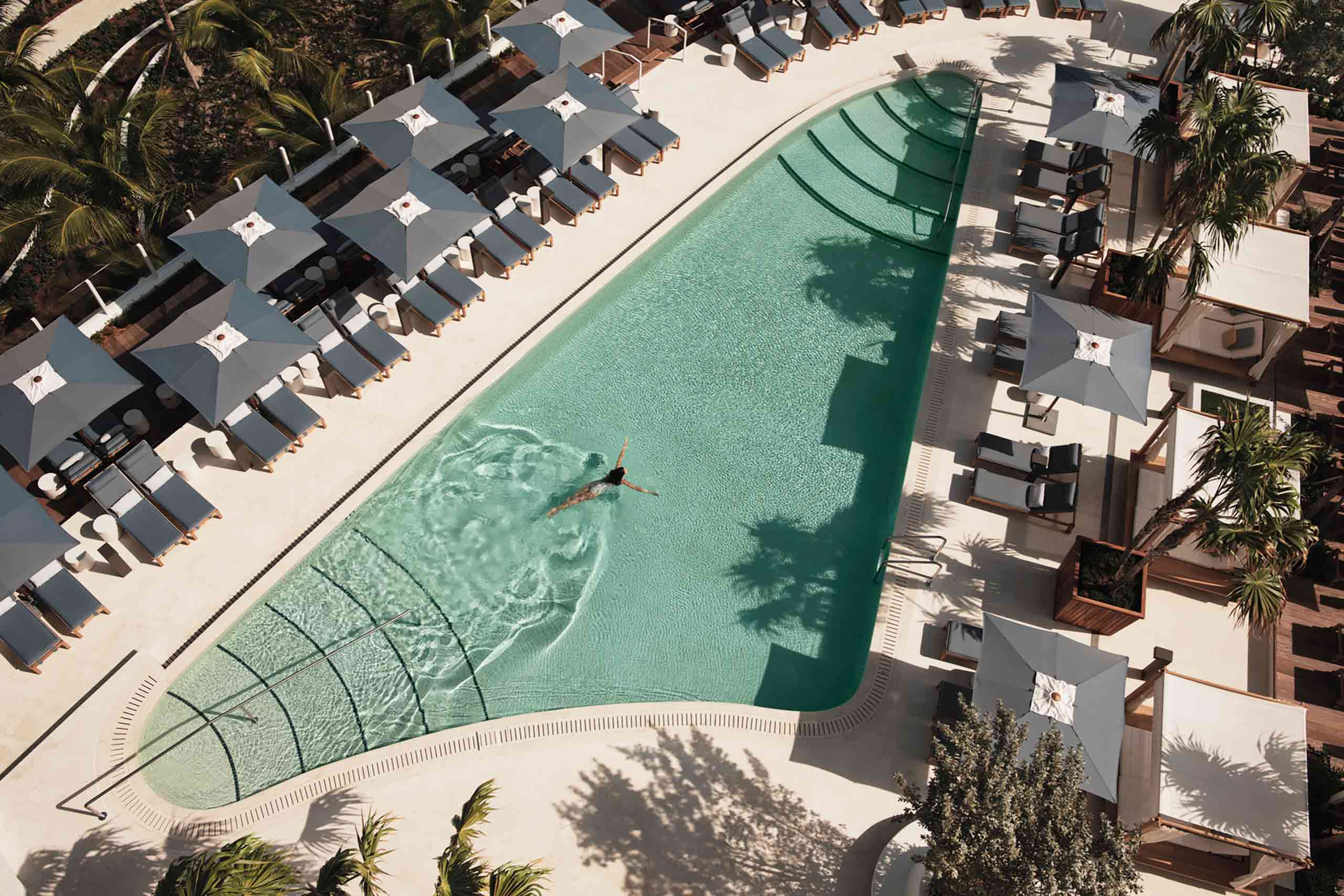
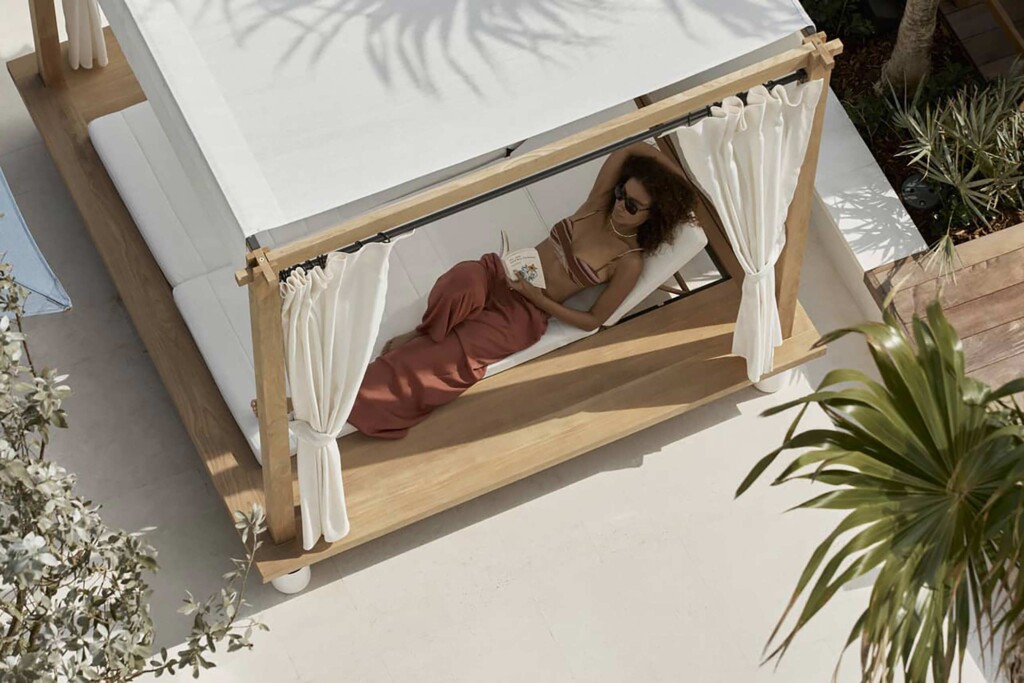
Poolside is where the hotel reveals its social rhythm. Service is excellent – almost preternaturally so – friendly without performance, efficient without haste. It is busy, though. Securing a sun lounger or cabana on demand is not always guaranteed, which feels refreshingly honest in an otherwise world of curated exclusivity. The pool deck hums with families and travellers in various states of holiday decompression. If you want quiet, there is a sundeck that looks out to sea – the perfect place for a slow afternoon dissolve, noise-cancelling headphones on.
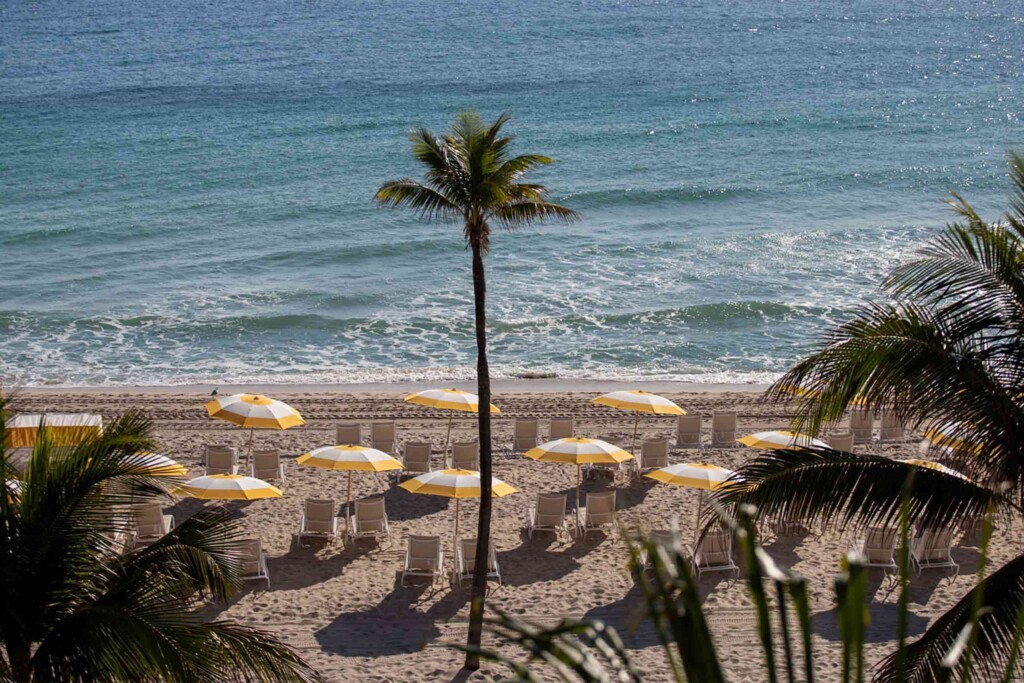
The beach, however, is the true seduction. It sits just beyond the hotel, across the road. Butter-yellow parasols punctuate the shoreline in a manner that would make a Slim Aarons print feel underdressed. Attentive service threads through it all. Chilled water arrives before you realise you are thirsty. Cocktails appear with impeccable timing. Snack boxes land like small acts of generosity. We came for an hour and lost an entire afternoon without noticing.
Dining at the Four Seasons Hotel and Residences Fort Lauderdale is confident. Each morning started at Honey Fitz for gourmet coffee and pastries that felt more European café than American hotel lobby. Then there was Evelyn’s, with views that stretched across the Atlantic. It draws from Eastern Mediterranean techniques while leaning into Florida’s seasonal produce. The result is fusion, but not in the tired sense of the word. Coastal ingredients are treated with restraint. Citrus lifts rather than dominates. Seafood tastes as though it has not travelled far, because it has not. Dishes arrive with clarity of intent. Grilled fish with a clean herbal backbone. Vegetables that feel introduced to heat rather than transformed by it. Service is similarly attentive and informed without reciting scripts. It is one of those rare Michelin-recommended dining rooms where recognition feels like a byproduct rather than the point.
Then there is MAASS, the hotel’s most theatrical culinary statement and one of the hardest reservations to secure in the city. MAASS Fort Lauderdale operates as a chef’s counter experience that leans into precision and theatre without tipping into excess. This is fine dining with a controlled pulse – a Michelin-starred sensibility that understands restraint as a form of drama. The kitchen is open and deliberate. You watch dishes built in layers of intention. Sauces reduced to something almost philosophical. There is a sense of pace here that feels near-musical. Courses arrive like movements rather than plates. Yet, the experience is immersive without being overwhelming.
Evenings can easily spill into the lobby bar, ViceVersa, where cocktails are treated with the seriousness of cuisine. The atmosphere is looser here but still anchored in craft. It was not buzzing by any means. It’s a place to recede to, not to be seen.
But for us, what makes the Four Seasons Hotel and Residences Fort Lauderdale so significant is not simply that it is good. It’s that it feels timely. Fort Lauderdale has spent years existing in the shadow of Miami’s polished, hyper-luxury hospitality scene. Where Miami is maximalist and performative, Fort Lauderdale now offers something more about space and drift. It is less about spectacle and being seen and more about recovery and ease. You can arrive through Miami, experience its energy, then retreat here for the exhale. Or do it in reverse and understand the contrast as part of the pleasure. Alternatively, you can skip Miami altogether and connect to Fort Lauderdale’s own airport if you so wish, which changes the game completely.
As a destination, it also sits at a fascinating intersection. LGBTQ+ travellers will recognise its lineage immediately: that sense of belonging. And the hotel’s people – many from the community – are intuitive in creating a welcoming space rooted in non-performative hospitality.
It is also a hotel for design-conscious travellers who want oceanfront calm without the theatre of South Beach. For couples seeking understated luxury without the parade. For families who want beach access without chaos. For cruise travellers arriving or departing through one of the world’s busiest ports who suddenly realise that the best part of their journey might not be at sea at all, but here on land.
We are thrilled to see that Fort Lauderdale has finally found its grown-up glamour. Not the kind that reinvents it, but the kind that finally aligns with what it always was underneath. A place of belonging. A place of water and light. A place where luxury does not seek to overwrite social history but to finally keep pace with it.
And in this new chapter, the Four Seasons Hotel and Residences Fort Lauderdale feels like the missing piece that was long overdue.
Photography by Uwern Jong and courtesy of Four Seasons Hotels & Resorts

Perfect for
The Insider

Fly into
FLL / MIA

Right on time
GMT -5
While you’re OutThere
Fort Lauderdale rewards slow exploration, especially around Las Olas Boulevard, where brunch spots, cocktail bars and waterfront dining set an easy-going rhythm to the day – we stopped by Earl’s Kitchen + Bar for a laid-back brunch and revisited a long-time favourite, Coconuts on Fort Lauderdale Beach, still unforgettable for its breezy marina setting and those moreish garlic “scoobies”.
But for a deeper sense of the city’s identity, it is worth heading a little further out to Wilton Manors, just a short ride away and long considered the beating heart of Fort Lauderdale’s LGBTQ+ scene. Here, the main strip blends independent spirit with unapologetic personality: sweet stops as Cake Daddy’s sit alongside neighbourhood cocktail bars such as DrYnk. At the same time, the ever-popular Hunters delivers classic, high-energy nightlife in all its unpretentious glory.
While you’re in the neighbourhood, make time for the Stonewall National Museum, Archives & Library, home to one of the largest LGBTQ+ archives and the largest circulating queer library in the United States. Its collection spans decades of community history – vintage Pride memorabilia, protest posters, archival photographs, oral histories, club flyers, drag ephemera and personal artefacts – each piece charting the evolution of visibility, activism and celebration in South Florida and the USA.