

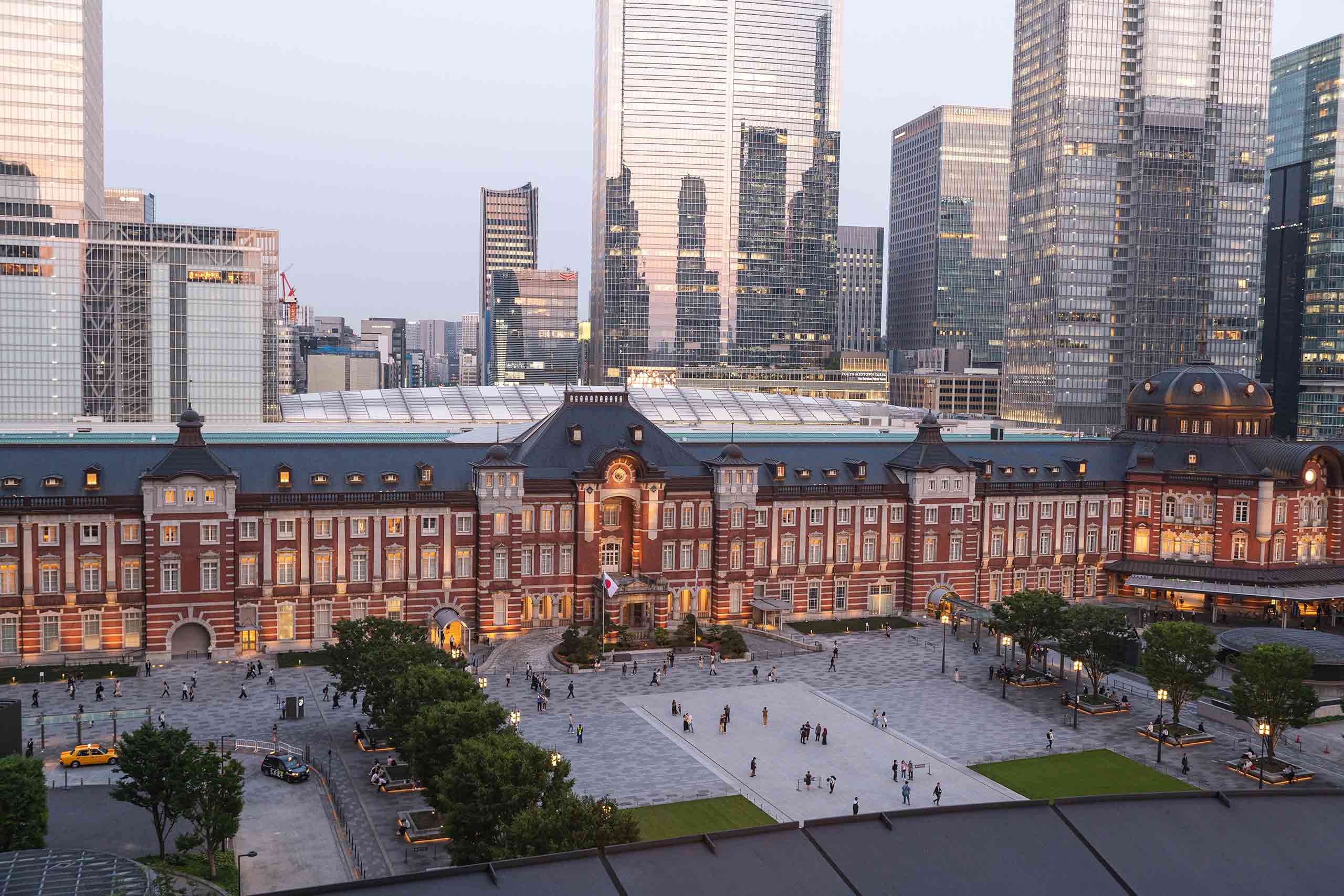



If the walls of the Tokyo Station Hotel could talk, they would probably do so in impeccably polite Japanese, apologise for the interruption, and then recount a century’s worth of imperial ambition, wartime scars, whispered rendezvous and the rhythmic lullaby of departing trains from one of the most iconic, if not unusual, heritage landmarks in the Japanese capital. And we’d be more than happy to listen.
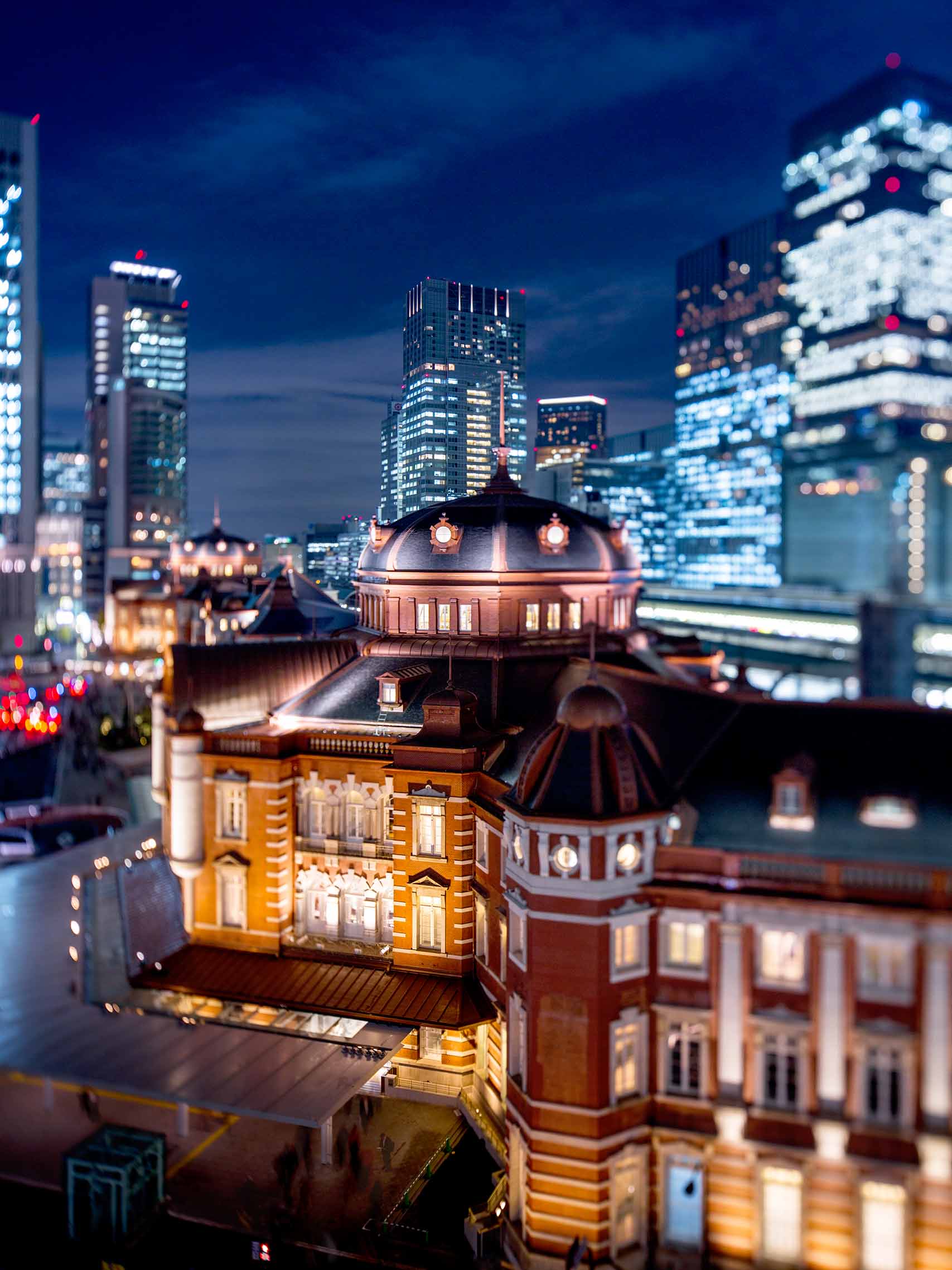
Opened in 1915 alongside the then-new Marunouchi building of Tokyo Station, the Tokyo Station Hotel is a living artefact of the Taishō era – a time when Japan, fuelled by optimism and industrial fervour, looked westward for inspiration yet insisted on doing things its own meticulous way. Designed by Tatsuno Kingo, a protégé of Josiah Conder, a London-born architect recruited by the Japanese to bring Gothic Revival style to the country, the red-brick façade stretches horizontally across Marunouchi like a dignified dowager refusing to be hurried by the vertical impatience of modern Tokyo.
And stretch it does. In a city now defined by glass towers, contemporary architecture and skyward ambition, this old relic of a bygone age remains resolutely tethered to history. Its corridors are so long that if you were to lay the Tokyo Tower on its side beside it, the hotel would still outstroll it, reminding us somewhat of the Outlook Motel in The Shining. From the corridors, glimpses open across and under the building’s domes into the station below, where commuters move like clockwork figurines in a vast mechanical diorama.
Construction began in 1908 and took nearly six years and some three-quarters of a million ‘worker days’ – the thousands of workers multiplied by the number of days worked – to complete, a staggering testament to early 20th-century ambition. Heavily damaged during World War II, the building lost its domes and much of its ornate detailing. Yet, in almost unscripted poetic symmetry, its meticulous restoration, completed in 2012, required roughly the same number of worker days and nearly the same span of time as its original creation – a century apart. It is as though the building itself demanded balance, an architectural on’yō and in’yō (the Japanese equivalent of yin and yang), a harmony the Taishō Emperor first instilled with pride. To this day, that sense of continuity is tangible, with his successors maintaining an uninterrupted line of sight from the Imperial Palace to the hotel.
The façade’s Renaissance Revival flourishes – white granite detailing, rhythmic arches and twin domes – speak to European grandeur. Yet look closer, and you’ll find the balance, proportion and restraint that are unmistakably Japanese. Beneath the Western veneer lies an aesthetic discipline rooted in craft traditions such as kumiko lattice woodworking. Gold chrysanthemum motifs, the imperial symbol of Japan, bloom discreetly in decorative flourishes, a subtle nod to national identity embedded within imported style. Above the entrance, fan-shaped windows add another layer of meaning: a symbol of aristocracy, a metaphor for growth, prosperity and the unfolding of life, and in Shinto tradition, a charm for warding off evil spirits.
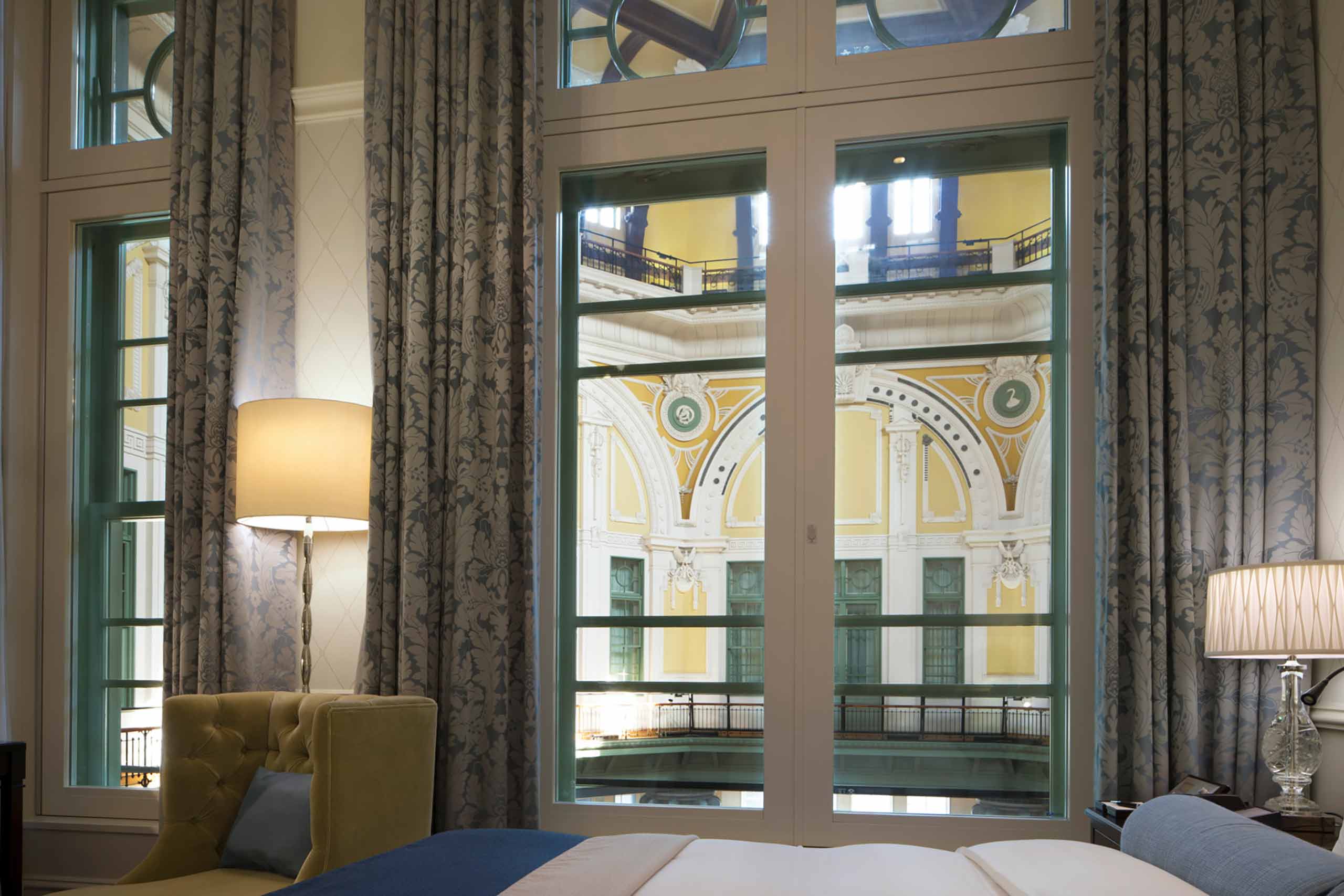
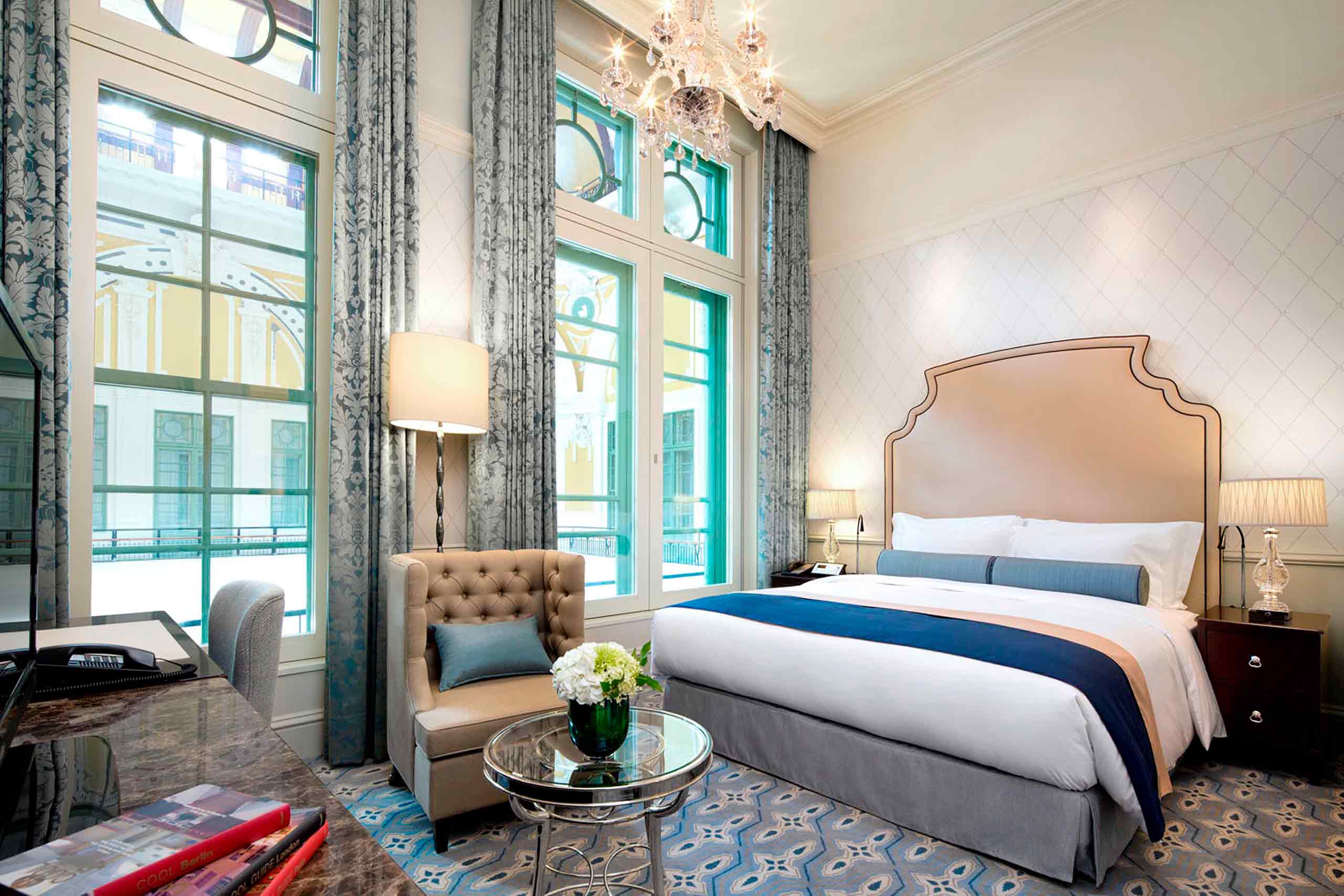
Our arrival was, we confess, inelegant. Dragging luggage through the organised ballet of commuters and across the building’s grand square forecourt was like swimming upstream through Uniqlo-outfitted salmon. Yet once we were inside, a hush descended. The bustle became a distant murmur. Staff in starched uniforms – some in blue porter outfits complete with round caps that would make Agatha Christie’s Poirot feel at home – glided rather than walked. There was formality, yes, but in Japan, formality is merely the architecture of respect. Service throughout was white-gloved and precise. Requests were handled with efficient grace. Luggage appeared and disappeared as if spirited away. There was warmth, but it was expressed through attentiveness rather than exuberance.
The location, frankly, was absurdly convenient. From beneath our feet radiated the arterial network of Japan’s rail system. The Shinkansen bullet trains streak west to Kyoto and Osaka, north to Tohoku, south towards Kyushu. Narita and Haneda airports are easily reached. Ginza’s boutiques were a short walk away, and the Imperial Palace gardens offered contemplative greenery just beyond the station’s edge. For travellers plotting a multi-city itinerary, there is a particular smugness in descending from breakfast to very quickly and conveniently board a bullet train.
Yet this is not merely a hotel for convenience-seekers. In a city awash with vertigo-inducing high-rise luxury – each peering over neon horizons – choosing the Tokyo Station Hotel feels like an act of rebellion. It is for those who prefer narrative over novelty, who appreciate patina over panoramic infinity pools. This hotel is for history buffs, railway enthusiasts, retro-glamour lovers and design aficionados alike.
Our room leaned heavily towards classic European elegance. Soaring ceilings and arched windows framed the Marunouchi skyline; polished wood gleamed beneath soft lighting; plush fabrics in regal blue and grey (one of three colourways, so if you have a favourite, make sure to ask) housed an oh-so-comfortable bed dressed in silky-soft sheets. A brown marble vanity gleamed in our bathroom, where towels were laid out with such generosity that cold tootsies seemed to be a constant concern of the management. The big rain showers invited long contemplative immersions, insulated from the city’s pulse by remarkably hushed walls. And then, of course, there is the Japanese toilet, arguably the nation’s greatest technological contribution to civilisation. Heated seats, precision cleansing, discreet dignity.
Each evening, a small gold lacquer box appeared as if by magic, with edible amenities within, exquisitely presented. It is a gesture both theatrical and tender, like receiving a tiny stage set of hospitality.
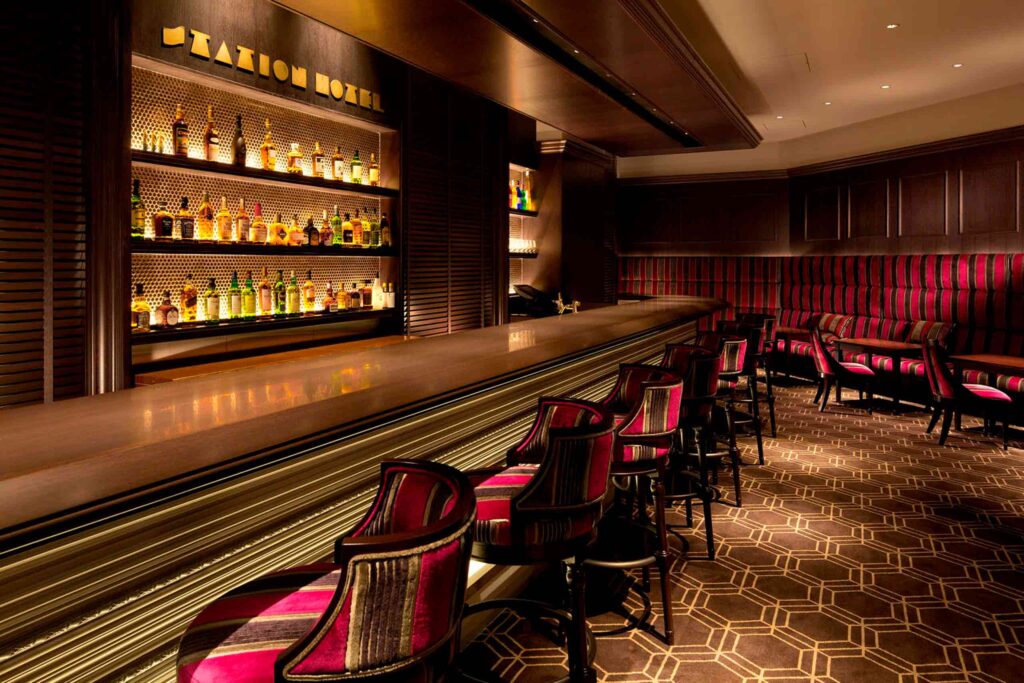
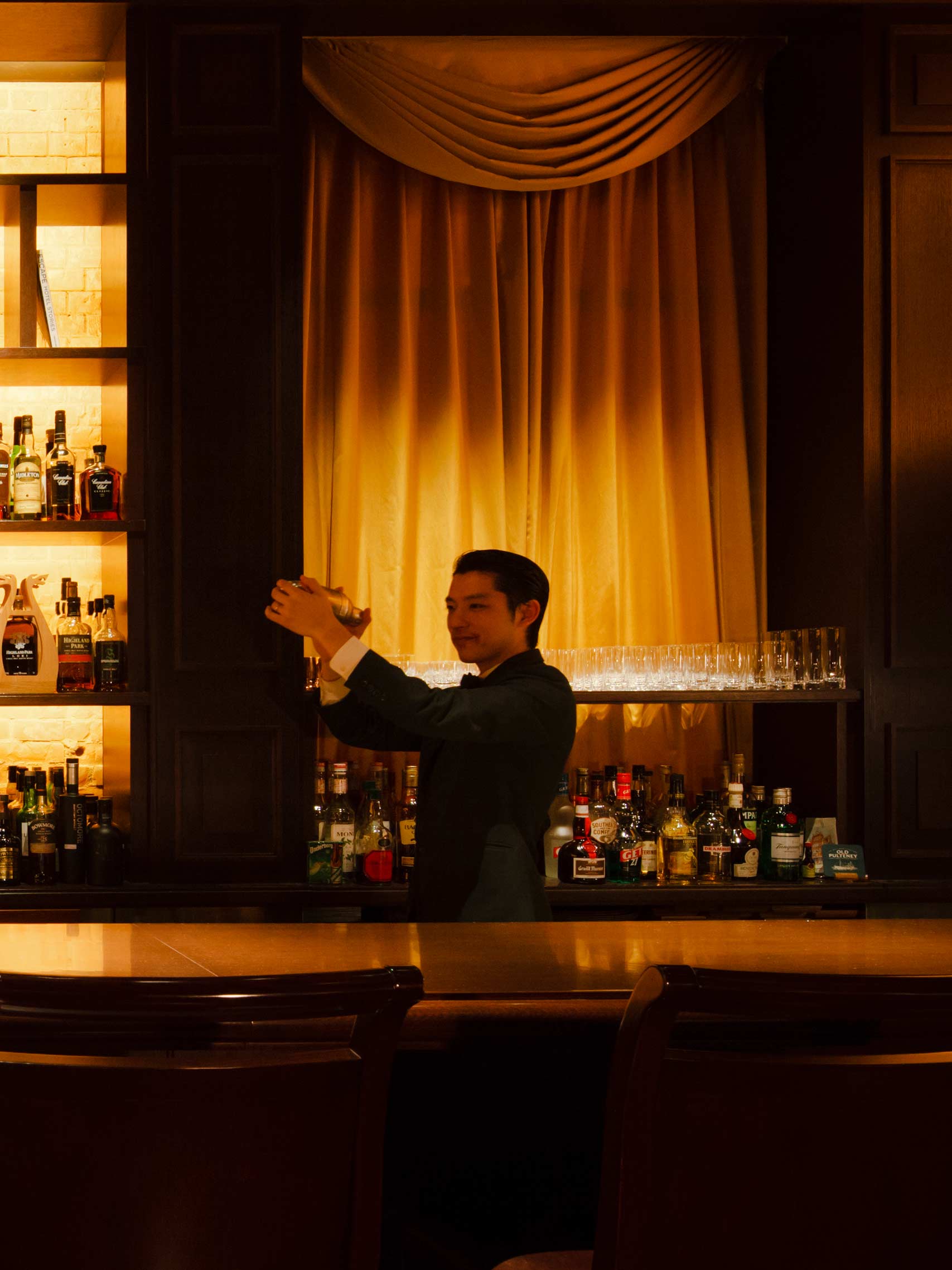
Downstairs, the timewarped Bar & Café Camellia overlooks the station tracks, its layout and look largely unchanged since it was first installed in the 1950s, retaining its traditional dark timber-clad interiors. Here, one of our favourite quirks resides: a clock that has been set five minutes fast for decades, ensuring that drinkers never miss their trains. As trains clacked past with aerodynamic nonchalance, we nursed a Japanese whisky and found ourselves irrationally amused that every train was five minutes late to us but precisely on time for everyone else. Amused, because in Japan, punctuality is sacrosanct.
And then there were the flowers. Everywhere, throughout the hotel, there were flowers. Each arrangement is an artwork in miniature, practising the centuries-old discipline of ikebana, the Japanese art of flower arranging, where the hotel’s negative space is made to be as meaningful as bloom. This is Japanese precision tinkering at its finest – a devotion to detail and an aspiration to make the practical and mundane beautiful. Even hand sanitiser bottles were dressed in origami-folded capes, as if modesty itself must be preserved at all costs.
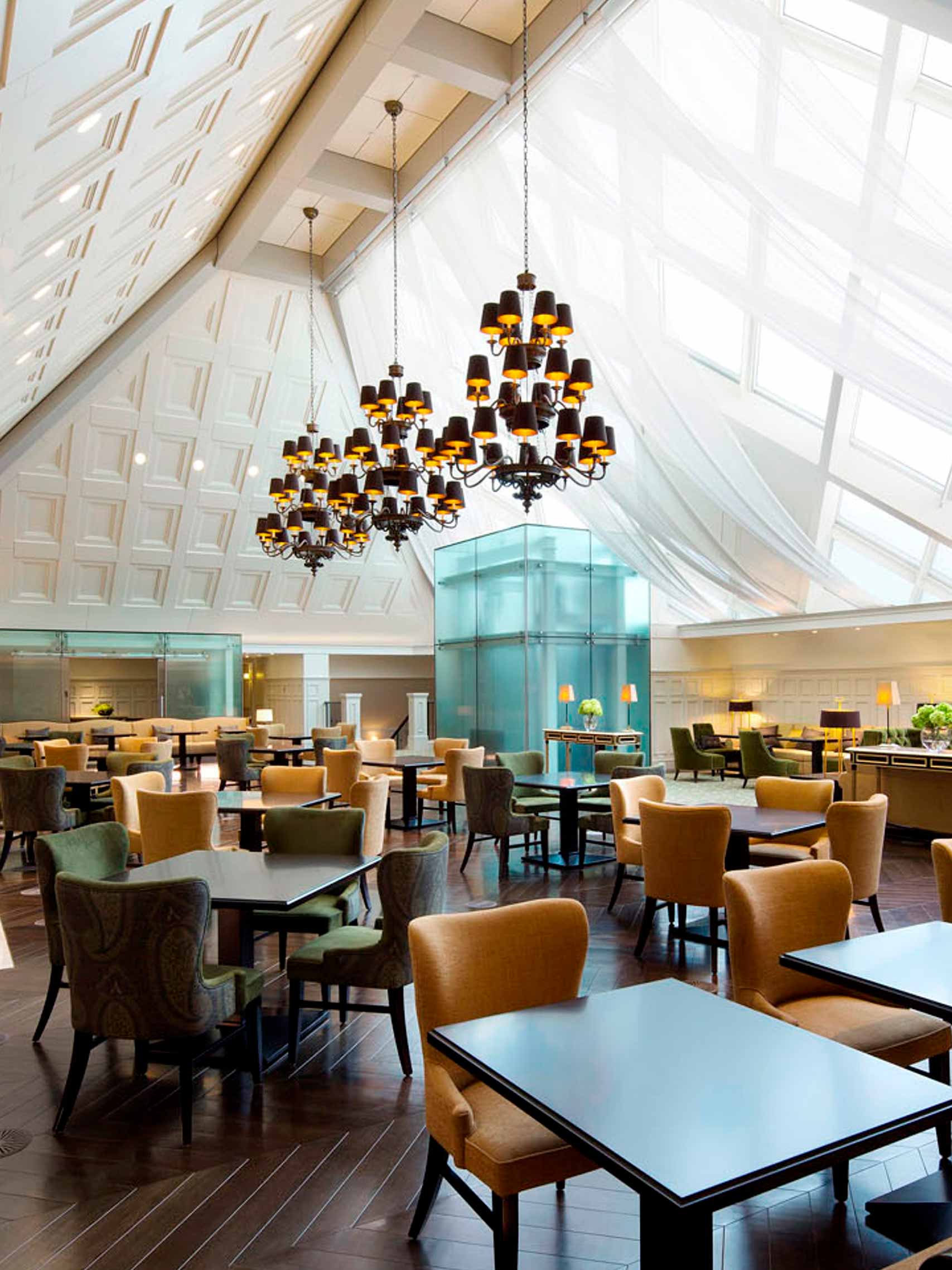
Dining at the hotel is no afterthought. Several high-end eateries deliver polished cuisine spanning Japanese and European traditions. Yet it is breakfast – set in the hotel’s attic (they call it an Atrium, which is far more appropriate) dining room – that reigns supreme, widely said to be among the best breakfast buffets in Tokyo. Imagine an incredible choice of Japanese breakfast accompaniments, flaky croissants worthy of Paris, steamy dim sum bamboo baskets, delicate tamagoyaki, seasonal fruits arranged like edible ikebana and an egg station where precision knows no bounds. We arrived determined to be restrained and left plotting a second (ok, third) sitting. Bill Bryson once wrote that buffets reveal the true nature of humanity. If so, this one reveals it at its most indulgent.
Who would we recommend stay here? Certainly, the culturally curious traveller tracing Japan’s modernisation, the design lover who appreciates Renaissance Revival filtered through Japanese restraint, the rail romantic with a soft spot for departure boards, the seasoned Tokyo visitor seeking a counterpoint to big-brand glass-and-steel anonymity, or anyone who believes that a hotel should have a story.
On our final morning, watching a train slide away silently from the platform as sunlight caught the red brick, we felt the peculiar melancholy that only railway stations inspire – that sense of perpetual movement, of arrivals and departures layered atop one another. Yet here, within these walls, time feels momentarily suspended. A place to stop, dwell and eavesdrop on history while the modern city hums beyond the façade.
In a city as dynamic as the Japanese capital, the Tokyo Station Hotel showcases age-old restoration, restraint and relevance. It offers not the highest view in Tokyo but perhaps the deepest perspective.
www.slh.com | www.thetokyostationhotel.jp
The Tokyo Station Hotel is a member of Small Luxury Hotels of the World. Photography courtesy of Small Luxury Hotels of the World

Perfect for
The Culturalist

Fly into
NRT / HND

Right on time
GMT +9
While you’re OutThere
Within the sprawling station complex of the Tokyo Station Hotel, on its second floor, you’ll find a Japanese institution that’s as timeless as the building itself: Toraya Tokyo Station Shop & Café. With a heritage stretching over 400 years, Toraya is Japan’s doyenne of wagashi – traditional confections made from bean paste, rice and sugar. The shop and café, tucked into the station’s bustling concourse, may sit amid the rush of commuters and Shinkansen announcements, but once you step inside, there’s a meditative elegance to the place. Think refined yokan (jellied bean sweets) sliced like jewels, delicately patterned nerikiri that evoke seasonal flowers and cups of matcha so frothy and vibrant that even we, bleary-eyed, jetlagged travellers, felt ceremonially revived.