




Six Senses London channels a philosophy that, until now, the city has not yet seen fully realised: luxury with purpose, wellness at its core and a story worth lingering over. Yes, it is yet another luxury address in London – but this one affords its guests a place to breathe, to pause, to be nourished, and to remember that indulgence in the capital can be thoughtful, deliberate and transformative. Could this be the hotel London didn’t quite know it needed, yet is all the richer for now having?
London, it seems, is having a moment. Actually, scratch that: London is always having a moment. And there are several reasons why. The city retains a stubborn gravitational pull for global wealth. Even after Brexit, the pandemic, and the occasional bout of Westminster theatre, London still sells – rather brilliantly – an intoxicating mix of heritage, social currency and a roaring contemporary cultural engine: new galleries, arts programming, rock-star chefs and glitzy luxury hotels.
And its hotels are multiplying at a pace that suggests many believe the city’s pavements are paved with solid gold. You can barely swing a monogrammed weekend bag these days without bumping into a freshly minted palace of opulence.
And for developers, it is as much about real-estate theatre as it is about hospitality. Attach a prestigious brand, install a Michelin-curious restaurant, add a spa the size of Luxembourg, and top it with a constellation of glossy residences, and suddenly the numbers – accountants will tell you – become “very helpful”.
The idea is simple: Build it, and they will come. Still, the pace feels vertiginous. Luxury hospitality runs on the peculiar logic that each new opening must outdo the last – more marble, more narrative, more “sense of place” – even when that place begins to resemble a London fantasy dreamt up by someone who has never endured a drizzle-soaked Tuesday in February. The problem is that most of them end up remarkably alike. Opulent? Absolutely. Dazzling? Without a doubt. Unrivalled service? Check! But memorable and distinctive? Well, in the scramble to impress, they often become predictable, gilded echoes of one another.
The arrival of Six Senses London in the old Whiteleys department store redevelopment in West London adds an intriguing chapter. Because a Six Senses here feels almost philosophical. It’s a brand built on barefoot luxury, regenerative tourism and the gentle suggestion that perhaps we should all calm down a bit and ferment or compost something. London, by contrast, is not widely known for calming down.
Can an experience-driven, purpose-led lifestyle concept devoted to sustainability, wellness and true local engagement thrive in a city defined by capitalism and consumption? Can regenerative hospitality coexist with wanton spending, hedonism and indulgence? Perhaps, intriguingly, this is precisely the point. If thoughtful hospitality is ever going to step up, it has to prove it can survive the chaos (and people) of one of the planet’s most urban environments.
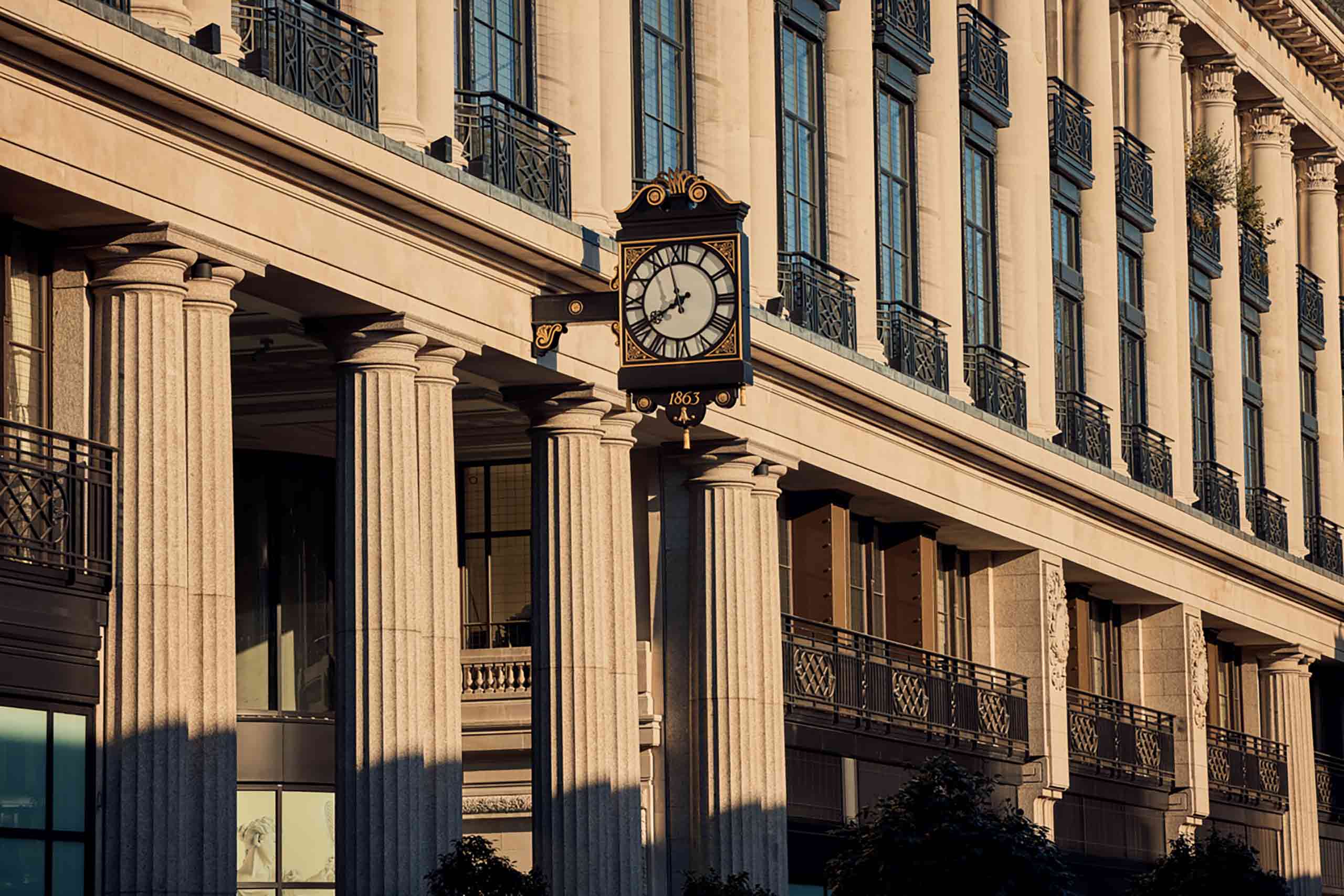
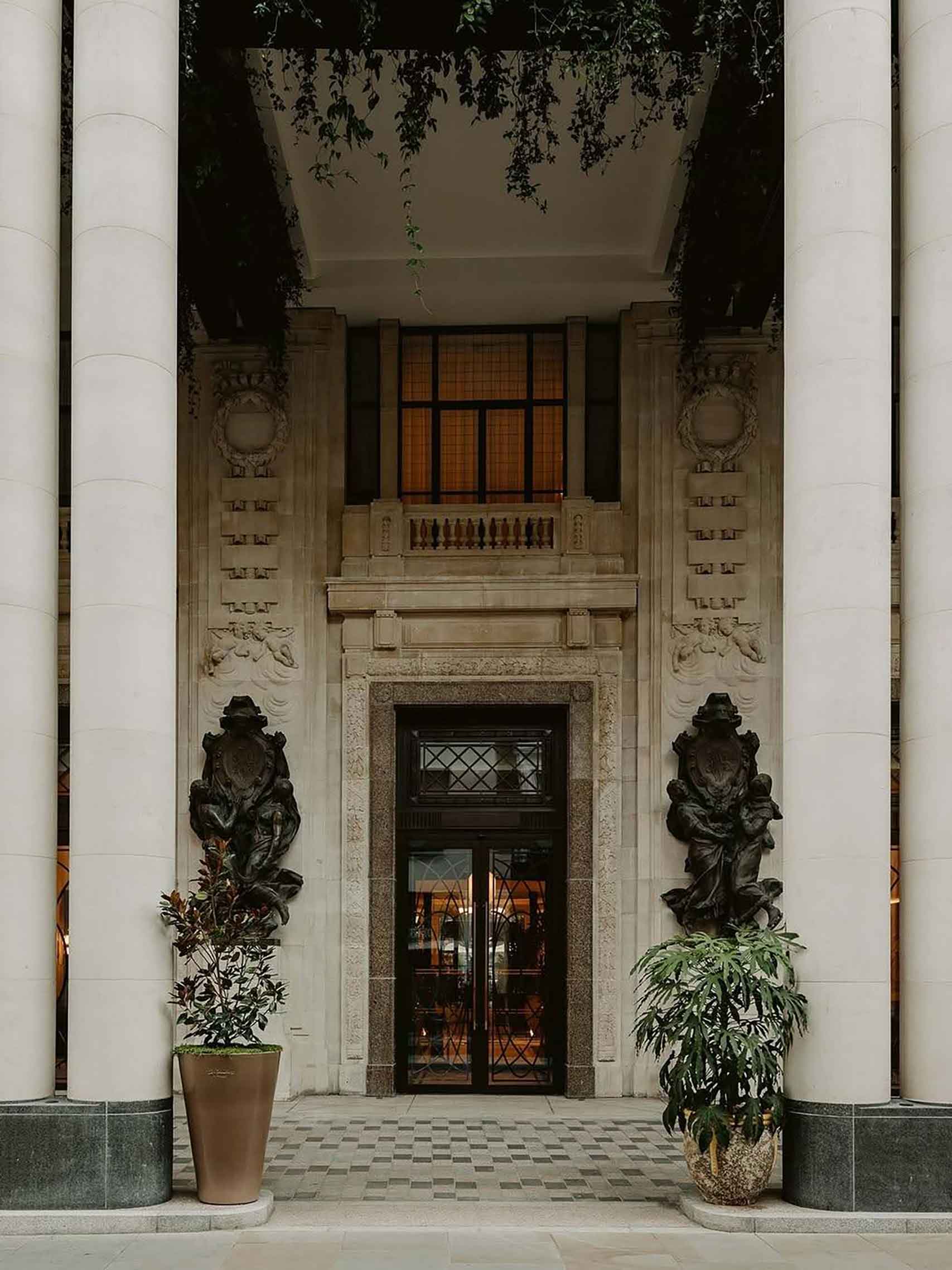
Set within the epic Foster + Partners reimagination of the 19th-century Whiteleys department store in Bayswater/Queensway on the Northwestern edge of Hyde Park, the building – today known as The Whiteley – represents an ambitious £1.5 billion/close to US$2 billion project, preserving its Grade II-listed façade and the iconic domed pavilion. A grand exemplar of Edwardian Baroque, its most striking feature remains the central dome, flanked by symmetrical wings, rising like a crown over this lesser-discovered West London neighbourhood and announcing the building as a landmark from every approaching street. Clad in pale Portland stone, the façade is articulated with Corinthian pilasters, grand arched mullioned windows and sculpted pediments, while delicate relief carvings of garlands, cherubs and mythical creatures hint at the lavish post-Victorian ambition of its eponymous founder.
The placing of Six Senses London within this historic shell is not just iconic – it is profoundly symbolic. When William Whiteley opened the building in 1911, he did not intend it merely to house goods; he was selling ‘possibility’, imagining the space as a social and cultural destination. The ambition was shaped by its era, and today Six Senses London carries that vision forward, transforming the building into a space of mindful luxury, regenerative hospitality and experience-driven stays.
Bayswater and Queensway are often written off as unloved, a corner of London supposedly in need of gentrification, particularly by the nearby Notting Hill set. It amuses us how the bourgeois are always first to call for change, as if the neighbourhood “needed saving”, while entirely skipping over what made it fascinating in the first place. To us, this area has always meant far more. It is the beating heart of London’s Southeast Asian community, particularly those from Malaysia. This is where, for decades, we came to stock up on provisions, graze on dim sum with friends, or track down a noodle or curry that could cure homesickness on a grey, wet London afternoon. And Whiteleys itself holds its own memories – it was in the cinema that once stood here that we stole our first teenage kiss, a little rebellion amid the dignified Edwardian arches and marble staircases.
So yes, we will acknowledge the stirrings of gentrification, and it irks us a little to see the bright red flash of a Gail’s coffee cup as we approach the hotel, yet we tread that balance carefully: excited by the possibilities that renewal might bring, yet protective of what has always made us belong here. We’ve seen it happen to our other spiritual home, Soho – a neighbourhood once ragged, electric and unapologetically alive, gradually smoothed over. The grit is gone, the chaos tamed, and with it a certain kind of magic. Bayswater and Queensway could easily suffer the same fate, yet for now, what makes them extraordinary is still here.
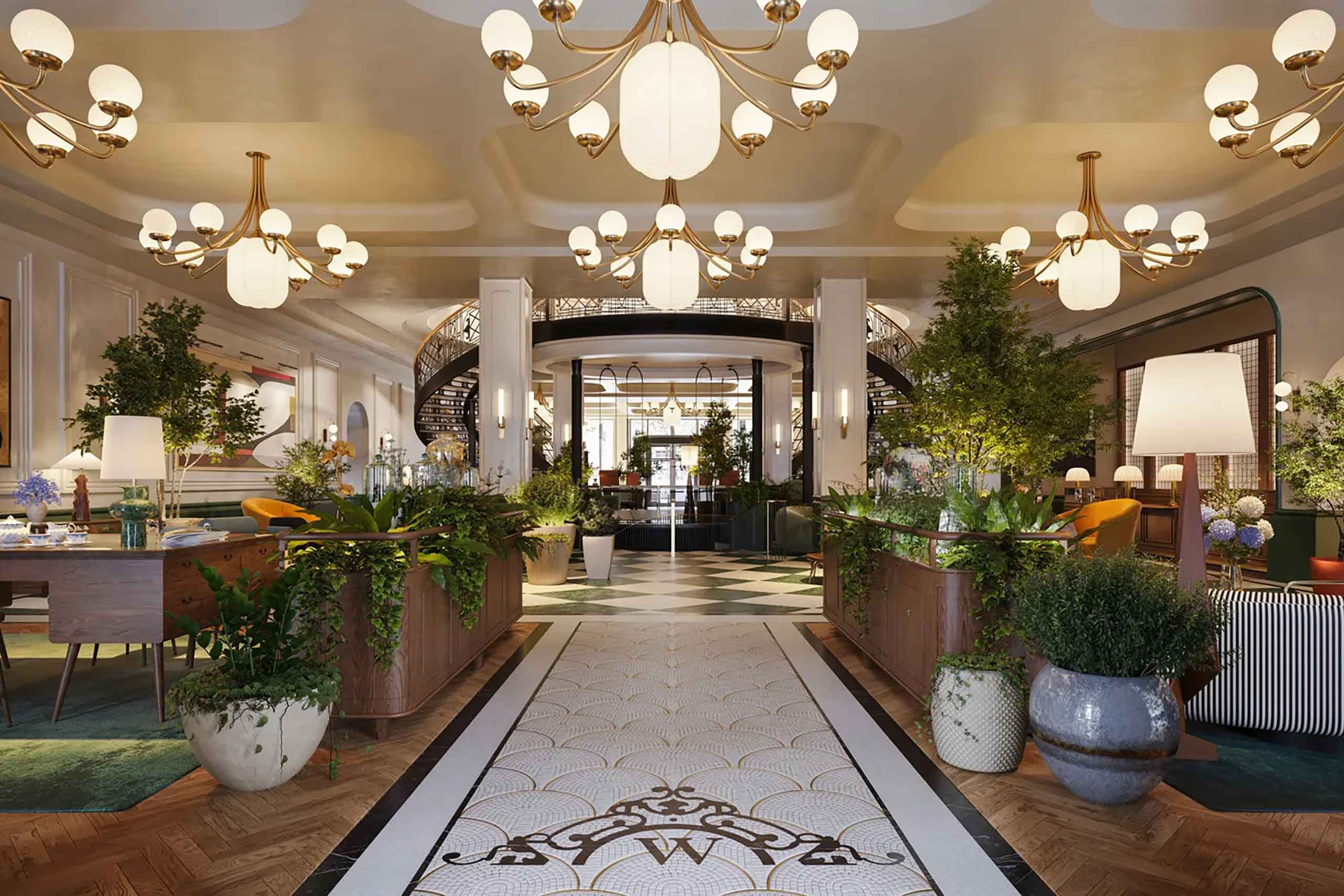
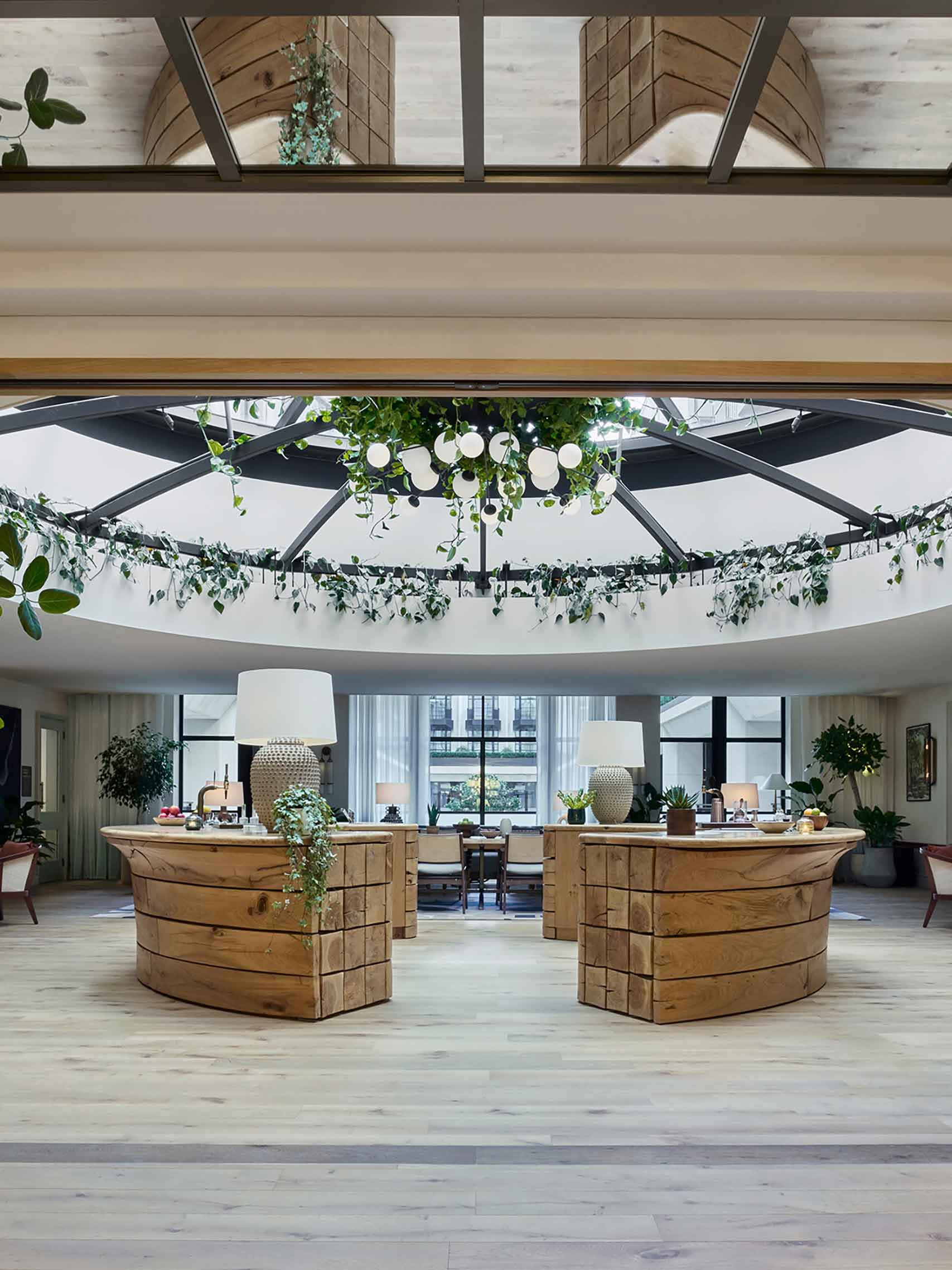
We stepped through the entrance and were immediately struck by the sense of space – a light-filled, glasshouse-like atrium that somehow felt both airy and intimate, a nod to Whiteley’s own inspiration from the Great Exhibition of 1851. The department store trappings are gone – no counters, no brass cash tills – yet the nostalgia lingered, woven into every detail, every line of sight, every thoughtful pause. Above us, ten-pronged decagon brass lantern chandeliers hung like suspended constellations, theatrical yet restrained, casting a warm amber radiance that spilt across custom, elemental seating and bespoke counters. The lobby furniture reflected interior designer AvroKO’s signature approach, marrying period references with contemporary lines and natural, biophilic materials – all in a glorious palette of British sage (parsley, rosemary and thyme) green, sneezeweed orange and Thames-beach shingle grey.
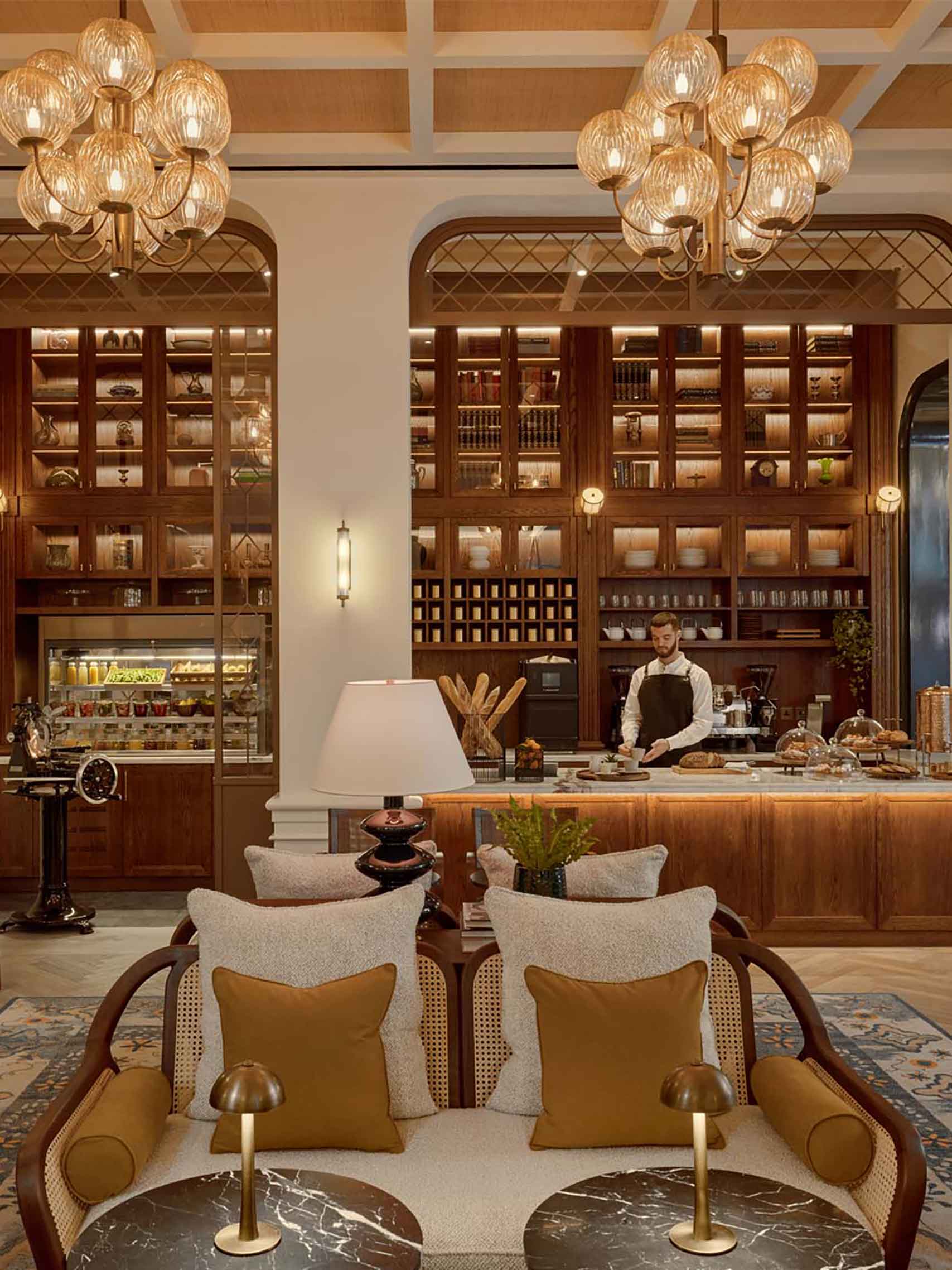
Beneath our feet, the floor had its own story to tell. A “W”-monogrammed tile promenade in a sunburst fan pattern gave a subtle wink to Art Deco geometry. From there, green and white curved checkerboard motifs rippled across the lobby in soft, undulating lines, guiding our steps toward the courtyard beyond. As well as the tiles, buttermilk oak floors stretched out, like those in the Whiteley’s Bar (where the best seat for people-watching lay just beyond the marble and green bar counter, along the far wall – we should know, we were the very first guests to ever drink in it). Here, cocktails are crafted around seasonal cordials and house-made ferments, celebrating botanical extraction and blending classic techniques with a modern, flavour-first approach, in collaboration with contemporary alchemist Charlotte Pulver.
In fact, every space flowed into the next with a quiet ease. The contemporary take on post-Victorian and Art Deco design never tipped into pastiche; it always felt thoughtful and alive. Plants peppered the space, threading life through the architecture: Tall palms and leafy specimens rose alongside seating areas, while smaller pots clustered on shelves and tables, softened the edges of glass and timber. The effects were immediate and tactile. The air felt fresher, the space more alive, more human. Outside, the courtyard beckoned, framed by floor-to-ceiling glazing. Two enormous eucalyptus trees, imported from southern Italy, rose like living sculptures, their presence a quiet, grounding spectacle.
Art was everywhere, curated by our friends at Artiq, whose mission to champion diversity and community made itself felt in each gallery-like corner. Bold canvases and works by emerging artists sat comfortably alongside the building’s Edwardian bones, creating a layered visual narrative that was playful, personal and utterly alive.
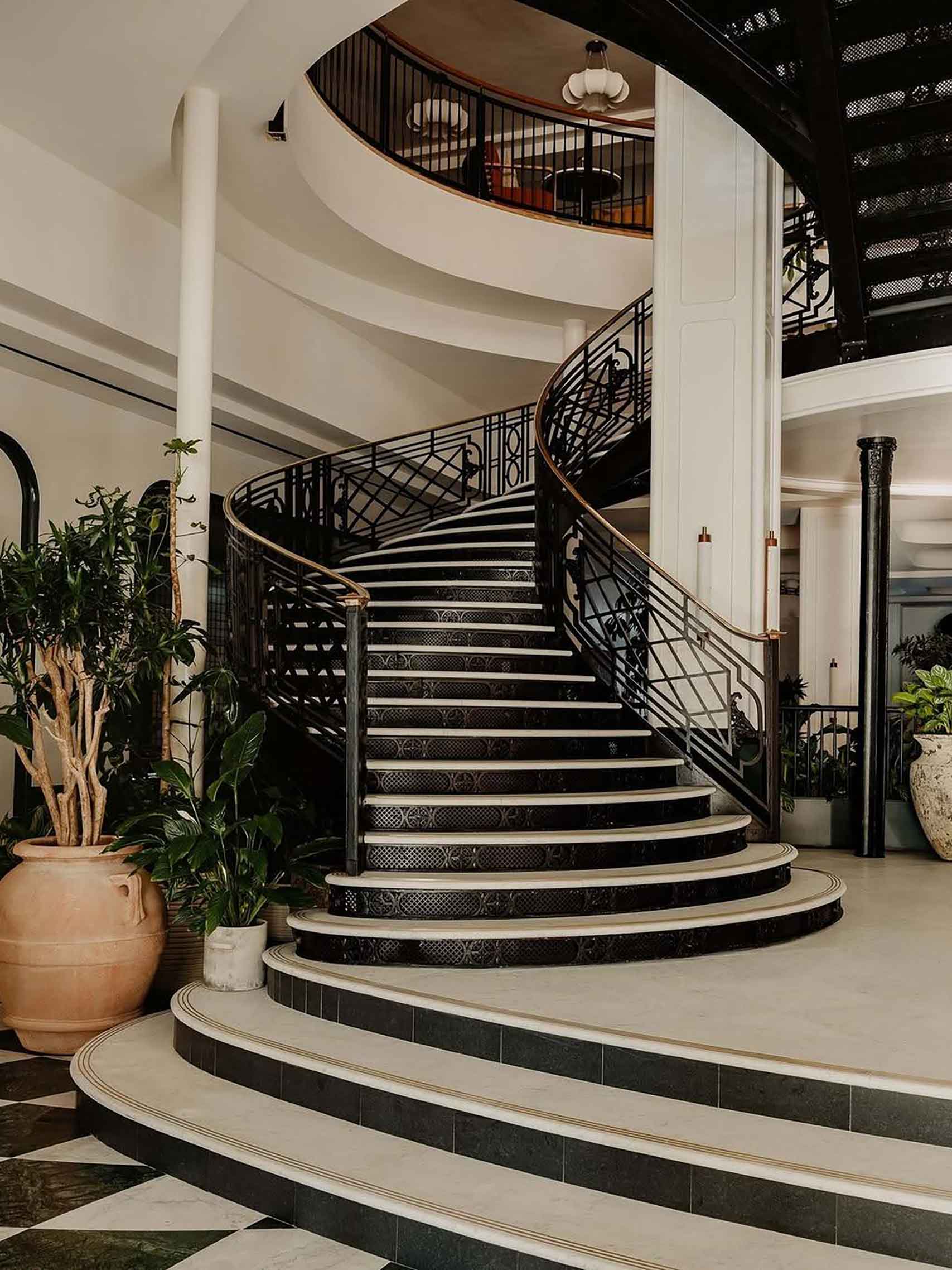
And then, of course, there was the centrepiece: the original Whiteley’s staircase, painstakingly removed, restored in Devon and then replaced. It arced gracefully between the ground-floor Whiteley’s Kitchen restaurant and Six Senses’ first-floor wellness-centric members’ club, Six Senses Place.
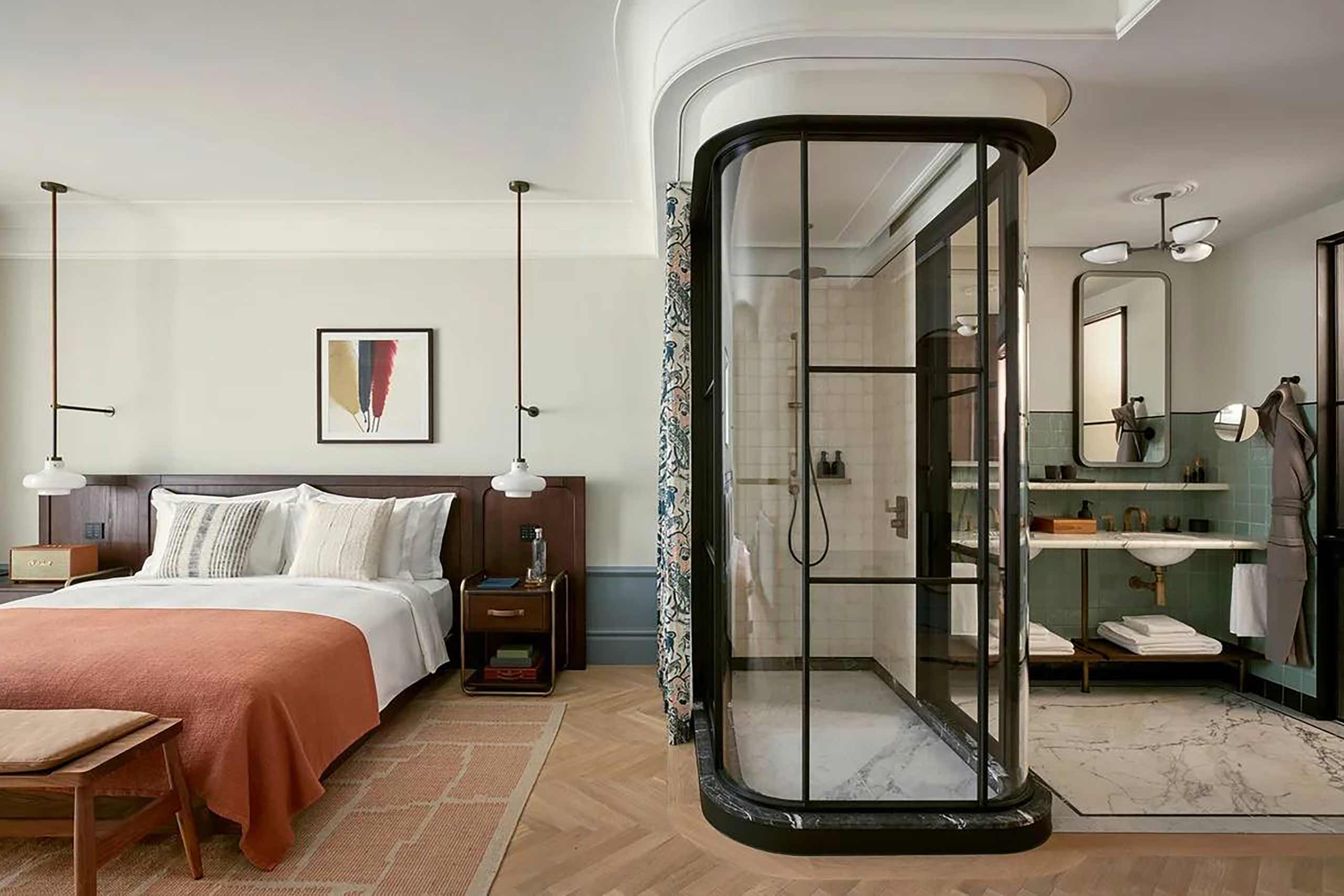
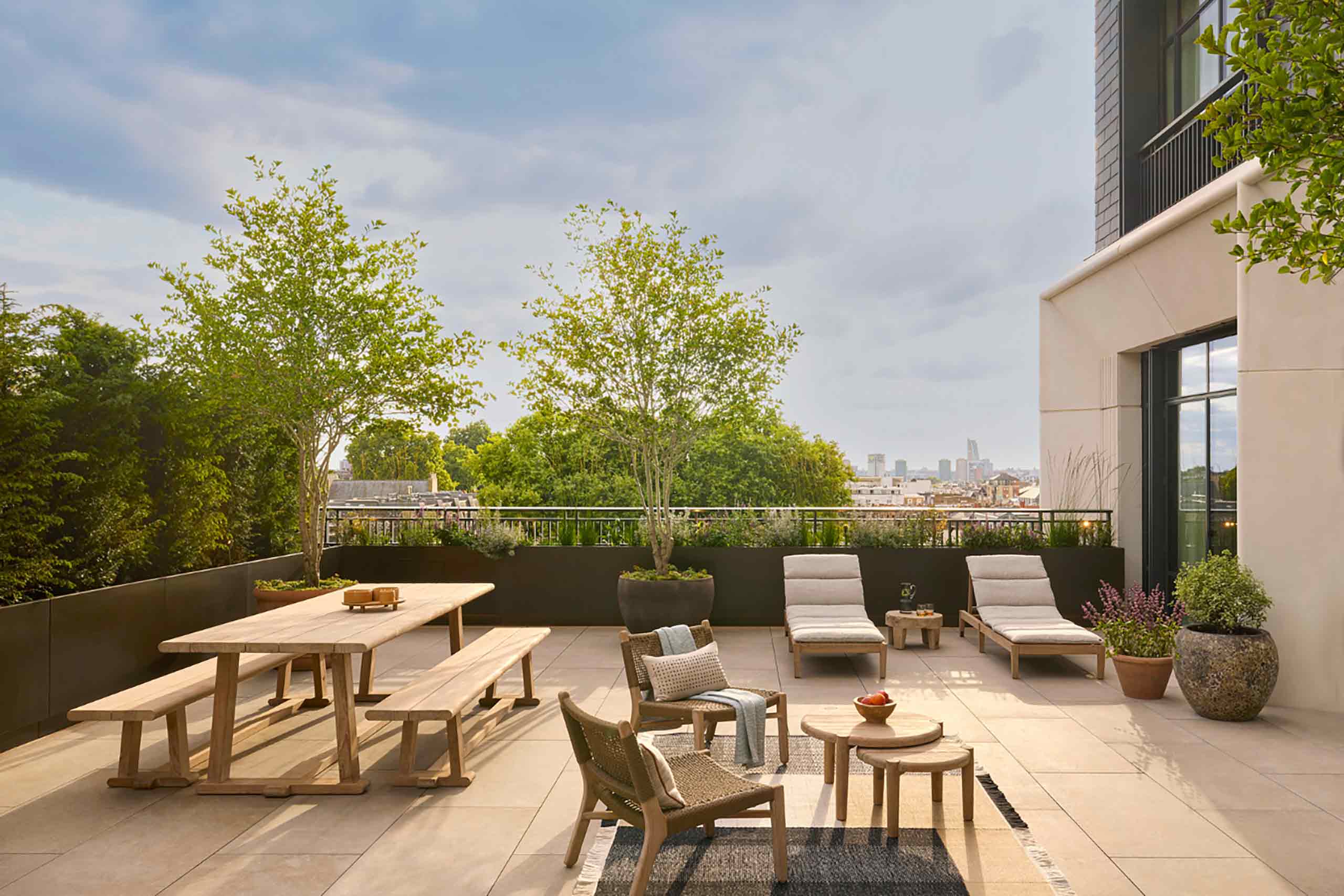
Upstairs, Six Senses London unfolds across 109 rooms and suites in 13 categories, ranging from 27.5 sqm (296 sqft) to 291 sqm (3,146 sqft), some boasting decadent terraces. The elegantly escapist theme of the lobby continues through the accommodation: Graceful curves mingled with natural textures, warm oak underfoot, Indian‑runner duck‑egg‑blue furniture and tiles, robin-redbreast throws, and Art Deco-inspired sconces, as if straight out of a Shaftesbury Avenue theatre, all bathed in soft light spilling from courtyard-facing windows. Bathrooms in most room categories are open-plan, featuring tall, phone‑box–like wet-room showers and marble vanities, while suites offer more expansive bathrooms complete with deep, round soaking tubs. The three largest suites – Notting Hill, Westbourne, and Whiteley – feel like private residences, each with generous terraces for rare-in-London outdoor living. And every stay also includes honorary access to the Six Senses Place members’ club for the duration.
Six Senses Place at Six Senses London is a pioneering private members’ club and social wellness hub – the brand’s first foray into this concept and a signature extension of its holistic lifestyle ethos. Designed to go beyond the typical hotel lounge or gym, it brings wellness, community, programming, social connection and creative life together under one roof, functioning as a holistic urban ecosystem where members can work, rest, grow, learn, dine and connect. Thoughtfully curated spaces include a first-floor bar and lounge for social gatherings, co‑working and meeting areas that blend productivity with wellbeing, a private restaurant serving nourishing seasonal cuisine, and wellness treatment rooms that complement the broader Six Senses Spa below.
True to the brand’s values, Six Senses Place emphasises holistic wellness, from physical to mental, and emotional to social. Its programming spans workshops, talks, mindfulness sessions, seasonal experiences and cultural events designed to inspire growth, reflection and connection. There’s sexology and crystal healing, deep-dive mindfulness and even scream therapy. It champions wellness over mere luxury or status – though, naturally, non-hotel guests must navigate a tiered membership system and annual fees to enjoy its carefully curated offerings… a gentle reminder that exclusivity, in London, is still very much a luxury of its own.
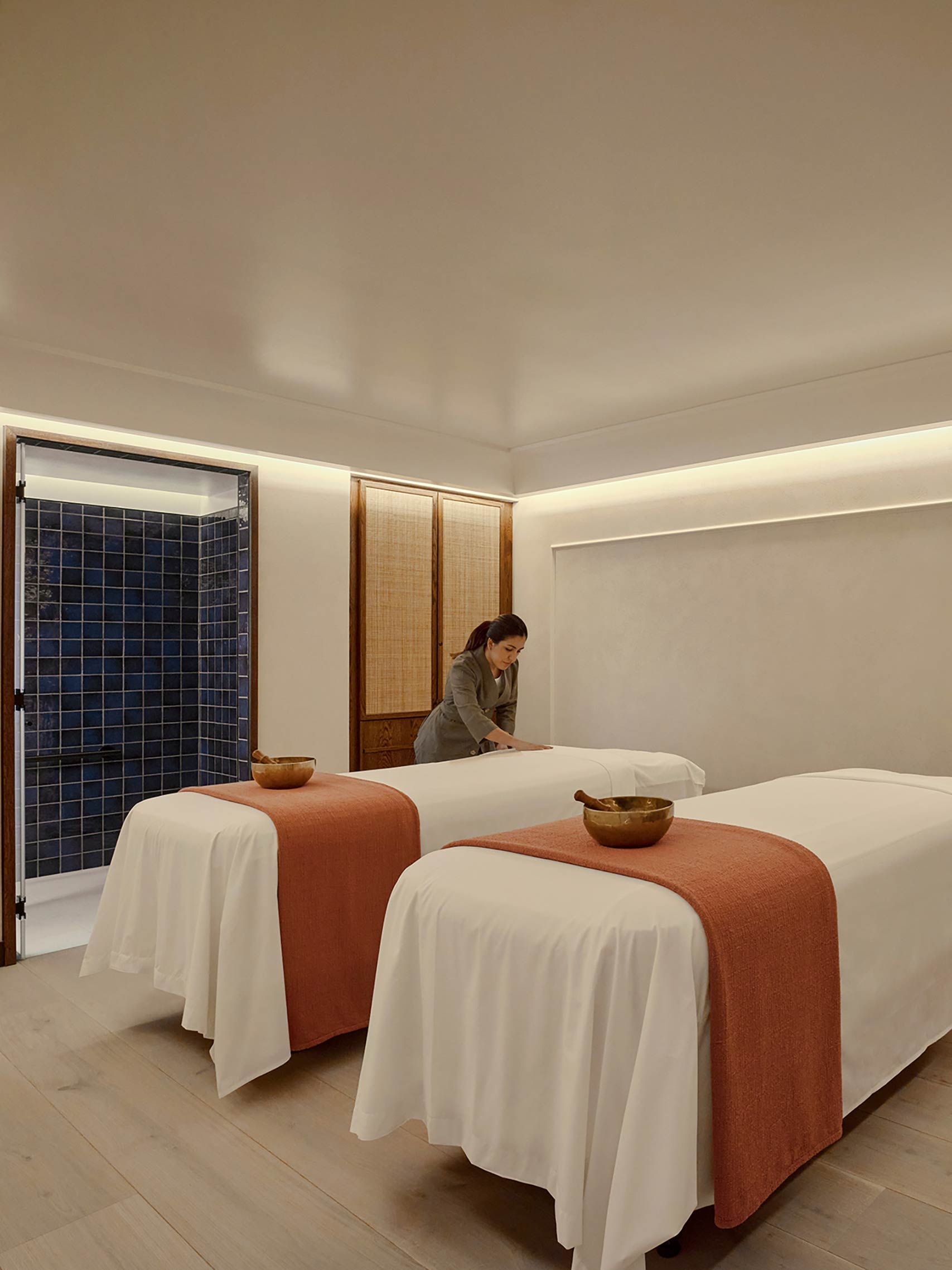
Wellness, of course, is the beating heart of Six Senses London. Descending one floor, we entered a subterranean sanctuary where technology, tradition and tactile wellbeing converged. The 2,300 sqm (24,750 sqft) spa translates the brand’s philosophy into a bold, big-city experience, softly crowned by Ula Saniawa’s stunning sculpture, delicate as giant snowflakes, suspended mid-fall.
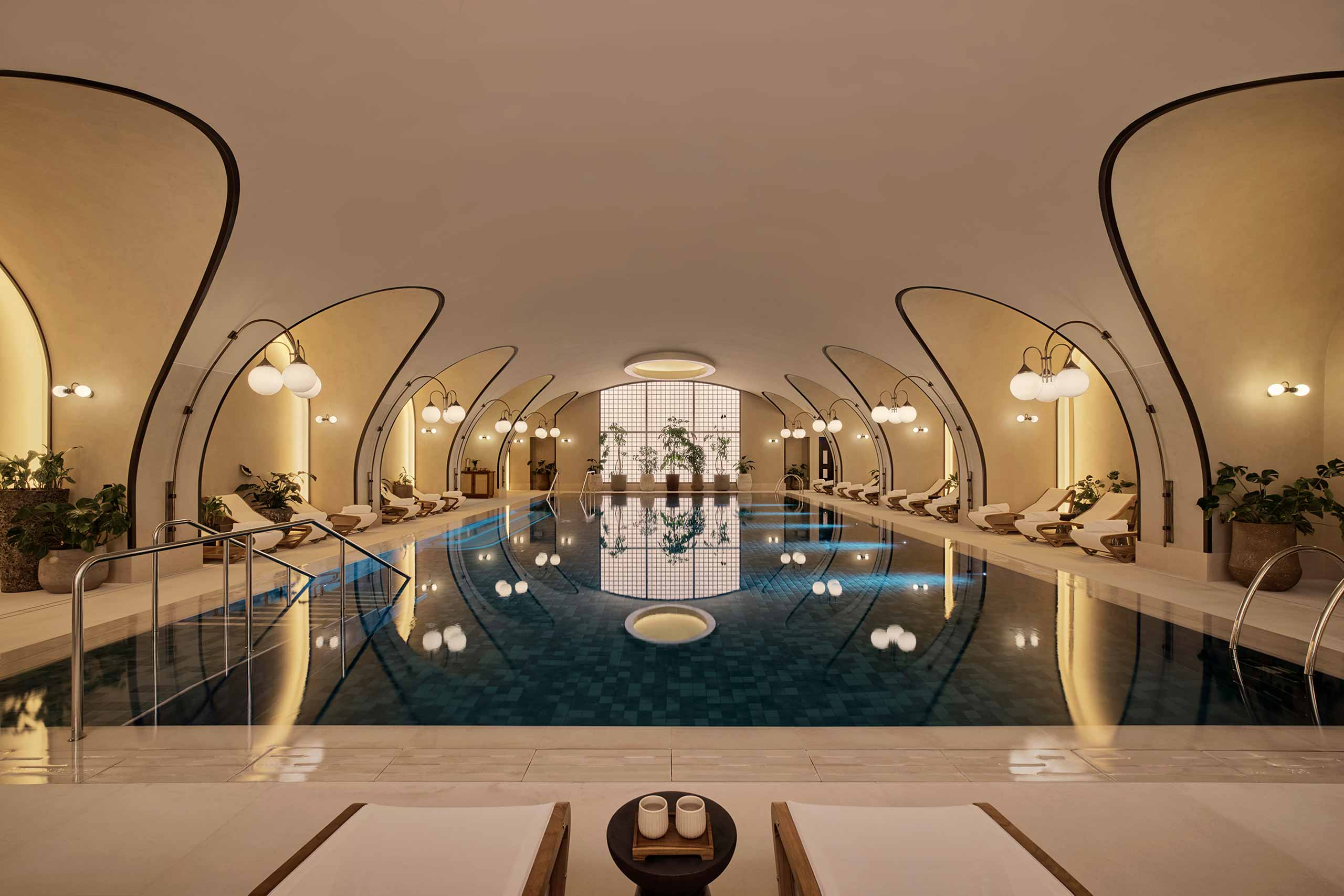
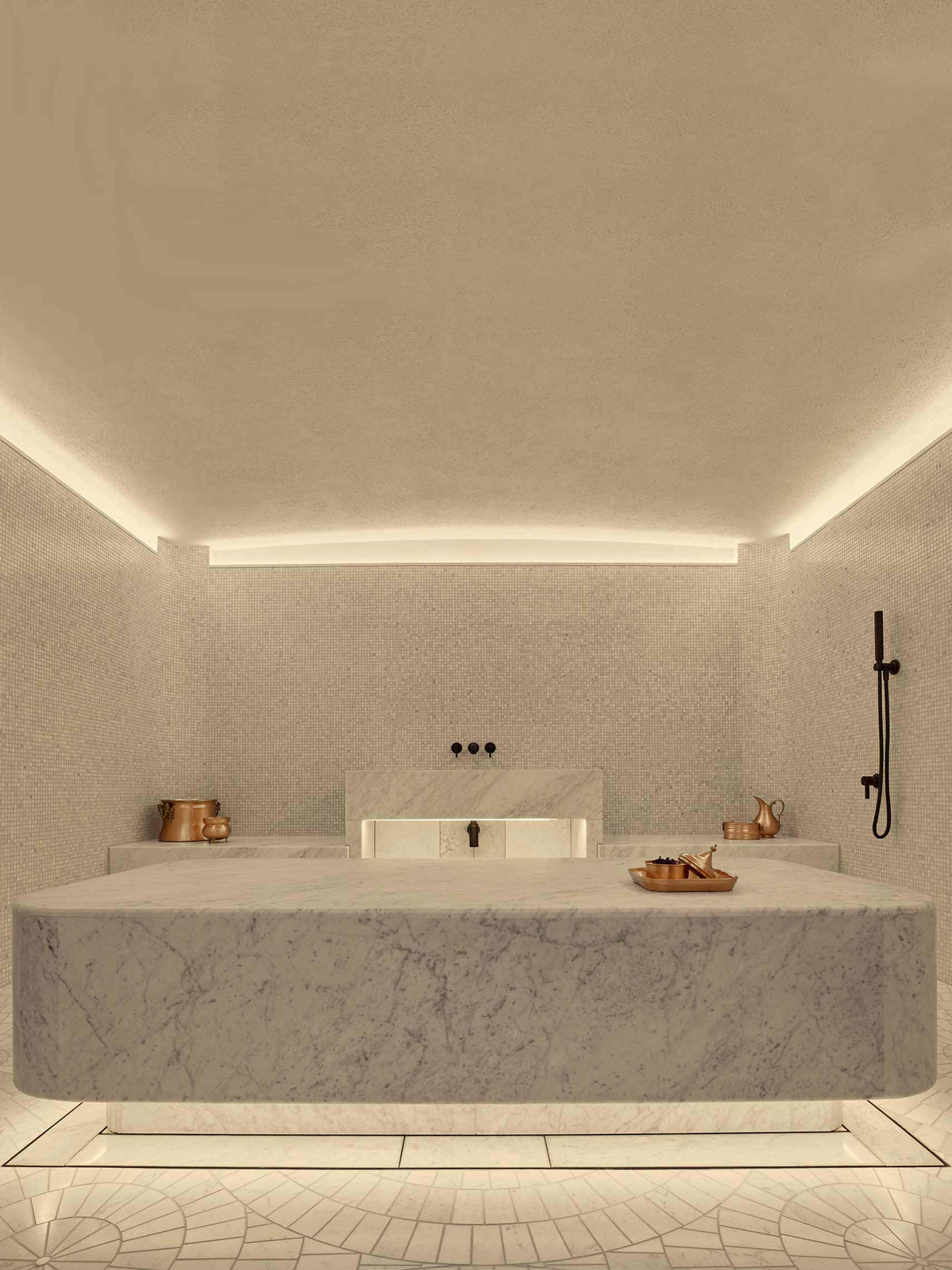
The showstopper is the shimmering pool, set beneath an alien-spaceship-like vaulted ceiling, serene under circadian-aligned lighting. Nearby, a thermal suite beckons with magnesium baths, Finnish saunas, steam rooms and cold plunges, while tucked-away corners host red-light therapy, infrared saunas, cryotherapy pods and a hammam. A flotation pod waits quietly for those seeking weightless escape. Certain stations boast unfathomable, slightly intimidating tech, seemingly designed by a dystopian fitness overlord – part wellness, part “what on earth does this do and where does that go?” – but we were told to fear not, it was all very much for our own good.
The gym, expansive and impeccably outfitted, houses more familiar machines – everything from AI-powered bikes to precision biohacking stations. Some of the more intimate spaces recall hospital corridors, tinged with the faintly regimented air of a Germanic wellness fasting retreat, yet clever design and thoughtful detailing keep the experience welcoming rather than austere.
We could catalogue every feature, but even then, we’d barely scratch the surface. If you’ve imagined it, chances are they’ve already thought of it. To date, it trumps every other London hotel that claims wellness as its raison d’être. And yet, this is not a temple to technology alone. Ancient practices, holistic philosophies and modern intimacy converge: Mindfulness, meditation and pioneering techniques we had yet to encounter were seamlessly woven into the programme, acknowledging that wellness is as much emotional, relational and psychological as it is physical. The real magic, however, is personal. Every guest is invited to undergo a hospital-grade Integrated Wellness Assessment, mapping forty biomarkers and galvanic responses to produce a tailor-made wellness roadmap. From there, a curated team of experts awaits: osteopathy-informed massage therapies, high-tech facials by Dr Burgener Switzerland specialists, personal trainers crafting bespoke routines and visiting practitioners – Ayurvedic masters, intuitive counsellors and skincare visionaries – create sessions designed to meet the body and mind exactly where it is.
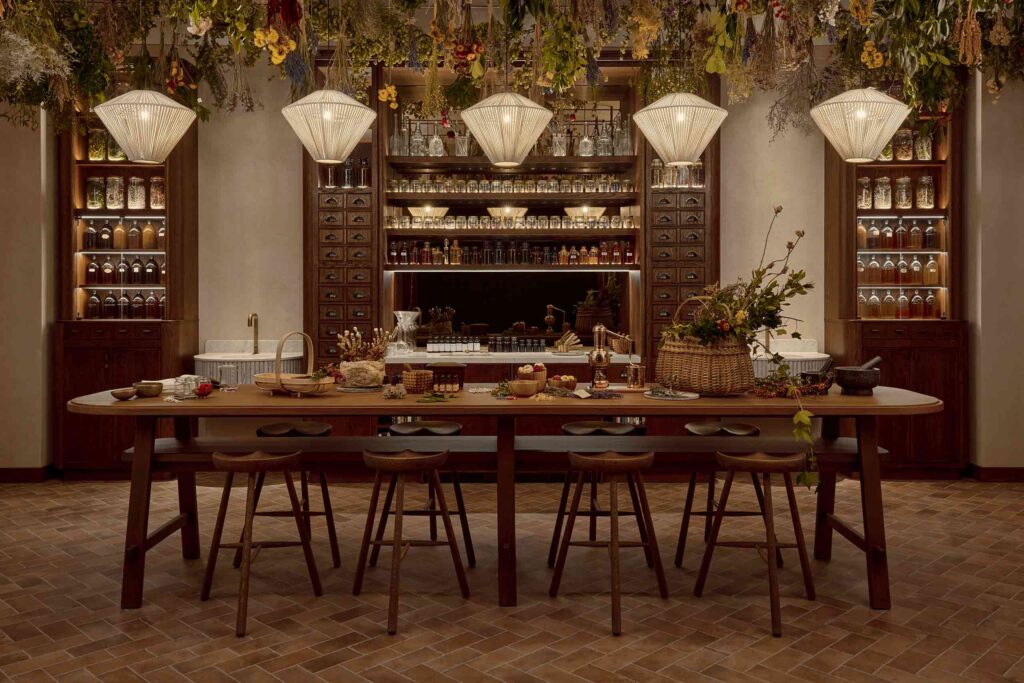
And then, of course, there’s the Alchemy Bar, a Six Senses staple. Bunches of flowers and herbs hang drying from the ceiling above copper distillers and a dehydrator that transforms plants into tinctures, teas, and remedies – a modern apothecary with a distinctly British twist. Across the Isles, herbology and botanical medicine have been quietly nurtured over centuries, passed down through generations rather than written in books, their druidic undertones often too enigmatic for the drawing rooms of high society. We left clutching a delicate rose-flavoured tincture, a drop to stir into our water each morning, its scent faintly sweet, its purpose uplifting. And we couldn’t help but wonder what rose-tinted truth they glimpsed in us from our consultation – what hidden tension, what overlooked calm – that we hadn’t yet noticed ourselves.
The healing power of plants and the mindful consumption it inspires permeate Six Senses London. Over half the restaurant menu is vegetarian or vegan-forward, with every dish grounded in provenance: Chef Eliano Crespi visited a mind-boggling number of British farms to curate ingredients aligned with the hotel’s sustainability ethos. He has also installed a fermentation lab, producing everything from house kombucha and tonic shots to botanical teas, served at breakfast and as welcome drinks. The property’s commitment extends beyond the plate, with investments in hyperlocal urban rewilding, planting initiatives and pollinator protection, including plans to cultivate two biodiversity gardens right on site.
Does London need yet another luxury hotel? Probably not. But if it is to have one, let it be one with a fresh vision, we say – luxury with character, a conviction to be more than merely trendy and a story worth telling! In a city that seems to churn out upmarket hotels with dizzying rapidity, Six Senses London proves insistently different. It has all the trimmings of the most luxurious stays, yet exudes a considered, soulful presence. It’s the kind that London didn’t quite know it needed, but is all the better for having. Here, regenerative hospitality meets a city defined by its energy, chaos and relentless appetite for spectacle. Wellness sits at the axis of every detail, community is cultivated, and notions of what luxury in London can and should be are reappraised.
Six Senses London suits the curious urbanite, the wellness devotee, the culturally minded and anyone eager to step off the predictable hotel treadmill and discover a renewed sense of purpose, ritual and respite amid the city’s pulse.
It also carries hope for the neighbourhood. Gentrification is inevitable and the hotel has certainly raised the bar in Bayswater and Queensway – but if a big-name brand is going to lead the charge, this is the one to preserve the human, layered and idiosyncratic spirit of the area rather than smothering it in homogeneity.
The people of London, those who live here and those who visit, will embrace Six Senses London as they do everything: with enthusiasm, a little scepticism and the knowledge that while trends may come and go, it’s concepts rooted in purpose that endure. And few hotels feel more rooted than this one – especially when you consider those two soaring eucalyptus trees.
At the very least, it offers a simple, undeniable joy: if you ever need to escape London, you can now do so without technically leaving it.
Photography courtesy of Six Senses Hotels, Resorts & Spas

Perfect for
The Insider

Fly into
LHR / LGW / LCY

Right on time
GMT
While you’re OutThere
The streets around Bayswater and Queensway are hotbeds of the best Malaysian food in London. Hidden among the pastel façades and yesteryear London high streets are gems like Malay Fellas, Med Salleh Kopitiam and Tukdin (not to mention the excellent hole-in-the-wall Normah’s), where laksa simmers with a heady mix of lemongrass, chilli and coconut milk and char kway teow sings with wok-fired smoke and sweet soy.
Each dish is a story of home, of markets, street corners and spice-laden kitchens, the kind of food that comforts while thrilling the palate. From fragrant satay to tender rendang, Malaysian cuisine here is alive with colour, aroma and subtle complexity – an irresistible invitation to tie a napkin round your neck, tuck in and savour a corner of the world right here in West London.