


Think one person can’t change the world? Proud Amsterdammer Bet van Beeren did. And she did it with the odds stacked against her. So, with her hometown welcoming WorldPride 2026, we take a look at one of the boldest and most unapologetic queer icons of Amsterdam’s history.
Bet van Beeren was born into Amsterdam’s poorest neighbourhood in 1902, as the youngest member of a family of 14 children supported on a bricklayer’s salary. When she was 12 years old – at the time, the legal minimum age to take up employment – she was pulled from school to help feed the younger children.
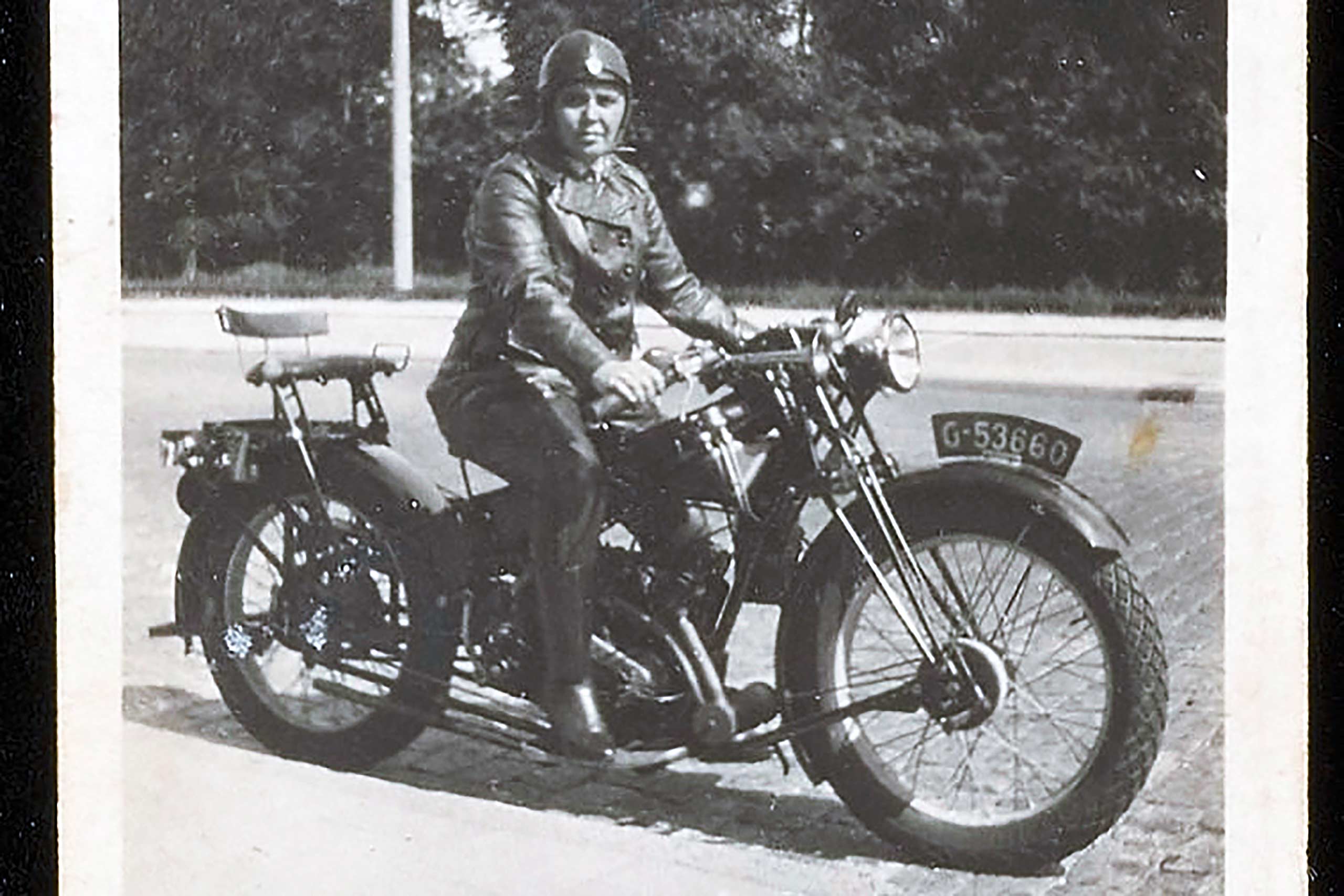
As with every part of Bet’s life, there are many legends about what she did next. She worked in a tinning factory where she lost two fingertips. She and her mother sold fish and beer on the street. Oh, and she became the first woman to get a motorcycle license so she could deliver food. But perhaps more importantly still, Bet van Beeren discovered that she liked women, and that they liked her.
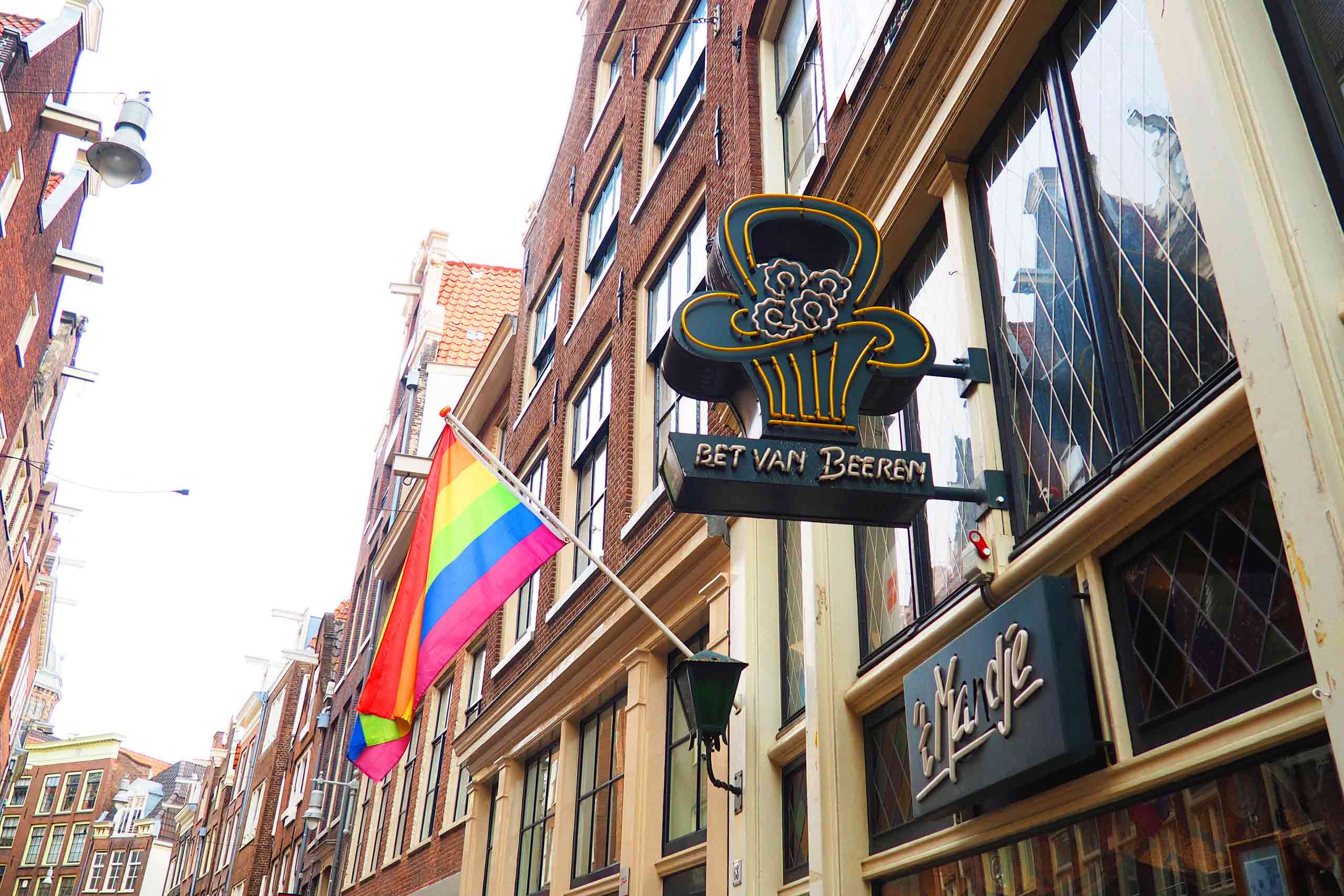
At the age of 25, Bet took over a small bar in Amsterdam’s Red Light district, naming it Café ‘t Mandje (the Little Basket Café) after her mom’s food deliveries. In retrospect, we can say that the cafe was the first brick in the foundation of legal gay marriage around the world.
At the beginning of the 20th century, there was nothing to suggest that the Netherlands would be the first to legalise gay marriage or that Amsterdam would host the first same-sex marriage ceremony. The city had a long tradition of religious tolerance, but that didn’t extend to sexuality. There had been violent anti-gay panics throughout the 18th century, followed by heavy suppression of queer life in the 19th.
When Bet van Beeren founded Mandje, police harassment was routine. On the flimsiest pretext, they would arrest and take photos of “suspected homosexuals”. Books of these photos were shown to prospective employers and landlords. Somehow, Bet turned the bar into a haven.
LGBTQIA+ people would find their way to Mandje, where they would be protected and entertained. Bet was fierce, but she was also larger than life. She’d stay up all night drinking and singing with her customers. If she felt someone was being stodgy, she’d cut their tie off (to this day, the ceiling is covered in severed ties).
She had a creative approach to police harassment. There was a green owl lamp over the bar, which she would turn on if she thought there was an undercover cop inside. And she crammed a pool table in the back of the space to prevent the temptation of dancing together.
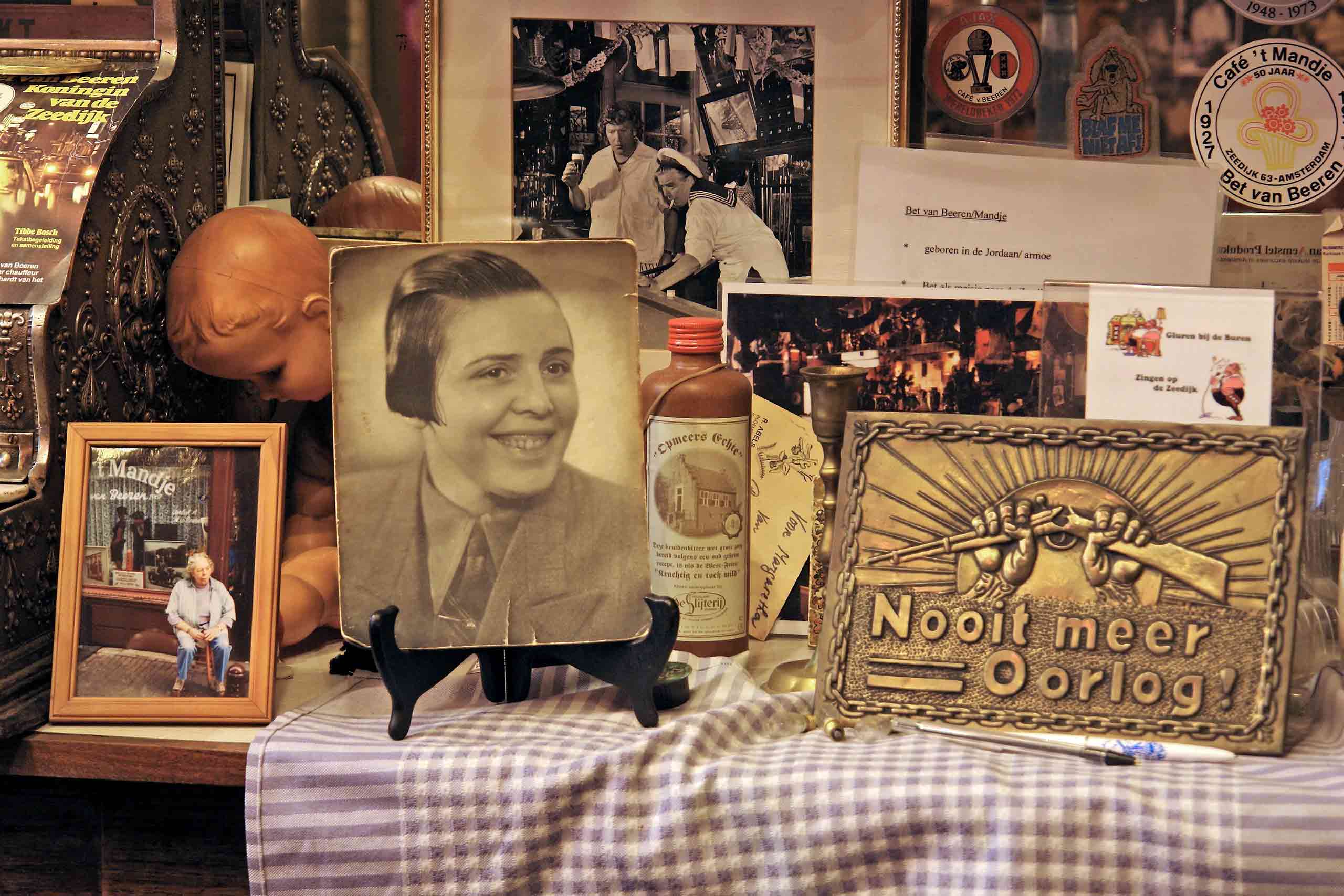
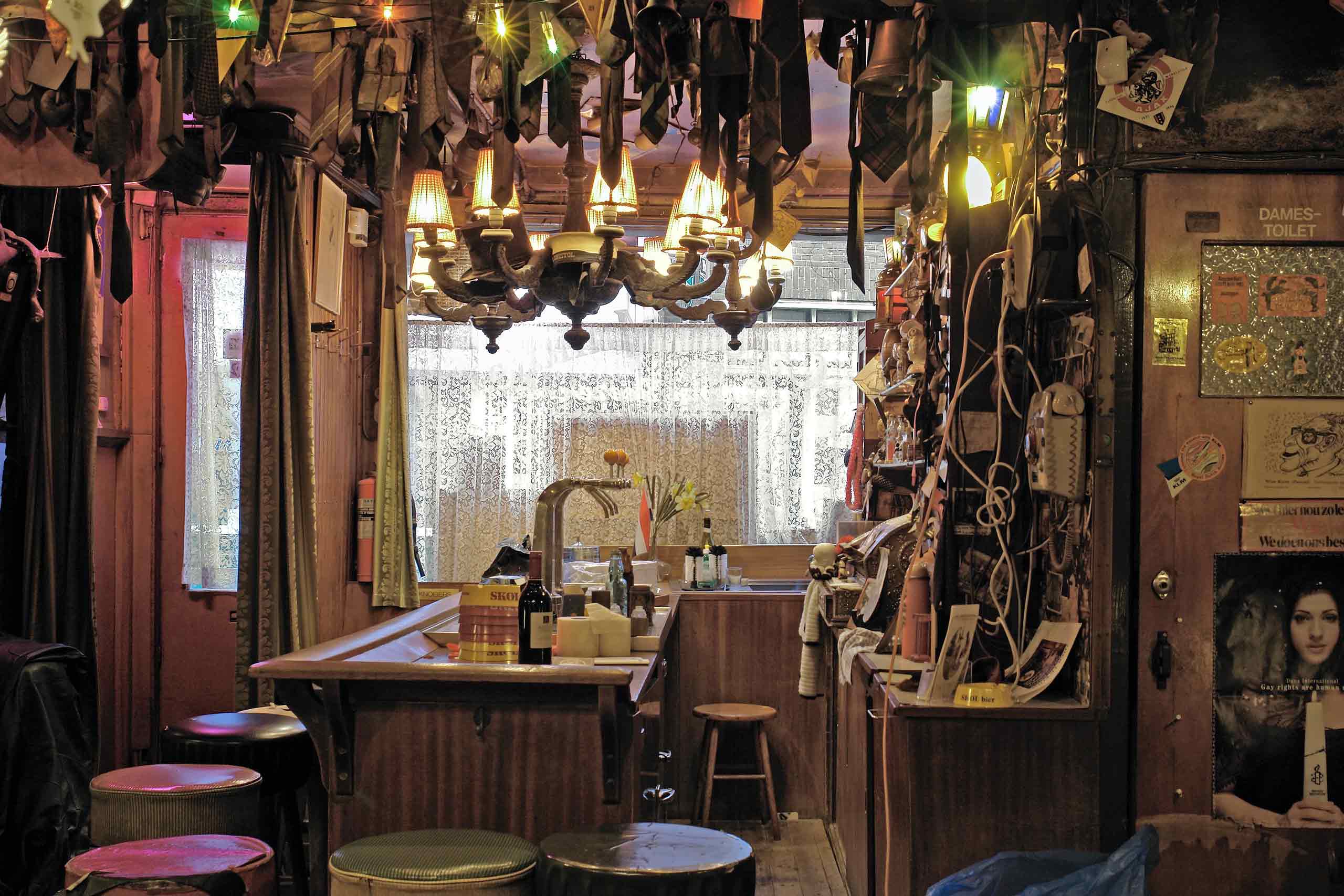
Bet also took advantage of Queen’s Day, a wild and utterly abandoned celebration on the monarch’s birthday. She would stand in the doorway, telling anyone she didn’t recognise that it was a private party. Inside, under the guise of going crazy for Queen’s Day, men would dance with men, women would dance with women, and people came dressed as whatever gender suited them. For one day of the year, at least, they were free.
When Bet passed away in 1967, she was laid out on the pool table. Her wake overflowed the bar and filled the long street in both directions. When she’d started Mandje forty years earlier, individual queer people would sneak up to the bar and dash through the door. After four decades of Bet’s community building, her people celebrated her in the street.
Of course, Mandje isn’t the only thing that led to the legalisation of same-sex marriage. But it is undeniable that Bet played a crucial role by forming a scattered and splintered people into a community. And yet, perhaps the most fascinating part of her story – her flaws, and all else that made her human – is often forgotten about.
Across today’s Dutch queer community, Bet is the stuff of legends: a larger-than-life badass who wasn’t afraid of anything. But her (much) younger sister Greet, who inherited the bar, later spoke about Bet’s alcohol dependency and a sense of loneliness Bet had felt despite having engaged in short-term affairs.
In the end, it’s those aspects of her life that might be the most inspiring thing about Bet. She didn’t create this place of community and help pave the way for a queer milestone because she was superhuman. Rather, she was a flawed human being whose actions extended far beyond her lifetime – and so can ours.
Modern-day visitors to Amsterdam can find multiple ways to find inspiration in Bet and her story. Café ‘t Mandje is run by a queer history obsessive, and it looks as it did in Bet’s time (including the ceiling of ties). Her dedication to protecting others lives on at Bar Bario, which fiercely guards the BIPOC, trans, and queer communities that call it home. And, perhaps most suitably, the spirit of Bet van Beeren arguably lives in Café de Lellebel owner Tori, who fights to make a safe queer punk space as she entertains her guests. Bet would’ve approved.
This article was produced in collaboration with Badass Tours, the Amsterdam-based walking tour company giving visitors to the city a behind-the-scenes look at iconic, yet frequently overlooked sites that tell the stories of diverse people who have shaped it: from LGBTQ+ and BIPOC communities to women’s history and Jewish history.
Photography courtesy of the Amsterdam City Archive and Badass Tours